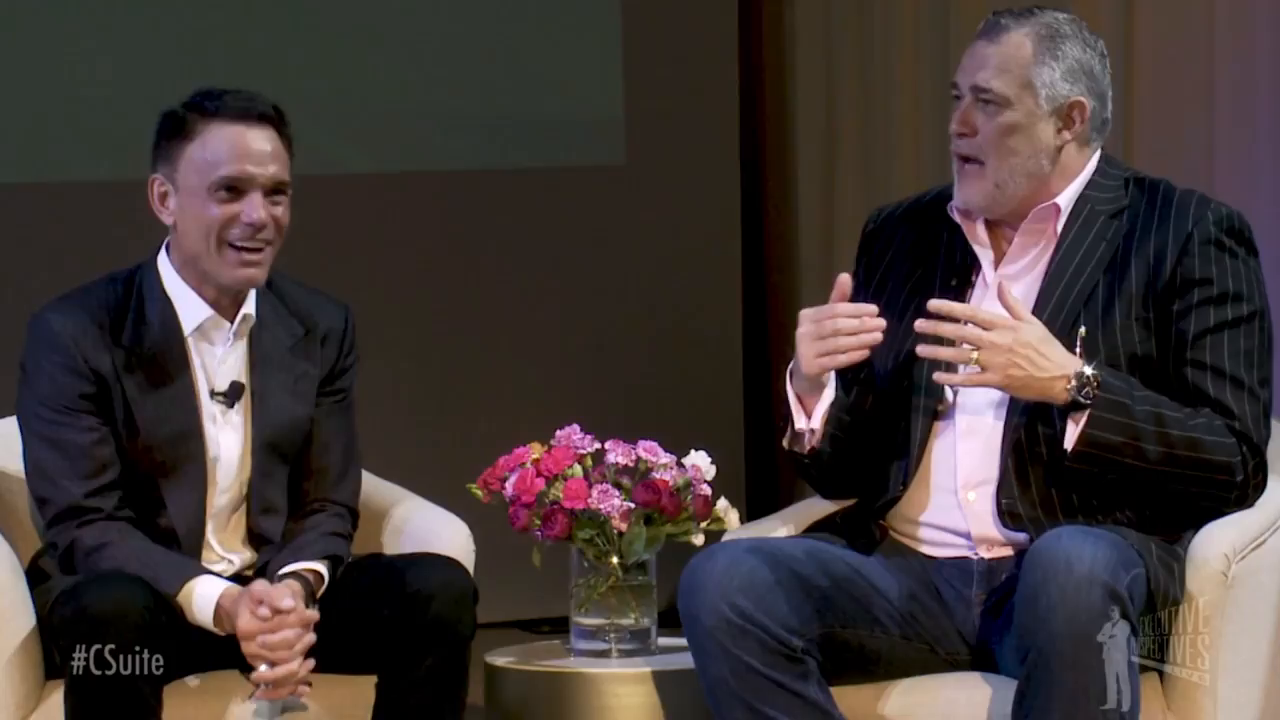
The Future of Financial Advice is More Human, Not Less with CJ Davidson
CJ Davidson · 24 min · Oct 29, 2026
The financial advisory business is changing, and the old model isn't keeping up. On this episode of All Business with Jeffrey Hayzlett, Jeffrey sits down with CJ Davidson, Co-Founder and CEO of Proxy Financial, to discuss how technology, AI, and changing client expectations are reshaping… Read more
About this episode
The financial advisory business is changing, and the old model isn't keeping up. On this episode of All Business with Jeffrey Hayzlett, Jeffrey sits down with CJ Davidson, Co-Founder and CEO of Proxy Financial, to discuss how technology, AI, and changing client expectations are reshaping the industry.
CJ believes the future of financial advice isn't about replacing advisors with technology. It's about giving them the freedom, support, and resources to focus on what matters most: building trust, understanding clients, and delivering better outcomes. From helping advisors discover their zone of genius to navigating the massive transfer of wealth and building businesses around their strengths, CJ shares why the next generation of financial advice will be built on relationships, collaboration, and a more human approach.
About All Business
Direct, unscripted conversations with CEOs, entrepreneurs and leaders about how they really run their companies.
Hosted by Jeffrey Hayzlett · 91 episodes
See all episodesFull transcript
Success transcends cities. As one of the world's most respected business leaders, I know what it takes. Join me now as I sit down with fellow leaders and we share our insights into how you can be successful. My name is Jeffrey Hayzlett and this is All Business. The financial advisory business is changing and frankly, it needs to.
Technology, AI, is changing client expectations and a new generation of advisors are forcing the industry to rethink what real value looks like. My guest today believes the future isn't about replacing advisors with technology. It's about using technology to free up advisors to do what they do best, to be human, to build trust and help people make better financial decisions. CJ Davidson is the co-founder and CEO of Proxy Financial and he's on a mission to reshape the financial services industry by giving advisors more freedom, more support, and a better way to build business around their own strength. CJ, welcome to all business with Jeffrey Hezl.
Thank you for having me, Jeff. It is good to have you. Normal SCU and Dallas are on the road. So it's good to have you in the nation's financial capital. You know, I lived here for 10 years and I loved my time here.
But now when I come back for a few days, I'm like, I don't know how I survived. I got gauntlet every time I see myself coming into the city. I'm like, I take a deep breath. You know what you're getting yourself into. But when people would visit me, I'd be like, why, how can you not hang?
It's like a Tuesday. We're just going to dinner at 10 o'clock. It's the mindset here is amazing. Across the river, it's a big difference. It's a lot of different.
You had a different world. So let's talk about the big picture. What do you think the financial advisory firm of the future looks like and what's broken about the model that we have today? Well, I think it breaks down to being advisor-centric. And what I mean by that is the advisor in my opinion is the most important or the lifeblood of this business.
The advisor client relationship is a sacred thing. And I think maybe 70 years ago, the industry was very much built on brand trust, right? The delivery of trust was through a fortified entity that had large amounts of depository accounts or a brand recognition. And trust really gravitated towards those brands. Maybe even a building near here, where we're setting, right?
I mean, there was a lot of that in terms of the stone. You know, that looked at field was the brand, but the brand changes. The brand is not about a promise delivered, right? Yeah, and we're in the service industry. And the best thing that we get to do in the service industry is listen to our clients and understand what they're looking for and adapt to the changes that they're asking for.
And I think to your point that maybe the number one thing that we're missing in this industry is the ability for an advisor more often than not to be able to look what the client is coming to them for, how they're building trust, how they're forging that relationship, and then pouring into making sure that that advisor can stay in that zone of genius and that mindset where they get to flourish on behalf of the client. I like that term zone of genius. I want to come back in a few minutes, but do the advisors have any freedom whatsoever? I mean, every time I've ever talked to most financial advisor, not the big ones, the good ones, the ones that you work with, right? But a lot of them, they say, well, I can't do that.
I can't send you that. I can't do this, I can't do that. They can't even tweet, they can't even send a, can't even help along Moscow, you know? That's the big problem. It's meeting the client where they are.
Again, a long time ago, I think people came to you because you had that trust already built in and you were leveraging or lending that trust to the advisor to be able to serve the client. Now the client has changed their definition of value and they look at the value being driven by the human that they choose. And one of the definitions of success for us as advisors is for a client to come to us and say, I want you to do more for me. I'd like you to take that next step and help me with this as well. And because of the way a lot of institutions are built, they're very focused on certain products or certain services that they may be incredibly good at.
But that doesn't translate to the relationship that an advisor has with the client. And these aren't crazy things. These are like, you manage my money. I'd like you to help with my estate planning. Or I'd like you to help with my small business that this money is coming from.
I'd like to use some of this money to invest in my business, maybe through an IRA or whatever it is. I'm sensing a sense of the shift is almost a hub and spoke. We've got this great group of people, but you got lots of experts around. Let me ask you about the financial advisors today. They're dealing with more technology, more regulations, more competition, and clients with a lot higher expectations, which we just talked about.
What do they need today? They may not have needed 10 or 20 years ago. Well, they need choice first and we've been talking about that. But the technology, I think, is one piece of it, right? The ability to meet the client where they'll be able to use the technology, just chatting with somebody and you being able to use the technology they use to chat.
But more importantly, being able to streamline some of the functions that aren't client relationship facing so they can spend more time in that zone. Yeah. That's hugely important. Well, because clients aren't stupid, right? They've gotten a lot smarter because we have access to the information.
There's, you know, we've had shows like this and others. So they're able to know, hey, you're just selling me the stuff you can sell, and not selling me the stuff I really want or need. It gets to that point where the authenticity can penetrate the lack of ability, and there creates a conflict. And then the advisor has very little choice and how to remedy that, right? The, I like to think that an advisor's path when they're great at what they do.
They spend maybe the first five or six years being the control group in a scientific experiment. They get to be the exact same person over and over again to the variable, the clients that come in that they're trying to earn business with. And they listen and they hear what the client is gravitating towards them to do. And then they get to a certain point where they say, hey, I think my business should be built on this because this is where I'm building trust. And this is why my community is coming to me.
And then they look at how to do that. And they're faced with very few options those options or either do it for someone else as an employee or do it completely by yourself and figure it all out including the things that have nothing to do with what got you there or why you're great at what you do. And that's tough to do unless you've got some support or some kind of network to do it. So, you know, I met you a few years ago at a financial conference and I could tell you you were working on something different. So you saw something in the marketplace that convinced you there was a better way.
Why did you decide to build proxy financial? There is a gap in the market. There's two major things happening simultaneously right now that may never coincide again and are happening in the case of the migration of retiring baby boomer advisors that have happened for the first time in like 30 or 40 years. That's not Bitcoin, right? No, no, no.
These are humans that are making life changing decisions, right? E.F.T.s or something like that. This is just real stuff, right? Real stuff. So you have 10 trillion in assets that are moving from the baby boomer generation of the biggest shift in the world of wealth going on right now.
And it's been going on for a couple of years as the Baby Boomers age and age. I'm at the very end of the Baby Boomers, right? We're probably in the third or fourth ending of that. And these are advisors that for 30 or 40 years have been incredibly good. It may be one or two things within the system that we just talked about that requires you to do something but you rise to the top and you become great at it.
They're facing the choice of either selling internally to a system that no longer serves them them but they've been just writing it out or going to an unproven private equity model in many cases who are looking at the business from a monetary perspective and not the actual service perspective. And you can see if you do your research, a lot of these firms that are aggregating for the purpose of aggregating are failing because they don't understand what it actually takes to weave that client relationship and maintain that. So they have these two horrible choices. All of that money is moving and at the same time there's a JD Power and Associates article recently that said maybe 30 to 35% of advisors that are in the workforce right now are considering moving in the next two years. So a third of the brain trust.
It really is. Where the rubber meets the rim. Where yeah, where they know the customer is going to go somewhere. Yes. That's going to be pretty big.
That's a big bell going off somewhere. So how do you make both of those things work? How do you provide an avenue for great advisors who know what they're trying to do to be able to settle themselves into a shopper and an infrastructure. They create that they have enterprise value and then be able to capture and compete with the private money in the major institution. And they've been in this point.
And they also have been not just the customer benefits from that kind of transaction, but they benefit financially as well. When we sit down with individuals that are thinking about selling, we, and this is maybe shocking or maybe not, the thing that they are most surprised by when we ask them questions is when we ask them, what do you want to do? What's important to you? The fact that someone's interviewed 30 or 40 times with somebody that wants to buy something they built for 30 or 40 years and they have never asked what you care about and what you're trying to do after this transaction is proof point that there is a missing piece in this industry and there is a gap that should be filled by people that are purposed with. Well, I want to come back and I want to know what did they say.
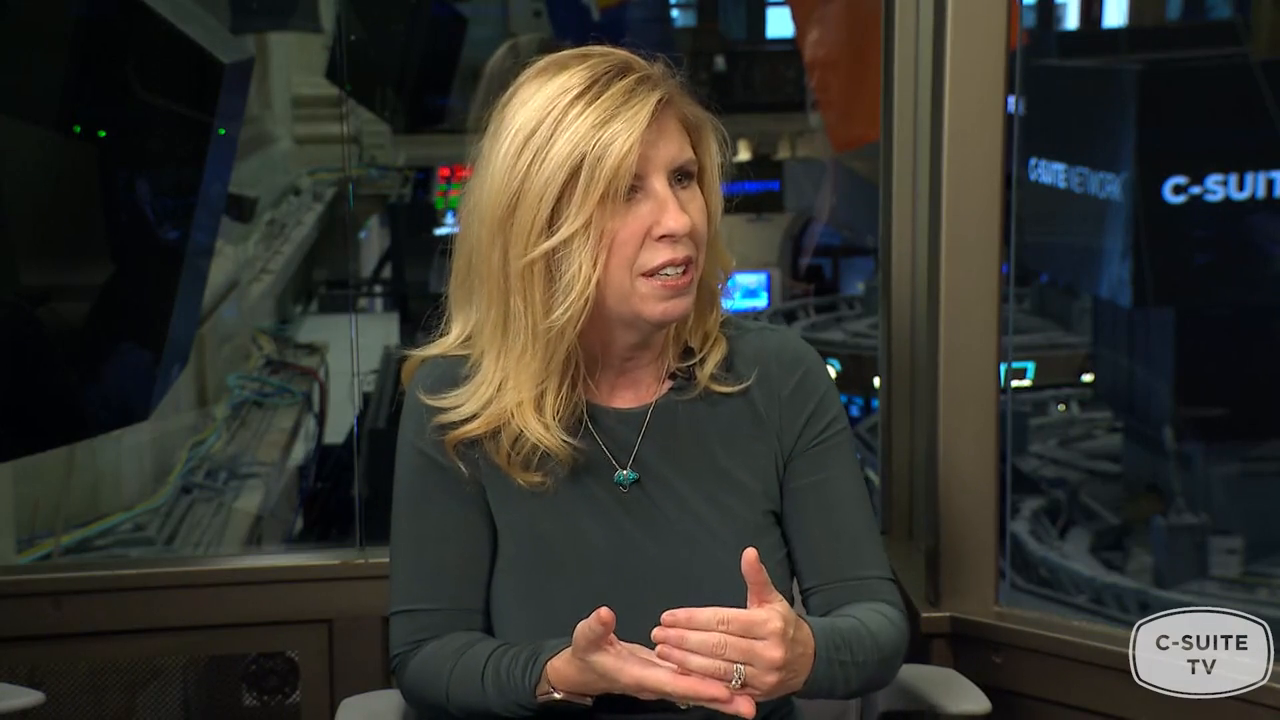
That's the answer I want to come. We're going to be right back after this message. We're also going to talk about No Life Self. That's what's coming right after this break. We are back and live right here from the New York Stock Exchange.
I'm Jeff Rehazel at host of All Business with Jeff Rehazel at on C-Suite Radio, C-Suite TV. Live right here on the New York Stock Exchange, right before the break. You said, you know, what do you want out of this business? What do you want out of this transaction? What do they say?
It's a little bit different every time, but it always comes back to taking care of the client. I could have guessed that because I've talked to these same guys. I refer it if you want them to you. And every one of the people that I know that are exiting, and I got a lot of friends that have made a good living, they're at that life stage, ready to retire. And that's the one thing they're the concerned about.
They want to take care of those customers to the point where I've watched two of them. In the last year, take less money or not take the money and stay with the business because they're afraid they're going to hurt their customers. inevitable that if you're great at what you do in our business, your clients become your friends. It's completely interconnecting. They're family. So people you travel with, they're at the bot mitzvah, they're at the funerals, they're at the weddings.
Like it's a badge of honor and maybe some of the only times that we get confirmation that we're doing a good job that when we get led into the person's life and then when you let us in, we love it, right? You have to love people in this business more than anything else and to be validated for what you're doing by being led into that kind of a circle, it's something we cherish forever. And when you go to sell, it's very difficult to look at a group that's saying, oh, I want to give you a huge check, but we're going to dictate what happens day one from this time you sign that check. You talk about the idea and you said there's no thyself. That's a pretty powerful concept of special in an industry where advisors are often expected to be everything to everybody.
What does that mean to you? Two things. It's a right of passage in our business. When you can get to a point where you really understand that scientific experiment has led to you really understanding what you're good at and what people come to you to do and then you can not only self realize that, but not give in. It's you're saying the hubris is not.
Not compromise. You're setting down the hubris that may have built up and saying, this is what I'm good at and this is what I should do because I'm an important service. I think great executives, when they get to all great executives, when you know who they are, when they really know who they are. Yes. And when they know that, everything else is so easy.
And I think the other side of the coin is when you know thyself to be able to then decide to build a business where you surround yourself with complimentary tools and to be able to architect that for this is one of the coolest things we get to do. When an advisor comes in and knows thyself, that knows what they're great at and what they want to build. And they have that vision right when they're out there and they say, this is what it's going to look like. And then we can reverse engineer and say, this is the path to have the least resistance to get to that place you want to be. That's, there's nothing more rewarding because in the right environment, this business is collaborative.
I was at a dinner on Monday night with an incredibly successful advisor in Las Vegas. And they were talking about how there's still a lot of conflict. There's a lot of unhealthy competition just right down the hall. They tell their younger advisors, don't go on the side of the office. that culture is so counterproductive because in a world where you want to serve the client, you want the greatest resources at your fingertips. Yeah, that's another football player telling the other one, don't catch the ball.
Yeah, don't throw it. I'm going to contract negotiations, so that's all in line. Do the play this time. Well, that's great. I want to take a step further because how does an advisor identify their zone of genius?
And then actually build a business around it to do the very best instead of spending all their time trying to do everything? Yeah, zone of genius is very similar to know that yourself. Your zone of genius is that thing that you do, that you can do all day and it never makes you tired. If you think about that part of your day or that part of your career and what you get to do from city to city, those things that will energize you that you can do for seven hours in a day, that's your zone of genius. And for someone to, we call it like men's the state, when you get in that flow state, where you're like, I could do these plans for eight hours in a day. different for each advisor.
Some are architects and they love the nuance because when they get into the architecture with the planning software and whatnot, they really absorb and then they can present and project better what that's going to look like for the client. Others are not architects at all and they do more social things because they know that if you see me at a dinner table 30 times in the way I treat the wait staff, that's your definition of somebody that's trustworthy because your personal experiences said that over and over again is somebody that I can trust and I can borrow that experience and plug it into this advisor. Every advisor is different, the way that they build their rapport, when it comes from ethics and it comes from projecting to the other person and what they want and when they find that little sweet spot it should be cherished. And again it's another level of knowing myself as one thing and then being able to identify what your zone of geniuses and then build around that. And you were saying earlier, advisor owner, those are the same thing in Hollywood.
Yeah, I kind of get confused by that, but they're only a bulk of business without question. This is part of the problem. Yeah. There isn't an exact industry-wide definition that someone that builds a book of business to serve other people is a business owner. There is still a conflict, and a lot of these advisors are still looked at as employees of someone else, building for someone else.
And that's a lot of where the conflict is. Our group is very interested in delivering the resources to an advisor as if they were a W2 employee with that level of stability, trust, and support, but giving them the autonomy to create like an artist and the enterprise value of a business owner. This is a 24-7 job. This does not turn off. Your clients, if you're great at what you do, will call you at 10 o'clock at night on a Saturday.
And that's when they really need you. to do that for someone else at a certain point is redundant. It's not the respect of the craft that you've earned. Think how many businesses you can call somebody that works for you, that's a vendor for you, and I'm not saying they're vendors, they become partners. You can call that late at night and they'll take the phone. That's a very special thing.
Hey, I know my zone of genius and it's taken a break right now. I'll be right back after this message. We are back. I'm Jeff Hayes, the host of all business with Jeff Rehazard on C-Suite Radio, C-Suite TV, I'm talking to CJ Davidson, the CEO and co-founder of Proxy Financial and they're rolling up a lot of the advisors, a lot of the businesses that are out consulting the people and building out. So here's the truth.
Nobody is great at everything. So why does the traditional advisor model often expect the advisors to be the CEO, the salesperson investment expert everything else by we're hearing some great sounds on the four there must be some really big business going down and I almost want to break but this is important for us right now so they can't be an expert all once so why is that so important I use the analogy Mary Poppins one man band right you might be able to play 18 instruments at the same time and it might sound good but it is exhausting and it's not necessarily repeatable right and and not necessarily the greatest music either right yeah it'd be a little weird yeah we think of it more like a conductor of a symphony. In some cases our advisors aren't even playing any of the instruments. They're just making sure that each of the specialists are working interconnectedly to provide a better product. If you're tax specialist, your investment specialist, your planning specialists are all working interconnected with that CFO or with that head of household, the outcome is always better.
It's always better. That collaboration those you get to get. Well you got to get lots of translation. You have people who are deep, not shallow, in terms of the operation. So talk about investment management and it's becoming increasingly accessible.
I'm highly automated. I'm on a board of an AI trading company. You see these things all the time. How do you see the role of the advisor evolving beyond just managing the investments? I love what AI is doing to our business.
It's really pushing the necessity to form true bonds with your clients. There will be a shift that continues towards the thing that remains being, I still need a human to translate or to get into my head or to understand emotionally what I'm capable of doing. I used to paint the picture with a client as they're going through the process and meeting us. We're going to get to a point where we're going to use this brilliant technology to run these algorithms and these Monte Carlos. And then I'm going to scooch the chair around like men in black, you know, where it was like, And we're going to sit next to each other and I'm going to help you understand and translate that into what I know to be true about you as a human.
The technology will always tell us exactly what to do. And as humans, we are never perfect. But there's avenues to get as close to perfect as possible and that translation, that's shepherding of those resources, is the value. And technology, do your thing. Make it easier for us to get to that point with the client so we can truly serve.
You mentioned a term, Monte Carlo, what's that? I don't know that term. So when we run our financial planning software, it does 10,000 forward looking projections using 50 different matrix. So is the market down for 20 straight years? If interest rates go up, if taxes go up, all of these different scenarios, and then we plug in different planning techniques to be able to understand the probability of success is doing a Roth conversion better for you 20 years from now.
But a lot of what we do is unrealized work and unrealized value for maybe a decade. When we put a plan together, it may not truly come to fruition for 10, 20 years. Some of that trust built is continuing to prove that step-by-step what we put in place, projecting 20 years out is working. And these little incremental steps feel like nothing. But when you see 20 years in the down the line and see where you should be year three, it creates a lot of certainty. in that stripping of emotion creates better outcomes.
More consistent. All the time, but we still have, and we're still trying to remain human. So we look at AI. A lot of people would say AI is a big threat for the financial industry. Okay.
If it's such a threat to financial advisors as well, is it no? Okay, so bad financial advisor. Okay, so how does that make, how does using AI more human in this kind of relationship? Well, because it allows us to spend more time with the client. Right? technology should take out as much of what we do as possible so that we can be who we are supposed to be.
If they're doing math like I'm doing math, we want AI to do that. And they're still going to talk to me, right? There's still humans downstairs doing things. There's a lot of technology here, but I still see people hitting the buttons. Yeah, a lot of people hitting those buttons.
And you talk about advisors orchestrating client financial life. What does that actually look like and why is that role so critical? We call it a surgery theater. And we meet everybody before we actually present to a client, part of our process, and before we even ask to be hired, in many cases, almost always, we do an internal meeting after we get to know the client, and we bring in the specialists. And just like the Mayo Clinic, we're beating up the recommendation that the advisor has in perfecting all the different things from the perspectives from the outside.
And it's, Radalio does this believability-weighted scale, right? People that are more believable, you weigh in, and they're more thoughtfully considered. But I want the perspective of the new advisor. I want the service administrative assistant weighing in because that amalgamation of perspective in a weighted way gives us a better outcome. And then the advisor gets to sit back and watch that surgery theater happen and envision the meeting to create a better client experience.
It, what we do works. We're really good at what we do. And most advisors, what they do works. The definition of success is whether or not you can actually shepherd and bring a client from where they are to where they want to go. And that is very fundamentally human and very fundamentally interconnected by emotion.
So the more we can give that to technology and focus on the emotion and focusing on the shepherding, the better we're going to be. So we've been talking a lot about the client, the end user, the person that's benefiting. When I asked it one last question, because you've been helping people operate more effective more efficiently and ultimately they build better lives and businesses. If you could tell an advisor one thing right now what would that be? Don't move too fast in exchange for finding your flock, finding your people.
And I say that both with your client base and with the people you choose to work with. I think a lot of times people when they enter into the business don't have enough resource or support to be able to choose who they work with. And then when they become successful, they have to reshape their practice. And a lot of times the effort that goes into serving the clients that are perfect for them is effort that should have gone into learning lessons with the clients that they should work in. And I think on the other side of the coin, when you're looking for a place to build that business, I think beforehand you used to have to go into a system.
Do five years at this place or do seven years there and then Tom talked to me. I was the rule. I think now we, there's institutions, we're not the only one. I'm very proud that there's a pocket of great practices out there that are saying these two options are old and there's a better way to do it. And we're looking at it as come to us and let us take care of you from the moment you're serious about this business.
From the moment you have that moment with a client that you're like, I'm actually doing something meaningful. feel it here and set it here in your pocket book, that shift should be met with support and with a flock of people that want to see you go to the next level. Fantastic. So CJ, thanks for showing us why the future financial advice may not be less human but a whole lot more human. And thank you for being on all business with Jeff Reyes and we really appreciate it. Good to have you.
Good to see you. I tell you at the end of every show I talk about what I learned and what I learned today Is that real independence isn't about doing everything yourself. It's about knowing what you do best, building the right support around you, and spending more time where you can make the biggest difference, especially with your money. That's it from Jeff Hayeslet right here on All Business with Jeff Hayes on the C-Suite Radio, C-Suite TV. Don't forget, tell your friends all about the show, and let them know how they could take advantage of this great advice.
Read more from Jeffrey Hayzlett
More from All Business
ABOUT C-SUITE NETWORK™

C-SUITE NETWORK™ is where executives go to grow visibility, authority, and revenue — through curated introductions, executive-only events, and a media network that puts your expertise in front of the right audience.
MEMBERSHIP
EVENTS
COMPANY
© 2026 C-SUITE NETWORK™ Powered by