
In 1960, the man who invented the Slinky walked away from it. Richard James left his company, his wife and six children between the ages of 2 and 18, and moved to Bolivia to join a missionary group, according to the Encyclopedia of Greater Philadelphia.
Sales were sagging. The company was in debt. And the person left holding it was Betty James, who once said, “To this day, I don’t know what a torsion spring is.”
She ran it for the next 38 years. Here’s how a dropped spring, a scared first sale and a woman nobody expected to be CEO turned the Slinky into one of the best-selling toys ever made.
The spring that walked
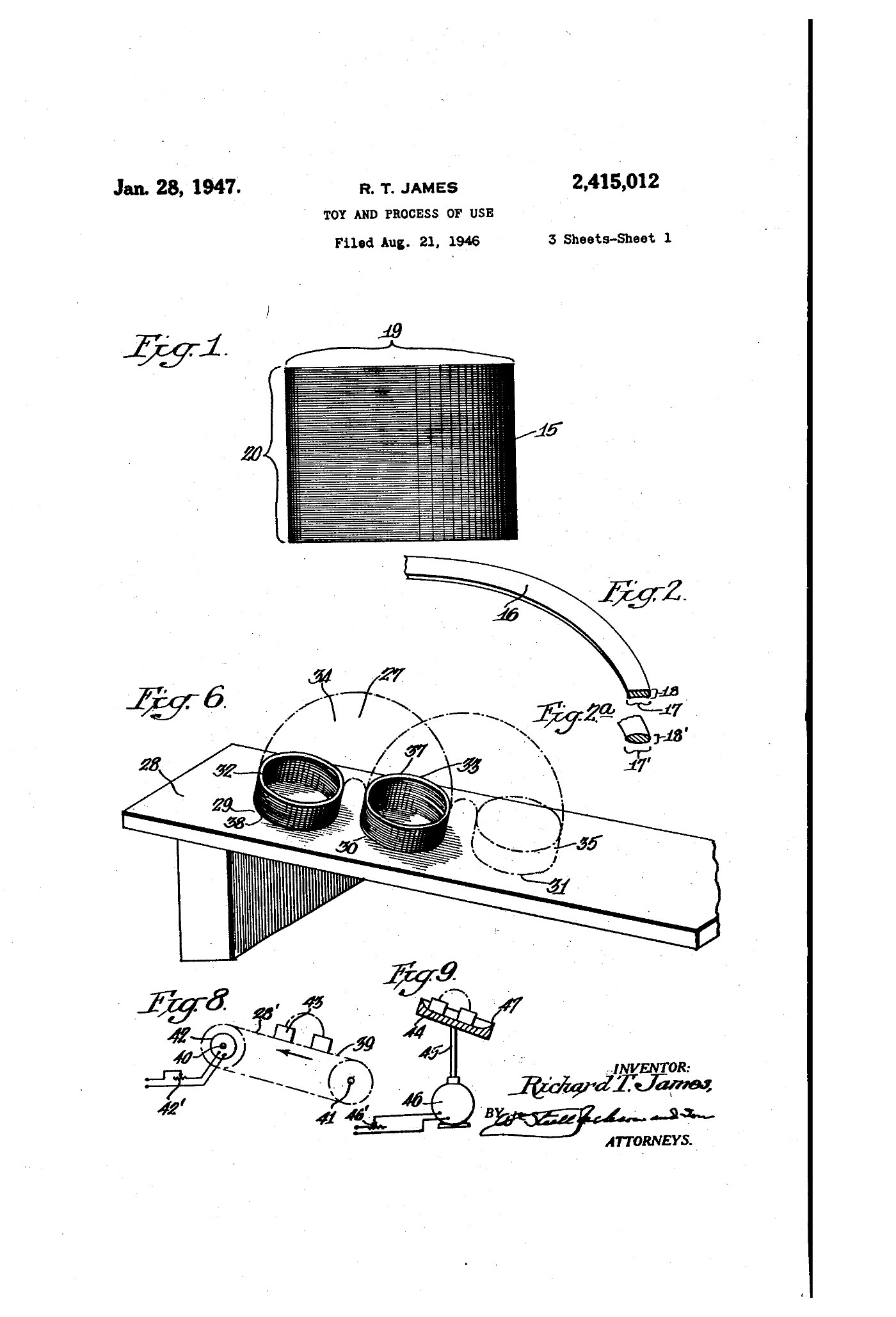
In 1943, Richard James was a naval engineer at the Cramp Shipbuilding Co. in Philadelphia. He was trying to design a spring that would keep sensitive instruments steady on ships at sea. One of his test springs fell and kept going, walking end over end across the floor, the encyclopedia reported.
He spent about two more years testing metals and proportions. Betty went through the dictionary looking for a name and landed on “slinky,” which she took to mean graceful in movement. The couple started the business with $500, Legacy.com reported.
Ninety minutes at Gimbels
On the evening of Nov. 27, 1945, Gimbels department store in Philadelphia gave the Jameses the end of a counter to show how the toy walked. Betty was not confident. “I was so scared that no one would buy them, I called a friend and asked her to come along,” she told the Deseret News in 1988.
They didn’t need the friend. “I was so taken aback when I saw this crowd of people, and everyone was waving dollar bills,” she said. All 400 Slinkys sold, at $1 each, in about 90 minutes.
The founder who left
The toy did well for about a decade. Then sales fell and Richard wanted out, the Linda Hall Library reported. In 1960 he left for Bolivia to work with Wycliffe Bible Translators. Betty later said he had given so much money to the group that the company was almost bankrupt, the encyclopedia reported. He died in South America in 1974.
Wait, what? The inventor left. The person who saved the company never claimed to understand the engineering at all. “He was a dreamer,” she said of her husband.
The CEO nobody planned for
Betty took over and divorced Richard, according to Wikipedia. She wrapped Slinkys by hand at night to keep orders moving. “When we first moved into this building, I used to clean the toilets, too,” she told the Deseret News.
In 1963, she mortgaged her house to promote the Slinky at the New York Toy Fair, where the big buyers shopped. It brought new orders, the encyclopedia reported. She paid for a television jingle in the early 1960s and kept running it until the country could hum it. By one count it became the longest-running jingle in advertising history.
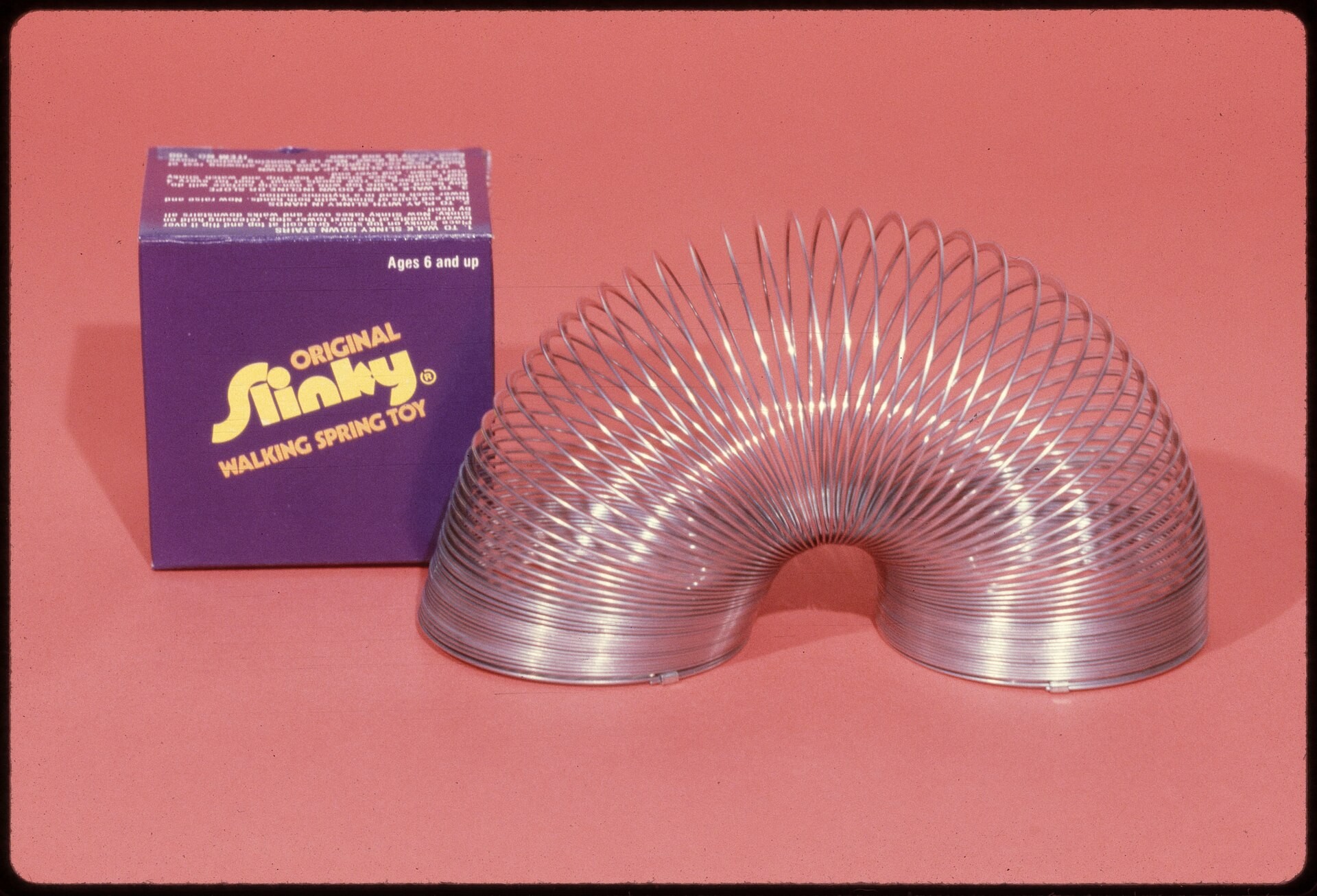
She moved production to Hollidaysburg, Pennsylvania, in 1964, and she kept the price low so families without much money could still afford one, the Linda Hall Library reported. She ran the company until she sold it in 1998. The toy industry put her in its hall of fame in 2001. She died in 2008 at 90, and by then more than 300 million Slinkys had been sold.
Steal this
Here’s what this means for your business:
- If you walked away tomorrow, who would keep it running? Betty didn’t know the engineering, but she knew the orders, the customers and the work. Who in your company knows the business, not just the product, well enough to run it without you?
- Are you in the room where your buyers make decisions? Betty bet her house to stand in front of buyers at the Toy Fair. Where do your best customers go to decide who they’ll buy from, and when were you last there?
- What would customers say about you without being prompted? A jingle kept the Slinky in people’s heads for decades. If you asked ten customers to describe you in one sentence, would they all say the same thing? Would it be the thing you want?
Sources: Encyclopedia of Greater Philadelphia; Deseret News (1988); Linda Hall Library; Legacy.com; Wikipedia: Slinky; U.S. Patent 2,415,012.
Who would run your company without you? Owners trade answers inside C-SUITE NETWORK™.