Reclaiming the Flame: How Burger King Is Winning Back Customers with Tom Curtis
Tom Curtis · 23 min · Oct 8, 2026
Burger King is in the middle of a major comeback and Tom Curtis, President of Burger King U.S. & Canada, says it starts with listening. From fixing the Whopper and reinventing the nuggets to empowering franchisees and bringing human connection back into the restaurant experience,… Read more
About this episode
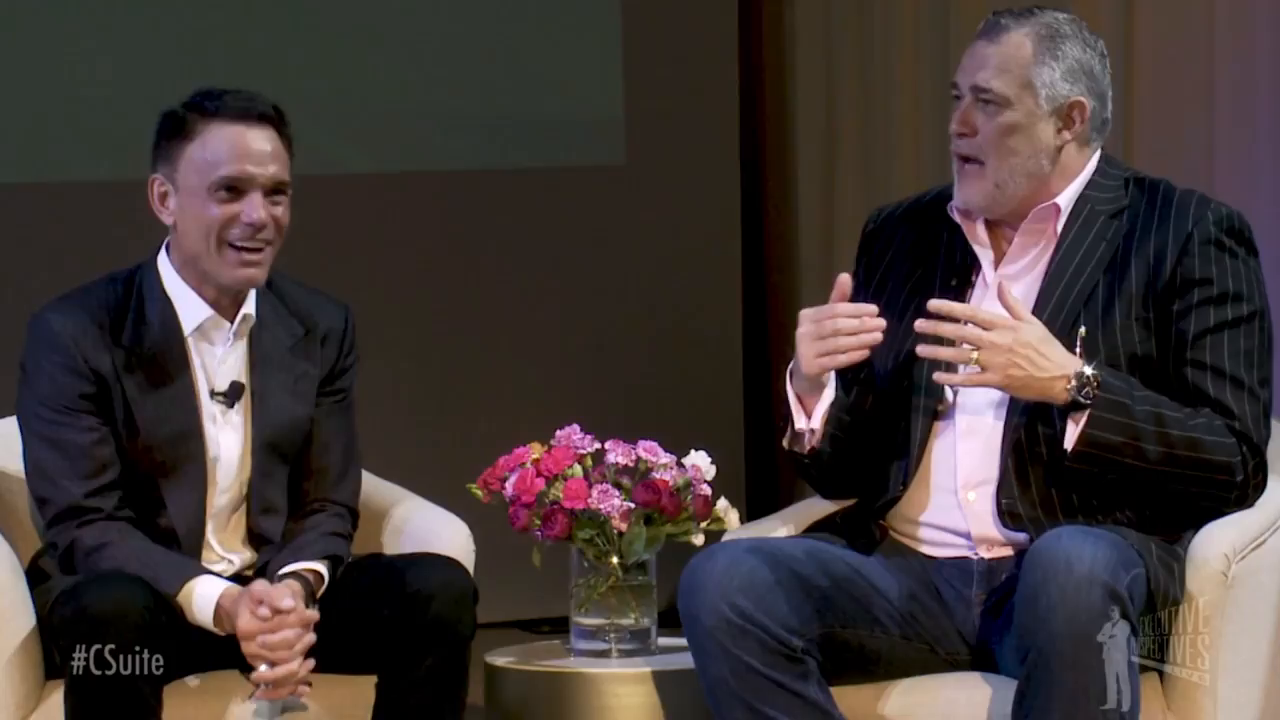
Burger King is in the middle of a major comeback and Tom Curtis, President of Burger King U.S. & Canada, says it starts with listening. From fixing the Whopper and reinventing the nuggets to empowering franchisees and bringing human connection back into the restaurant experience, Curtis shares how Burger King is rebuilding the brand from the ground up. He and Jeffrey Hayzlett discuss why great turnarounds aren't about chasing trends, they're about getting the fundamentals right, executing relentlessly, and giving customers a reason to believe again.
About All Business
Direct, unscripted conversations with CEOs, entrepreneurs and leaders about how they really run their companies.
Hosted by Jeffrey Hayzlett · 91 episodes
See all episodesFull transcript
Success transcends cities. As one of the world's most respected business leaders, I know what it takes. Join me now as I sit down with fellow leaders and we share our insights into how you can be successful. My name is Jeffrey Hayzlett and this is All Business. Burger King is having a comeback and this one is about a lot more than burgers.
My guest today is Tom Curtis, president of Burger King, US and Canada, a restaurant industry veteran who spent 35 years at Domino's before taking the helm at Burger King. Under his leadership, the brand has been executing its reclaimed the flame strategy, investing in restaurants, technology operations, franchises, and perhaps most importantly, listening directly to its guest. With US Same Store sales up 8.5% and Q2, Burger King has some serious momentum, but Tom knows that a turnaround isn't built on one quarter. It's built on getting the fundamentals right, earning back trust, and giving people a reason to come back. Today we're talking about how you transform iconic brand, empower franchisees, and listen to customers, and turn a comeback into sustainable growth.
Tom, welcome to all business with Jeffery Hazler. Thanks Jeff, great to be here. I love that you use the word execution because that's really what there's been. It's all about, I mean it's 10% strategy, 90% the hard work that you do every day and eventually somebody notices. Yeah, well I noticed.
I saw the commercial and I go whoa, now I also know your background with Domino's and I saw a playbook, oh play, come out of the playbook from Domino's in Toburger King because you and some of the leadership are down there right? Absolutely and history doesn't repeat itself but it often rhymes. Well you hope it rhymes and you hope it does repeat itself. So far the results say that it can be repeated. Yeah and I tell people because what you did back then and what you're doing right now is telling the truth.
Yes. Right? Yes. You're just being transparent about things. Being honest about your shortcomings, what you've got right, what you've done wrong, and really listening to folks and taking action on exactly what you hear from them and what they tell you you need to get better at.
That sounds like pretty simple. Pretty common sense, right? I mean, if you listen to your customers and do what they say, they're going to give you money. Right. And that's what's happening.
And I think they feel empowered as well. they see their feedback, the feedback that they're giving us, they're telling their friends, hey, I told Tom to fix the nuggets. They're fixing the nuggets. Yeah, did you really not like the nuggets? I wasn't a fan, I wanna say that, and I wasn't proud of them most importantly, and I was proud of the WAPER, one of the things that we do best, and we've all done best, but we also elevated the WAPER based on guest feedback. And what the art it is, is really listening to exactly what they're saying.
What they said about the Whopper and the early going when we started this listening campaign was, hey, your Whopper's the best sandwich in the business. But sometimes it's smushed, or the bread isn't quite right. It doesn't seem the bun, I don't like the bun, I love the burger. So you gotta really get literal in how you take their feedback and turn it into action. Well, you've got some pretty impressive momentum right now.
I mean, 8.5%, US same store of sales that you had, in the last couple of quarters. When you look at that number, what do you believe is really driving the turnaround? I think it's the foundational work that was done before we started talking about it. 2022, we did launch, reclaim the flame, and started working on operations, started working on the culture and the restaurants, the culture of hospitality that is non-existent today in fast food, working on the actual quality and the image of the restaurants, pouring hundreds of millions of dollars of our money at Burger King and billions of dollars of franchisee money into improving those restaurants. And then really the story just started getting told this year and the story's driving the result. Yeah, I mean, you're advertising the way you're telling the story.
I mean, we pay attention when you fire the king. Yes. That was a big move. Did you have that conversation in the C-suite? Yes.
And actually, the king had been put on leave of absence several years ago because the persona that the king had. It wasn't good. It was creepy. It was like your drunk uncle. The word was creepy.
In fact, I've talked to some people about preparing for the show. They actually used the word the creepy king. It's like, yeah, which it's not the brand promise that you guys hold. No, and it really was an attempt to get attention. That's not a genuine way to really earn somebody's business and earn their trust.
You've got to earn that through being honest and through giving them higher quality and at a consistent price and that's what the story needs to be, not a creepy king. Or sexy advertising. My former CEO at Codec once gave me some great advice and said, you can do whatever you want because remember if you start selling sex, if you start selling comedy, you've got nothing left. You've got to really get back to the core, which is what you're doing. Now I want to remind people that are listening and watching right now that playbook from Dominos.
Your stock went from back then. I don't I can give you numbers. It was like 98 cents wasn't it? It was like nine three bucks. Three bucks.
Okay. I've been two and change. I okay Get my story telling a little bit more to every but it went up to $400 a share right over 500 Wow, so I stopped checking it for 400 brother. So that's a pretty good run In fact, I think it's the greatest stock rise ever. Yeah, I mean in that day There was a lot of story around technology and internet, the internet, the big thing at that time.
Mobile and all of those companies were the darlings of Wall Street and that's what everybody talked about. But quietly and under the surface there was a little company called Domino's that was just tearing it up. Yeah, it was super easy. Great to be a part of. So great to be a part of.
Well let's talk about being part of this. We'll be right back after this message. We are back in life with Tom Curtis, the president of Burger King in America and Canada. And so we're talking about reclaim the fame. That was back in 2022.
That's when you launched it four years back into the strategy. What did Burger King have to fundamentally change and what did you refuse to change about the brand? my former boss gave me an article that said, 10 iconic brands that will no longer be here in 10 years. Yeah, well, we were number five. Kodak was probably, but Kodak was on that. Burger King was number five.
I don't know what Kodak was. Yeah, but Burger King was number five. And when I got here and started to do my early investigation trying to understand where the brand was at, I loved the brand when I was a kid, but just came to understand that for decades really, the brand had let its assets deteriorate, had no culture around excellence in the restaurants and hospitality, which is so important to me. And really, the marketing, we talked about the creepy king, that wasn't appealing to folks. And there was really nothing going right except for one thing.
And that was the Wapur. And what was on the Wapur, which was a flame-grilled burger. And frankly, that's what we were founded on. That's where it's found. That's where it's been around.
It's been around forever. Yeah, and no microwaves, you see in some of the other ones. Right? This was always been that flame going across. Exactly.
And I think that we just needed to re-center on that core and realize our reason for being our purpose. And I think we've done that quite well. We got away from a lot of the LTOs, the limited time offers that brands often do. They give you a momentary burst of interest, but then you go right back to baseline because they made the restaurant so complicated to run. And so just stay in on the Whopper flame grilling and having it your way through listening to guests.
I still like the original chicken too. I still, that's one of my- It's still there? I know I had it the other day. It was very, very good. But the Whopper is and the Whopper juniors is staple our family and we do that.
So those are interesting products because we think about innovation, which is putting new things out there. We think about renovation, which is fixing things that are broken and we think about elevation. When it comes to the WAPER and the OCS original chicken sandwich, those are products and menu items that we need to elevate. They're great. They love them more.
Exactly. And what about the new wraps? You got these new wraps. And I know I've talked to a couple of other people. That's innovative.
And they love that. They're saying these are really good. That's innovation. So those are products we didn't have that opened up a whole new consideration set. looking for a lighter menu item, something more protein forward, come to us for wraps. And then the nuggets which were about to relaunch, that's renovation because in these calls that I took, I rarely got nugget love for anybody.
You put out your phone number. The last person I saw do that was Todd Davis at LifeLock. He actually got on camera and said, look, I'll protect you so much here is my Social Security Card and he held it up to the camera. Wow. half a million calls, we got a lot of calls. And, you know, so that was, but you've gotten thousands of calls yourself.
Yeah, I feel like now that you've said you've got a half a million calls, it's kind of, that made it disappointing. I thought it was, we're at about 125,000. Well, if you said text me, I think if you said text me, we would probably be good. But you have taken a couple thousand calls, which I have to commend you of being an executive and a busy, busy company. That says something about that's customer focus, right?
But you learn so much, you know, we try in this business to run our business spreadsheets and research that we get from our analytics department and that's great. That's great way to aggregate but you can't appreciate the human emotion unless you actually talk to people and then I think that's when you really learn the nuance of what you need to do, how you need to do it and how to take action. So what won't you change about the brand? The WAPR and Flane grilling, those will stay the same always. It's our reason for being.
You have to for any company. You've got to go find out what was the founder's passion and you've got to deliver on that passion in a new and modern way as you go through time. It's kind of like Kentucky fried chicken and gravy. And the gravy. Don't change the gravy.
Once they were trying to change the gravy, he was ready to run to the media. Cove, new coke, yeah. Exactly. Big mistakes and some of that. Why don't you learn coming over from another QSR brand in terms of dominoes?
Would you learn from pizza that you could put here? It's always been extremely important to me, the restaurant culture, and this idea of communicating with people directly. And that was true at Domino's, even though they were on a big technology run, doing a lot with technology. We're doing a lot with technology. We work with our digital app.
We invest a huge amount of time, effort, and resources into that. We invest in AI. But it's not a substitute for human interaction. People actually crave genuine interaction these days. Are you going to take it where I can only order through a kiosk?
No. You got it. If you want to order through a kiosk, you can. But guess what? We try to keep an eye on you from the lobby, from the counter, and say, if you're struggling with the kiosk, we're going to jump in and help.
And if you come up to the counter, we're going to gladly take your order. Now, that's very easy in this business when you do start to introduce technology into the restaurant space for team members to start to say, okay, I don't need to do that anymore. So there's a lot of training that's involved here as well to get people in the mindset of, okay, this technology is here to help you be a superhuman, not to eliminate the fact that you're a human. Right. And customers first.
Yes. I have a big question that I have to ask is that recently another burger brand, the CEO took a bite and it didn't go well. Do you go about eating your burgers the same way? Or do you... The way that I ate my burger was very genuine because I got a big lapa mayonnaise right on my face and I said, hey the only thing missing is an African.
It was just a natural moment I was having with our wonderful chef Amy and I did not say hey put these two together. The internet did that all on its own. Now once the thing got a little bit viral, we cut down our social media piece to be just that moment. But really it was, you've got to genuinely love your product. If you don't, yeah.
If you don't love it, you can't sell it. So the real test of listening isn't hearing people, it's doing something with what they tell you. Can you give us an example where guests be back directly changed a decision of Burger King? Everything that you've seen this year is exactly that. And we have three immediate examples.
The first was the elevation of the Whopper where they said they love the Whopper, but it's smushed and I don't like the bun. So we know exactly where to go. And if we looked at research, might have said, hey, don't change the Whopper, but just through talking to guests and hearing their emotion around what they loved, but what was missing. And then we just launched your way champion, which is somebody in the restaurant that proactively visits tables or leans out the window and says, how's your day going? And that was because of the insight that we learned from listening, not from the research, that people just don't feel heard or valued anymore in fast food.
And then once again, the complete overhaul of the nuggets and once again, the flavor of the listening there, the flavor of the input that we got was, guys, you got to start all over. And so we started all over. And you have different vendors, different, certainly different recipe. recipe, different breading, better packaging, different marinade for the chicken, a thicker cut. I mean, it's really souped nuts. The chickens have fairly big item these days in burger places, right?
It really is, but what I actually see other burger chains doing is saying, hey, chicken is a thing, we're going to go chase chicken, and that's going to be our strategy. I, we are burger chain. And do I need to? Yeah, do I need do I need to appeal to the veto vote for folks who come in and want some chicken? Absolutely and it needs to be great chicken, but we are burgers first and foremost.
That's awesome How are the franchisees? In fact, let's take a break. Yeah, and we're gonna come right back. I want to ask that question I'm gonna come back We are back live from the New York Stock Exchange I'm Jeffrey Hazard host of all business with Jeff Rehazone see sweet radio and see sweet TV I'm talking to Tom Curtis, the president of Burger King in both the US and Canada. I want to get to the Canada question too because we got a lot going on between the United States.
But right before the break, I said, hey, franchisees, how many do you got, by the way? Little shy of 400 right now. We think that number will grow. Oh, wow. So in the numbers that you have, how's the franchisee taking it?
That was a franchisee myself for 20 years. I mean, I feel like I can speak the language and I understand where they're coming from. Frankly, I've been a franchisee or a franchisee myself. So it's a very important thing to do. I was going to ask if you'd ever worked in a shift.
I've worked more than a couple. Yeah, it's kind of fantastic. Yeah, so having been a franchisee, I know that the franchisees are more committed to this brand than even we corporate citizens are. Because they're here their whole lives. They hand these things down through generations.
And frankly, they put their hard earned money every last ounce of it into these businesses. If we can grow their restaurant cash flow, that goes right back into the restaurants. That's a big part of your business. A thousand percent. Is really servicing them.
I know we're servicing the customer. You've got that business. There are. Exactly. 100%. But you're working day in and day out.
You have franchise council, ad council, I'm sure you have all those different things. So I think that's got to be a big important part. Yeah, we have a technical, there's five different councils. Technology, yeah. Let me ask you, I've got a lot going on with Canada right now with what the president's done in terms of trade.
You've got foot on both sides of the border, right? How is that sometimes? What's that like between the franchisees? And I don't know. The franchisees, they're fantastic.
And they're Canadian franchisees. They know their constituents and their customers well. And it's far bigger in the news than it is in the way that we interact with our partners to the north. I have somebody that reports to me in Canada. And we talk several times a week on what he's doing, to move the brand forward.
It's not a lot dissimilar to what we're doing here. Other than here, we're trying to reinvent a brand that people have forgotten or that let them down. In Canada, we're trying to introduce a brand that often people haven't even ever spent time with. They're all familiar with the name, but there's a good two thirds of Canadians that have never been to a Burger King. It's interesting.
Certainly probably been to attend Hortons, but yeah, no without question. But Burger King started as a rebel brand. Yes. I mean, if you really go back to its history, it was a rebel brand taken on the arches, right? And that was a big portion of what they were.
And then as they developed, became their own entity, they became less rebellious, right? Yes. And people often say you're the rebellious brand. And I think that that's a notion that some former management teams took a little too literally. Because rebellion means, hey, I'm not going to do what I'm supposed to do.
No, it's, to me, it means cool. It's different. Well, sometimes it's being associated with it's cool, but what I'd like to think is we need to march to the beat of our own drummer. We need to do us. It's not rebelling against society.
It's not a drunk creepy king. It's let's do us. And I've spent a lot of time since I got here trying to keep everybody's focus off the competition. And once again, kind of promoting the founder's mentality and what he stood for. So when you went to the franchisees and said we're going to do this, what was the first reaction.
The first reaction was we'd love to but we have no money because the brand was very struggling and it was fair. So we actually crafted a plan with them where we invested first and if in a two-year period we were able to get unit level profitability to a certain number then they would start investing and so we delivered on our promise and they've delivered on theirs. Most people don't understand when you go to a franchise show or your franchise meeting, a meeting of the owners, you're looking at every line item and you have that measured down, they know what they're doing, they know where they stand, they know where they stand in California against, they know California knows how they stand against Nevada and so forth, right? I mean, they're really measured. I have done a lot of talks with groups like yours and it's always amazed me how well those small businesses have those resources. part of the magic of being part of a franchise system.
As you have a built-in community of, and I had this before, when I was a franchisee, we're always talking to each other, comparing notes, trying to decide if we thought what corporate was doing made sense, and if we were going to support it. And once again, having been a franchisee, I think that's given me a unique ability here to band together with my franchisees, to our franchisees, and build a plan together. They know that I know what matters in this business. Are you still a franchisey? No, I'm not because that'd be someone A little conflict of interest.
Yes. Well boy, what I love to be someday. It would be amazing to be able to see things I've learned. Yeah exactly right right. Yeah, you went here on the other side of it It's got as good and bad and a little bit of ugly sure on both sides Yeah, so how has you're traded right here in the New York stock exchange?
How has everything responded in the marketplace? Yeah, it's really starting to show the last couple of quarters in the strength in our stock price relative to others in the space And I think for us not just at Burger King But in the other sister brands that are part of our BI. Yeah, you have a number of other companies. Yeah, we're learning from each other and Everybody's seeing this thesis of investing in the brand and partnering with your franchisees and being focused on restaurant level cash flow and and they're saying, okay, this is what works. It takes a little bit of time, but if you stay committed to it and you stay on your plan, that this is the way you grow restaurant brand.
Let me ask you this one last question. You've introduced your way champion role and the Warper Guarantee, which I think is really cool. What did you learn about the customer experience that convinced you that the restaurant manager role needed to evolve? I think that just watching not only in our business, but in other businesses, Watching the managers get more absorbed in trying to manage the metrics, trying to check all the boxes and do all the back of house work that they had to do, the restaurant manager job became less of a customer service job. And people, like I said, people want that.
People want human connection. Sometimes they don't want to initiate it. They're used to working on their phones, but they really do enjoy actually talking to a person. And I think that giving them that focus and the training and the guidance that that's what we're looking for in management has really started to swing the pendulum and get them out in the lobbies and at the drive-thru's where they're talking to me. I've been waiting for a restaurant like yours to swing the pendulum back to its customers and people, which I think is really cool.
So Burger King may have reclaimed the flame, but it sounds like the real mission now is making sure it never goes out. So thank you. It's really day. It's still early. We're gonna keep going.
Thanks for being on our business. We really appreciate it. Thank you very much. much. Well, at the end of every show I'd like to talk about what I learned and what I learned from Tom Curtis is that the great turnaround doesn't start with reinventing the business. It starts with listening.
Got that? Listening. Fixing the fundamentals and giving your people and your customers a reason to believe again. Burger King isn't just reclaiming the flame, they're proving that when you listen and act growth follows. Don't forget tune in next week and listen to all business with Jeff Rae's at right here at the New York Stock Exchange on C-Suite Radio and C-Suite TV.
Thanks for listening and watching.
Read more from Jeffrey Hayzlett
More from All Business
ABOUT C-SUITE NETWORK™

C-SUITE NETWORK™ is where executives go to grow visibility, authority, and revenue — through curated introductions, executive-only events, and a media network that puts your expertise in front of the right audience.
MEMBERSHIP
EVENTS
COMPANY
© 2026 C-SUITE NETWORK™ Powered by