AI Is More Than Cost Cutting: The Human Advantage with Dr. Angela Jackson
Dr. Angela Jackson · 24 min · Oct 21, 2026
AI is changing business, but are companies using it to cut costs or create new opportunities for growth? On this episode of All Business with Jeffrey Hayzlett, Jeffrey sits down with Dr. Angela Jackson, CEO of Future Forward Strategies, Harvard lecturer and researcher, and bestselling… Read more
About this episode
AI is changing business, but are companies using it to cut costs or create new opportunities for growth? On this episode of All Business with Jeffrey Hayzlett, Jeffrey sits down with Dr. Angela Jackson, CEO of Future Forward Strategies, Harvard lecturer and researcher, and bestselling author of The Win Win Workplace. They discuss why the real opportunity in AI goes beyond efficiency, how leaders can empower employees to innovate, and why human agency, clear communication, and a willingness to rethink work will separate the companies that lead from those that fall behind. The challenge for business leaders is simple: don't just ask what AI can replace. Ask what it makes possible.
About All Business
Direct, unscripted conversations with CEOs, entrepreneurs and leaders about how they really run their companies.
Hosted by Jeffrey Hayzlett · 91 episodes
See all episodesFull transcript
Success transcends cities. As one of the world's most respected business leaders, I know what it takes. Join me now as I sit down with fellow leaders and we share our insights into how you can be successful. My name is Jeffrey Hayzlett and this is All Business. AIs changing the way businesses operate and forcing leaders to make pretty important choices.
Do you use AI to cut cost and replace work or do you use it to give your people the capacity to do more, create more and build what wasn't possible before? My guest today has spent her career thinking about that very question. Dr. Angela Jackson is a Harvard lecture and researcher, CEO of Future Forward Strategies, an author of the Win-Win Workplace, a New York Times bestseller. She's an expert on the future of work, organizational innovation, and what happens when companies invest in their people.
Today we're talking about AI, human agency, innovation, and what it really takes to build a business that wins for both the company and its people. Angela, welcome to all business with Jeffrey Hazel. Thank you so much for having Jeffrey. It is good to have you here to talk about what everybody's talking about. And let's start with a question I think every CEO should be asking right now.
What does AI allow organizations and their people to create that simply wasn't possible before? I love that we're starting with that question because many times when we're hearing conversations you look at the headway and it's about how many workers have we cut. Yeah, totally. It's about productivity, efficiency. That's not good enough.
I feel like it's and you put a comma there and what net new can you do because of that efficiency, what new products, how can you better serve communities, services that you can have, and that's the interesting conversation that I'm having now, and I'm watching CEOs who are having those conversations. Are they really getting into the boardrooms and having deep conversations? Because I feel that we've always had these superficial ones, and I used to be there, and every once in a while someone would raise their hand and ask a thought provoking question. Are they spending enough time thinking about the impact that they are going to have on the people? people? They're starting to and if you look at research that came out of BCG, they talk about the transformation that we're seeing with AI. 70% of it is going to be about the people.
So boardrooms aren't talking about the people. They're step behind. I was just listening to an earnings call with the company of Firm and you had them talking about the people there. They talked about the productivity that they had and with the engineers that they had but they said what more can we do with these aim engineers that we couldn't do before that AI makes possible. So empower them, which is over.
That can power them. And that's the thing. You've got all this history and all this learning and education and investment quite frankly in the people. Why wouldn't you want to turn that on even more? Well, if you think about the old ways of work, that's not what we were meant to do, right?
And so people were brought in to do one thing to do it well. And then they could check out at the end of the day and we'd have an innovation department. That's not good enough anymore, right? We need everyone who's looking around the corner and thinking about how they can add value with this new technology, but there's no one has the playbook. And so I'm really interested in following those companies who are thinking about net new things that they can do with the technology and how they're embracing all of their workers.
They're not just talking about cutting people because there's only so much you can cut at the end of the day, you've got to think about what new products, new services that you can create because of this technology. I'm thinking about the innovation department because I was cheap marketing. I'm sorry, I can't do innovation, I'm only in marketing. And it just sounds crazy to me. It doesn't, I mean, you've been through this with your work at Kodak, right? watching this transformation you saw it.
I remember I was at, cut my teeth at Paramount when we were going to DVD to streaming, right? There was some people who were so resistant hanging onto that, still running after people to say, you know, you're duplicating a video, we're gonna arrest you for that, we're gonna charge you, where there was another set of people saying, what can we do now with this digital streaming when I say there was another group of things, Netflix, right? That was doing this real time. And so we need to watch the companies who are like taking a step back and saying, Yeah, we're going to be efficient. I'm never saying hire people, just to hire people.
We're going to reimagine roles. But again, we're looking at again, where can people be that force multiplier for innovation? For those that are watching, listening right now, we used to have CDs that you would mail. Mail, okay? This is what, in that first, first, get started with.
You mail and you can only get like four at a time and then you had to put them in the, obviously. It was a crazy thing way back then. All right, we're seeing AI drive enormous efficiencies, but we're also seeing, as we said, layoffs and workforce disruption. Are too many companies just looking at AI as the primary cost-cutting rather than growths? What's got to be done to switch that around, to say, hey, no, it's going to be a growth tool, and it's going to be a creative to add more people?
Well, there's two things that we've seen just in our research and with companies that we're watching. Those who are actually measuring it, and it's going to become costly for people just to think about AI and not really following up on the efficiency. We're seeing the cost of tokens right now. We're seeing the budgets that public companies are coming with. So I'm already seeing SIPOs are saying, who's the brakes on this?
What are we using this AI for? To what end? And when we start getting smart about that and asking those questions, you're gonna see that people are pushing more to revenue. I was advising a small startup company called Memrise. And they were talking about what they could do with their engineers two years ago versus what possibilities can they open now?
So before it was too costly to think about making five six different products at the same time. With AI, they're able to leverage it and spin up new ideas in 48 hours, right? And they can say yes, no, this is something that we want to pursue. So we have the power today. It's just going to be the incentive.
And I think what's going to happen is you're going to see some digital native companies. You're going to see more companies who are being more thoughtful about this. Walmart is one of them. I look at Lloyd's is another one of them. We're being thoughtful about their strategies.
We're going to see their performance. And other people are going to start to take note. is a good-forced leadership to think differently. Listen, I was watching a real earlier today where a woman was standing in front of her AI agent, her AI buddy, who was talking to her, okay? And she had eight screens going, she said, spin up this, then do this, then grab an agent for this, then grab an agent for this, and this, and I was like, whoa, this is forcing me to think differently about how I use it, but will it force the C-suite to do that? I think earnings, the market's gonna force them, right?
And you have an analyst. They're going to pay attention to that. They're going to pay attention. And we have analysts who are going deep on companies really understanding, again, what's that incremental value that's being added? And so what we're seeing, and we're starting to see this now, that the market is going to reward the companies who are doing things one differently, but who are able to increase their mode, right, and get exponential earnings from that.
And again, if we're looking at stock and investors, investors should be looking at their companies and saying, beyond the headlines of you fire to 100 people or a thousand people, what are you doing now? Because you can only again cut so much. So we need to be asking that as investors, as analysts, what is net new about this company that they are doing today that they couldn't have done 10 years ago? I'm tired of that story too. I think most of us are, because it doesn't make America what it needs to be.
So when more you sit, what's the difference between an AI efficiency strategy and an AI growth strategy? So when you talk about efficiency, you're hearing a lot just about cutting heads. You're talking about duplicate efforts. You have people who are saying, now we're not gonna hire anymore entry-level people. Everyone who comes is gonna have eight reports.
When you think about that, we really have to interrogate it. Because if we're not gonna have any more entry-level people, how do you train that next level of people? How do you get your next level of that? How do you get the job if you can't get the experience, right? Right, or are you gonna be paying more for talent?
There's downstream consequences. And so I think those are the ones that we have to be thoughtful about because sometimes the market rewards these headlines that we see without taking a deeper peek under the hood. Yeah, and I've been hearing a huge sucking sound from the people that are leaving and it's going over to those tokens, right? So it's not really replacing a lot of the costs. It's just moving it on the balance sheet, right?
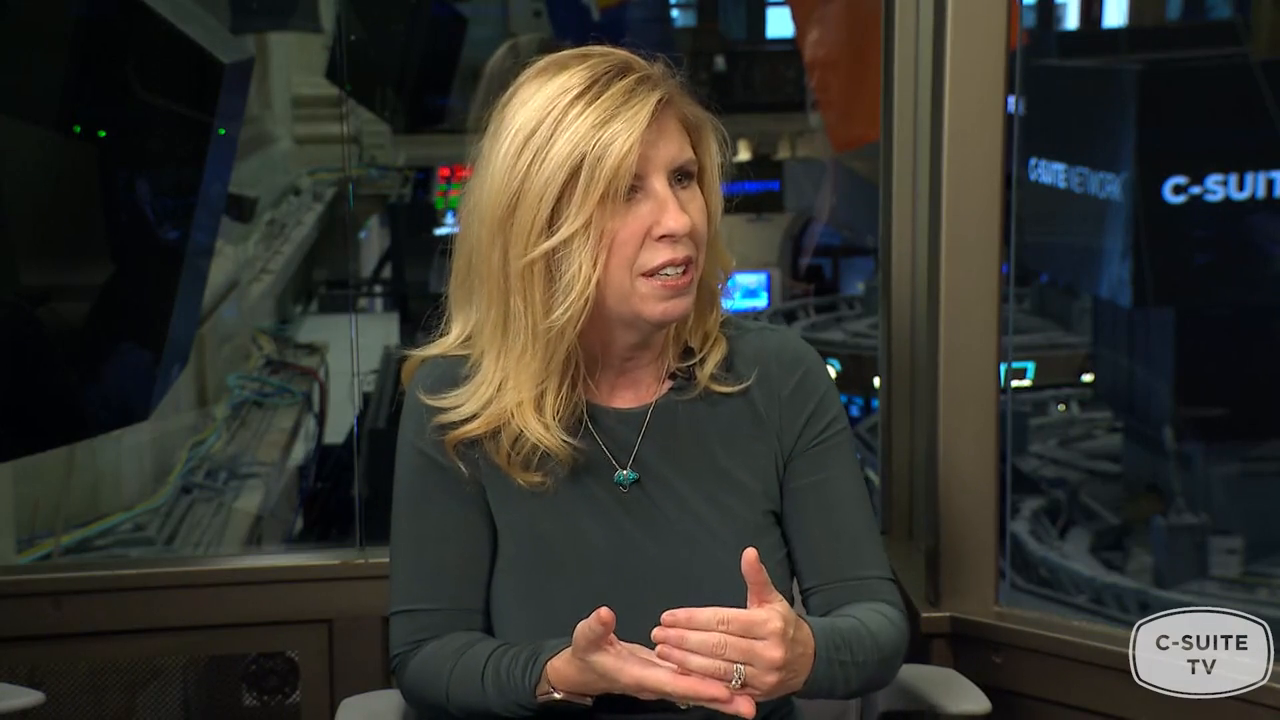
It's moving on the balance sheet. Well, speak about moving, we're taking a quick break and we'll be right back after this message. We are back live right here from the New York Stock Exchange with all business with Jeffery. Is it on C-Suite radio, C-Suite TV? I'm talking with Dr.
Angela Jackson, and we're talking about all things AI and all the change that's going on. We were doing this during the break. We're talking a little bit, you know, is the C-Suite up for this? And I'm thinking it's gonna be very tough. This is probably the toughest test we've seen.
You know, we've had the internet. We've had computerization. We've had digital. Okay, we had mobile, and now, then we had COVID, okay? Right?
So when most of us work so hard for so little, quite frankly, and now we've got this whole AI, which is causing headaches in the C-suite, right? Well, it's just a new rodeo, right? If it's a hard rodeo, it's a different way of thinking. I mean, it's like rodeo hell, this is like space cowboys. I mean, this is different.
This is, it's absolutely a new frontier. And you said we had COVID, we're still feeling it. We still have C-kosers still trying to get people back to work. Yes, correct. And at the same time, they're trying to implement this mass, you know, transformation and change management.
And that's what it's really about. And we think about this. This is about change management on how we work, well how do we find value and work, what activities have the most value? And so there's a reimagining of that happening. And to your point, the CEOs who are visionaries who are leaning into their people, who really understand the incremental value when we talk about humans and look, what does that mean for your company?
Not just to say, what does that tangibly mean, and where does that add value and capacity? And so the CEOs who want to lean and do that work, some of them say they want to, but as we see, this is gonna be a long road ahead of us, right? We're not gonna see the winners in one or two years. It's gonna be a little further down the line. I do too.
I think it's gonna take a little bit of time for it to shake out, too. We know what's real and what's gonna happen. You got all these different competing. Do you go with chat? Do you go with claw?
Do you go with grog? Do you go, I mean everybody, it's gonna be all the above, right, in some way, shape or form. For a lot of coming, do you think the employees realize how important this is? I mean, if you're fighting going back to work, don't you think maybe, hey, maybe I shouldn't fight going back to work, I should probably get my butt in that office so they see me, see what's going on, how can I contribute, how can I do it, and not be so remote? Well, I think the thing about employees in this moment, and I teach graduate students to have a exec ed, we need to know how you add value with AI.
Be you at home, be you in the office, FaceTime isn't gonna cut it either, just having enough time and doing the dance. Literally, how are you adding value in your position? because that position overnight could lead. It could be reimagined. We saw what Facebook and Meta did several months ago where they came in and said, we're gonna be an AI company. Didn't work so well, because dealing with change management people, by the way.
You look at their CTO, they said, we could have done some things differently. We have to bring people along. You had the bomb a C on, he was talking about transparency. This is really important. People may not understand, but it's our job as management to make them understand what's at stake and what the strategy is if you're going to bring them along and do something completely different.
I love that. And you talk about the human agency as becoming a competitive advantage. What exactly do you mean by human agency? And why does it become more valuable as AI takes over the routine work? Well, we talked about this a little bit earlier.
It's not enough to have an innovation department. We need everyone in their seat thinking about how they add value to the company. You need agency to do that. If you're sitting around afraid to fail or afraid to take risk, You need to go through seven or eight people to get permission to do something. That's slowing everyone down.
What do you mean by agency? So, agency? Giving him permission to do it. Agency is within my scope and my role, I feel like I can take risk. I can find new opportunities for business.
I can try and fail and be transparent about it. And I don't feel like I'm losing my job the next day. Yeah. In fact, I'm incentivized to do it. It's part of my job description.
It's part of the culture. You're talking crazy stuff now. I know people love, people say it's crazy, But when we look at the companies who are actually doing, there's some, it works time and time again, right? Even in my own company, I was like, why are you asking me? That's your job.
That's what you're supposed to be doing. That's what you're supposed to be doing. But we see companies do this all the time. I mean, it's not in the budget. We tried that once before.
It's a hard concept for people to get. Well, it is. And I think that's what's so big about this transformation that we're seeing. Everything before we look to the CEO, we look to the CCE, We look to the innovation department for direction. Now we're saying to people, we don't know what it looks like.
Again, this is a new frontier. So you have to have people imagine what could be possible for a company within the strategy, right? But also to push against, to say see something that's outside of the strategy, that there's a vehicle, there's a mechanism that that information can get to management without being blocked by multiple layers in a complex organization. I'm almost ready to start, I'll let my people go, let them go. You're getting able to give them.
Give them free, right? Yeah, I'm free to go do that. So if AI can increasingly handle execution, what human capabilities become the most valuable? Is it judgment? Is it creativity?
Relationships? Problem solving? Decision making? What are we looking for? We're really looking at all of it.
And at the intersection of those, right? And that only a human can do. You know, when I sit here with you, we can put AI in the room, but I can read your body language. I can let you hear your eyes. And that's why it's so important when people say we need people back in the office.
Yeah. can you can see but any investor, any company or CEOs, listen now, I'd get really clear about what's uniquely human about the roles. They have to have an analysis. If someone in a role, you can't wait for someone to tell you. You need to be telling your manager, your boss, and as a CEO, you should understand, what's that human percentage of it, right? That's gonna bring that innovation that we can't replace with tech, but even if we did replace it with AI, there's gonna be some very hard downstream consequences behind it.
Yeah, well, we're changing the entire dynamic. We're changing the way humans operate as well, right? We aren't changing. I mean, when I think about the use and the rapid adoption that we're seeing in AI in general, and that's just with people tinkering around the edges. Imagine if you could really take that and deploy that and serve us as some of the world's most difficult problems, some of the business problems that we have out there.
There's a significant potential, but again, it's a rewiring of work. It's a new way to be a CEO. We talk about level five leaders. You're gonna need someone who listens, who's gonna be okay with saying, I don't have, I've got four out of five. We don't have everything baked.
We actually need your help. It's gonna take a level of vulnerability that we haven't seen from management sometimes. Are you seeing management do that? I mean, like every day, I'm sending out things to the team. Someone will say something.
So I go and pull together the briefing, put it together, and send it to the team. Now, go give me this. Right? Yeah. You're seeing this more regularly because in the absence of communication, we see and we've seen this with our research.
We've looked over 200,000 people, people make up stories in their mind. So if you're sitting in your office and you think that everyone knows the strategy, actually you've got 56% of people saying they don't know the strategy. They don't know the strategy around AI. That's the real world. Not just AI.
Many companies don't know anything. Yeah, around anything, the company, the vision of the company, its values, I mean, that's pretty sad. That's loss productivity, right? That's a big gap that we can close and we can see value created in just that moment of bringing people along. So we're saying, communicate, bring people in, give them the agency so they can move on this and track it.
Yeah, on this agency thing, and I got to tell you, I'm ignorant about that. Is this something that you've said or is this something that's starting to take hold? So it's starting to take hold. It's something that we've been looking at for a while. When we started this research about 10 years ago, it was at the top.
It was around agency, it was around employee ownership mindset. I love it. They don't have stock options. Do they feel like they're an owner? that they have toys on, with this company. And those were the people who were gonna go the extra mile, because they feel like it's something in it to them.
That's why mission-driven businesses are, again, well-positioned healthcare organizations are well-positioned, because you got people there who are passionate about what they do. And now you're saying you're unlocking this new technology, again, that can be a force multiplier for them. Yeah, I love it. It's like drinking the Kuwait. I don't know what some of the HR companies don't always like that.
Or drinking the champagne. Can we drink the champagne? I like champagne. I'm a little caviar. Anyway, I love that idea.
All right, speaking of champagne, we'll be right back after this mess. We're going to get a glass and we'll be right back. Thanks. We are back. Angela Jackson, Dr.
Angela Jackson, of course, an author and everything else, leading your own company. And then we're talking about AI today. I want to know, what does it look like for a CEO to intentionally design an organization that increases human agency rather than diminishing? What's it look like? If you, if you, you, we said drinking the champagne before.
So he or she drinks that champagne. Now he wants to get the others to do it. How does that manifest itself? So the big thing that we want to go with and look at is the listening aspect of it. This is a time to really know your organization.
I've looked at over 1700 companies and I've been amazed that when I look at most of those companies, when you ask them and you ask their people, does management understand what we're doing? We hear overwhelmingly that they don't. When I ask companies, especially legacy companies, okay, you've got people who've had a 25, 26 year old tenure, how can you redeploy them? What skills do they have? Many times at the top of a button, they don't have that information.
And so we're really wanting to listen, we need to understand what skills and what value do the employees have that they think that they can bring the bear in this moment. And then we have the technology to turn these insights. There's a technology that I love called rapport that takes the insights from individual employees, gives it to senior management so they can see the trends, see the hot buttons to understand what's happening in the organization. It's not enough to have them once a year serving. At this point, you talk about the delay.
The technology is moving too fast. And so what we're seeing are more and more dynamic organizations. And there's a lot of exemplars out there, again, that are keeping their finger on the pulse of what's happening in their businesses. And again, who's your A-Players? How can you redeploy them?
What else do they want to do next? If you have a new role that you need to spend up in two weeks, a month from now, who is going to be on your target list to do that? These are things that we need to be thinking of succession in real time. How do you empower that employee to think a little bit different? Most employees I would think AI is going to hurt them rather than help them.
For instance, in our company, every single employee has some kind of AI agent working for and they've got some subscription that we're always using to utilize it because I want them to get through the stuff faster. Right? But you have to be clear with them. Some people are just doing things. So we, a study just came out with some colleagues at Harvard that you got people who are using AI because they think they should just be using AI.
So they're dilly-dallying. This is where we're seeing the issue with the tokens. We need them to make sure that they're clear on the strategy and how they're going to add value. Because if they're not clear on the strategy, then they're just doing things to what end. And again, the technology, the businesses moving so fast, we need people who are clear on the strategy, know what they want to do, and also know how they add value to the overall companies nor star.
I don't think I've ever heard Dilly Dowying mentioned in an interview here but this is good because that leads to Lolligaggers don't like them either. All right so your book is called The Win-Win Workplace. What have you learned about the connection between investing in employees and actually improving on the bottom line? The biggest thing the takeaway is they're not at odds. You know sometimes we talk about when investing people is the most valuable resource but we think that it's a lose you know that's going to be an expense. what we saw with the set of companies and we looked at the Fortune 500, $338, the majority of them that were investing in their people and actually measuring and I want to be clear on that.
We're measuring it just like you measure on the balance sheet. Those are the ones that we saw had outsized return. How do you measure that? So a lot of it's measuring retention. We're measuring turnover.
We're measuring time to productivity. And so these are real concrete measures that we can then dotted line chocosation and correlations to the fine lines. Yeah, time to project, that we sped up the launch if we've done this, if we've eliminated mistakes. We've done this in C's exactly. Those are big.
So, there's often assumption that what's good for employees and what's good for shareholders are competing priorities, right? We hear that like that. Why is that a false choice? Well, it's a big one when we talk about long term. And we know that the market is on quarters, but long term, we're seeing the value of durable sustainable companies are the ones that are maintaining their staff that are returning that are redeploying them at a moment that they know what they're good at and they can redeploy them to a new project.
Those are the companies are sustaining their values. When you have people who are not on board we're also seeing research that says you've seen work stoppages that are happened. You're seeing a pushback you know you saw that came with meta right when you said we're gonna transition where AI people said no we're actually not and so They have to re-look at their strategy. It's not enough to be the strong man, right? To say this is direction we're going, you have to bring others along.
And that's the biggest differentiator. And it's the hardest thing to do when you're moving so fast. 100%. So from a CEO and investor perspective, how should leaders think about employee capability, engagement, and opportunity as a driver of the enterprise value? The biggest one is it should be one of the key drivers. And if you don't have the people in your building that you can look at and think that they're the key drivers of that innovation of that value creation.
There's another conversation that we have to have. You don't have the right players there. And then that's the time that we might wanna look at a restructure or reorganization to think about that. But first you need to know who's in the building. And I tell you, after looking at these 1700 companies, a lot of management don't.
Yeah. Who do you think's owning AI? I don't know. That's a big question. Yeah.
I sit on a board myself. who should own AI? There's a risk in someone owning AI. Everyone should be owning and having a responsibility around AI. If you're waiting for one person to do it, that person's going to inadvertently be set up for failure. You can have someone who's the champion, right?
Who's out there, but everyone should own a piece of AI and how it's deployed within their jobs. They should be clean on it. Yeah, I think a lot of people look at AI as a destination, right? Not as a tool that you use. It's a journey as a continuum.
Yeah. Just at the beginning of this, right? And it's going to get smart. It's never going to be done. It's amazing to see these changes, amazing to see the impact.
I'll tell you that. So the future of work isn't about choosing between people and technology. It's about using technology to unleash what people are capable of creating. Dr. Andrew Jackson, thank you for helping us see what the future can look like and thanks for being on all business.
We're doing it. Thank you for having me. Hey, so at the end of every show, I like to talk about what I learned. And what I learned is that AI shouldn't just make a business more efficient. It should make its people more capable.
It's ideas bigger and its future more valuable. Well, as I said earlier, let my people go. That's what we need to do. We need to be thinking about more of it. I'm gonna be thinking about AI right here on all business with Jefferais, C-Suite Radio, C-Suite TV.
Live from the New York Stock Exchange. Don't forget, tell your business friends.
Read more from Jeffrey Hayzlett
More from All Business
ABOUT C-SUITE NETWORK™

C-SUITE NETWORK™ is where executives go to grow visibility, authority, and revenue — through curated introductions, executive-only events, and a media network that puts your expertise in front of the right audience.
MEMBERSHIP
EVENTS
COMPANY
© 2026 C-SUITE NETWORK™ Powered by