Quick take
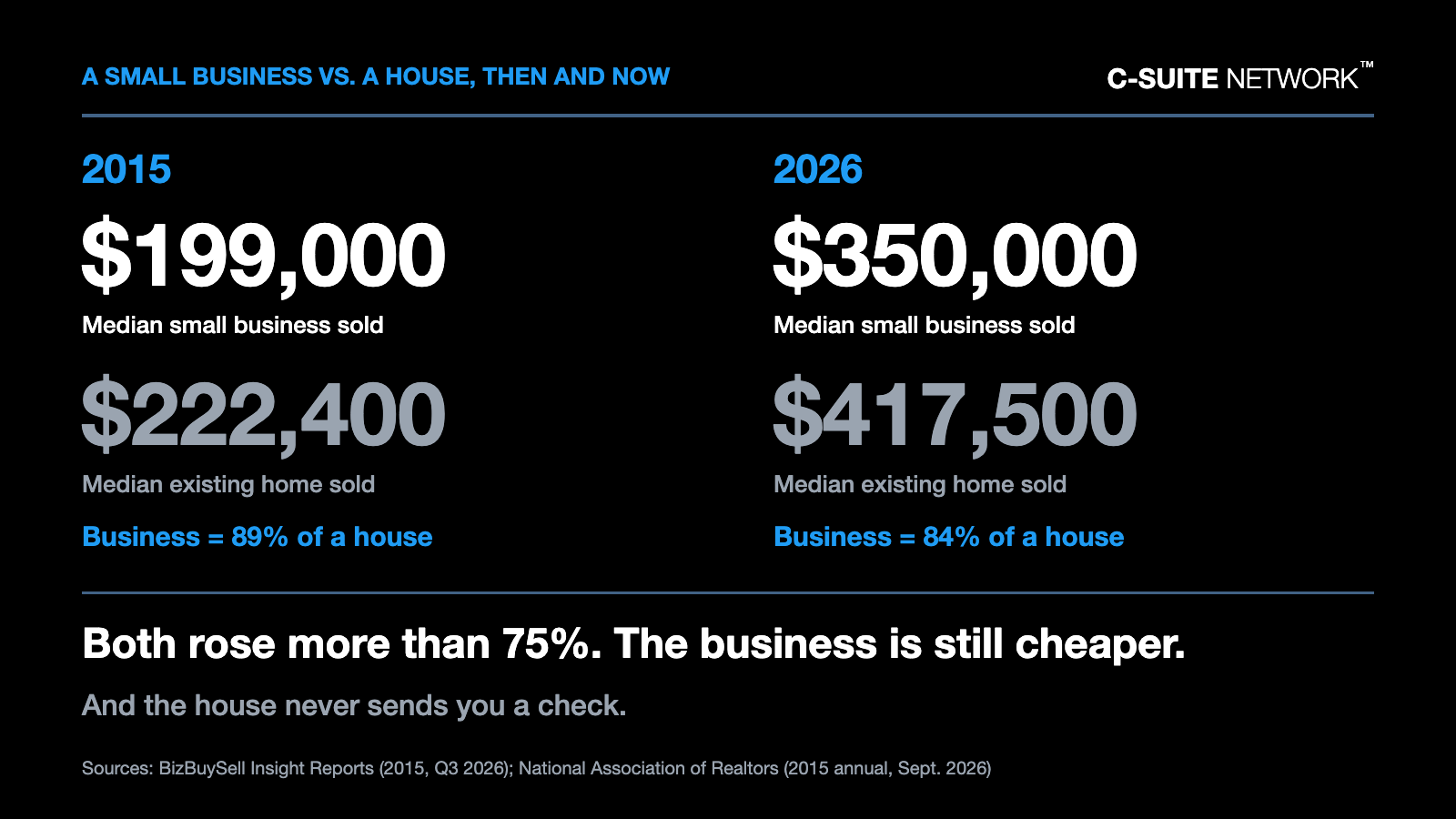
- The typical small business that sold last quarter went for $350,000, less than the typical American house. In 2015 it was the same story: $199,000 for a business, $222,400 for a house.
- Main Street businesses still sell for about 2.6 years of cash flow. Wall Street pays about 19 years of earnings for the S&P 500. That gap is the biggest bargain in business, and private equity has noticed.
- Why it matters now: Private equity is buying up local heating, plumbing and service companies by the dozen and stitching them into platforms worth billions. If you own a business, someone is doing the math on yours. If you want to buy one, the cheap seats are filling up.
In 1946, a sheet-metal shop opened in Homedale, Idaho. It became Owyhee Heating & Air Conditioning and moved to Nampa. For 76 years it was what most American businesses are: local, owner-run and worth whatever the next local buyer would pay for it.
In 2022, it was bought by Apex Service Partners, a private equity-backed company out of Texas. This past May, Apollo put roughly $2 billion into Apex at a valuation of about $10 billion. Apex didn’t exist until 2019. It now has more than 13,000 employees, 75 local brands and more than $3 billion in revenue.
A heating shop that started the year Truman was president is now a piece of a $10 billion company. That’s not a fluke. That’s the story of Main Street right now. And it starts with a number most people have never seen.
A business costs less than a house. It always has.
BizBuySell tracks small business sales across the country. In the third quarter of 2026, the median business sold for $350,000. In September, the median existing home sold for $417,500.
So is that new? No. Go back to 2015. The median business sold for $199,000. The median home sold for $222,400. Back then, a business cost about 89% of a house. Today it’s about 84%. Business prices are up 76% since then and home prices are up 88%, and the business is still the cheaper of the two.
Here’s the part that should stop you. The house costs you money every month. The business pays you. The median business sold last quarter produced $156,000 a year in cash flow. That number includes the owner’s own pay, so it’s a salary and a return rolled together, not free money. But try getting a house to hand you anything at all.
Main Street is still priced like it’s 1982
I’ve said it for years. The only difference between a business on Main Street and a business on Wall Street is the number of zeros. The problems are the same. The customers are the same. The math should be the same. It isn’t.
Small businesses sold last year for an average of 2.61 times their annual cash flow. In plain English, a buyer paid about two years and seven months of what the business earns. That number has barely moved. It was 2.49 in 2023.
Now look at Wall Street. As of October 9, the S&P 500 traded at 19.1 times its expected earnings for the next year. Investors are paying about 19 years of profit for a big public company. In 1982, when the long bull market began, the S&P traded at around 10 times earnings.
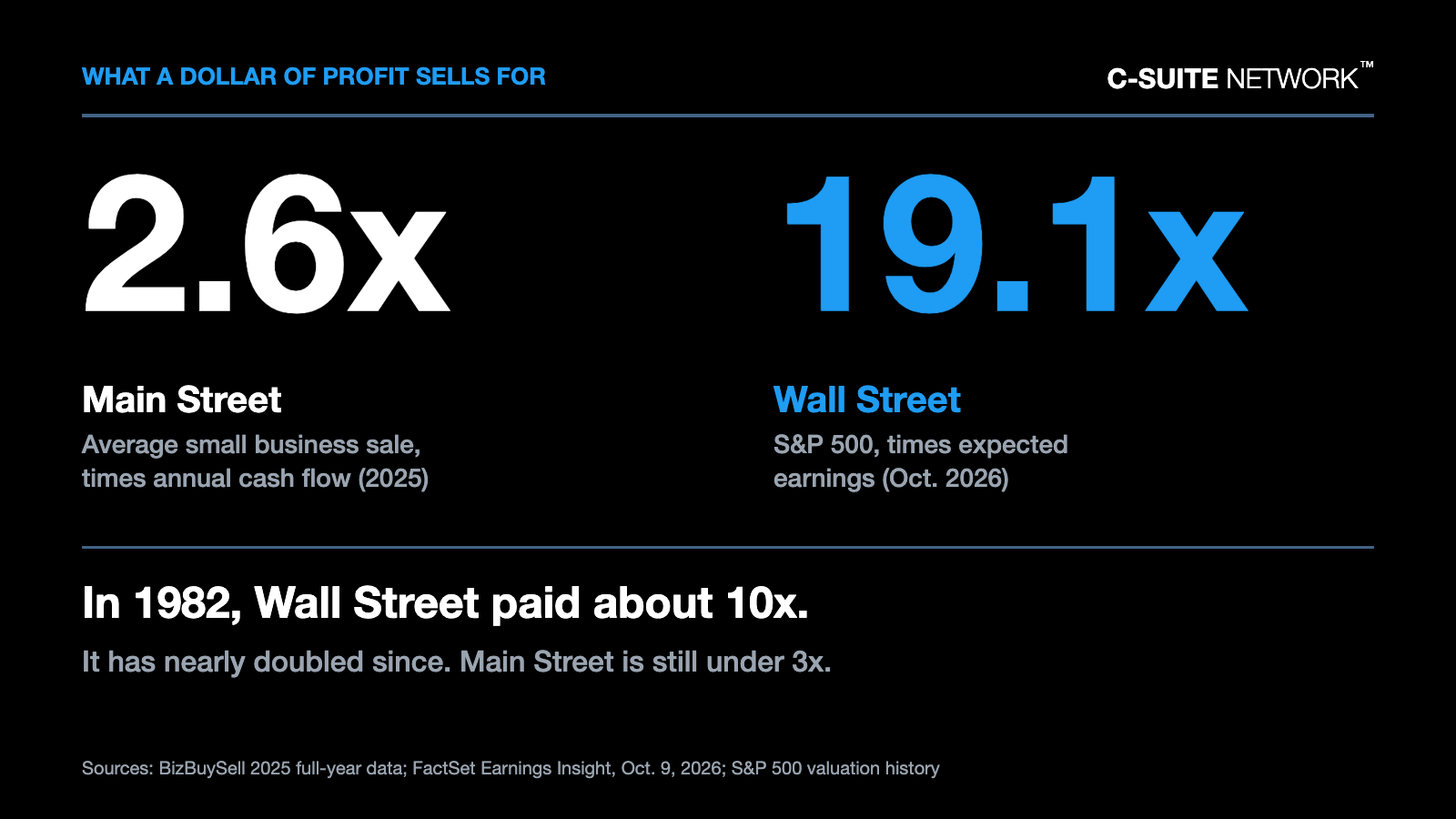
So since the early ’80s, Wall Street roughly doubled what it’s willing to pay for a dollar of earnings. Main Street still sells for less than three. Some of that gap is fair. A small business is riskier. It often depends on one person. You can’t sell it with a click. But a gap that big doesn’t stay unnoticed forever.
Wall Street noticed
Owyhee wasn’t alone. In the Boise area, one local report counted a string of long-time trade businesses sold to private equity groups in just a couple of years:
- Master Plumbing, started in 1948, rolled into a regional platform with about a dozen other companies.
- Western Heating & Air, 54 years of local ownership, sold a majority stake to a private equity firm that owns more than 40 companies.
- Diamond Heating and Cooling, Right Now Heating and Air, Perfect Plumbing & Air and others, all bought or backed by private equity.
Multiply that by every mid-sized city in America. That’s the play. Buy local service companies one at a time at small-business prices. Put them under one roof with shared marketing, buying power and back office. Then sell the whole thing as a big company at a big-company price.
Here’s the rough math, using reported industry numbers. Small owner-run HVAC and plumbing shops have been selling for about 2 to 3.5 times their earnings. Large assembled platforms have reportedly traded for 17 to 20 times. Say a shop earns $300,000 a year and sells for three times that, $900,000. Inside a platform valued at 18 times earnings, that same $300,000 is worth $5.4 million on paper. The owner got $900,000. Someone else made the other $4.5 million by putting the pieces together.
That’s not a crime. That’s capitalism. But if you own the shop, you’d better know which side of that math you’re on.
So are the good times over, or just getting started?
Both. It depends which chair you’re sitting in.
If you own a business, the good times are just getting started, but only for some owners. Big money is now shopping on Main Street, and that means more buyers and better prices for the right business. The right business looks a lot like what the buyers keep telling BizBuySell they want: reliable cash flow, clean financials and limited owner dependence. Only 22% of owners say they have a team that can run the place without them. Be one of them, and you get to choose who you sell to.
If you want to buy a business, the easy money in some industries is already gone. When private equity is bidding on the HVAC shop down the street, you’re not getting it at a small-business price. The median sale price jumped 17% in a year, even as the number of businesses sold fell 7%. Fewer deals, higher prices. And nearly half of buyers already think listed businesses are overvalued.
And let me be clear about something, because I’ve watched a lot of people get this wrong. A cheap price is not a reason to buy a business. Buying something you don’t understand because the multiple looks good is how you lose your savings at 2.6 times cash flow instead of 19. The people who win on Main Street buy what they know, in an industry they’ve worked in, with a plan to make it run without them. Passion alone is not enough. Someone’s got to pay the bills.
Before Your Next Meeting
- Know your number. Take what your business earns in a year, including your own pay, and multiply by 2.6. That’s roughly what a typical buyer pays today. If that number scares you, it’s telling you something.
- Know who else might want you. If you’re in a trade, health care or a service business with recurring customers, there may be a buyer out there paying a very different multiple. Ask your CPA or an M&A advisor who’s been buying in your industry.
- Ask the hard question: what happens to this business if I’m gone for a month? That answer is worth more than any growth plan when it’s time to sell.
- If you’re thinking about buying, start with the industry you know best. The best deal is the one where you already understand why the customers come back.
Sources: BizBuySell Insight Report, Q3 2026; BizBuySell 2025 full-year data; BizBuySell 2024 full-year report; BizBuySell 2015 full-year report; National Association of Realtors, September 2026; NAR 2015 annual median, via Los Angeles Times; FactSet Earnings Insight, Oct. 9, 2026; S&P 500 valuation history; Modern Distribution Management on Apex and Apollo; BoiseDev on local HVAC sales; HVAC and plumbing roll-up multiples; BizBuySell buyer demand survey.