Note from Evan Hackel: Today I am pleased to share this article from my partner and colleague Cordell Riley, Founder and President of Tortal Training.

Are You Aligning Your Training Goals with Your Business Goals?
Four Keys to Establish Congruency
 Be our guestYour next big opportunity could be in a room you're not in.Meet CEOs, founders and owners at a reception in your city or online. Your first event is on us.Request my guest seat →
By Cordell Riley
There are really two types of training. The first and most basic centers on teaching employees to improve their performance of required skills and tasks. The second type does that too, but produces far more transformational results, because it also teaches skills and behaviors that align with larger company initiatives and goals.
A way to illustrate this point is to envision a golf caddy as a trainer. That caddy can walk the course and hand his golfer one club at a time and say, “This is the best club for this shot.” That might improve the golfer’s game. But what if the caddy added a higher level of information by giving perspective on the overall layout of the hole, the potential hazards in the path, and even a strategy for playing the entire course?
Similar lessons apply in many settings. Do you want your son or daughter’s piano teacher to only teach the mechanics of pushing down a key, or to give an overview of a piece of music? If you are hiring a landscaper for your yard, do you want to discuss only one plant, or do you want to collaborate on an overall, transformational plan?
Given choices like those, of course, you prefer the bigger picture. But how do you do that in planning your company’s training process? Here are four important steps to take.
Define and Keep Your Most Important Objectives in Mind
Are you striving to create a company known for delivering superlative customer satisfaction? That is a great objective, but reaching it means defining specifics that can get you there—what you would like your training to achieve.
For example, you could plan to train your phone reps to resolve 90% of all complaints during customers’ first calls. Or you could focus on training those reps to deliver the kind of care that gets 90% of callers to report that they are “extremely satisfied” on post-call surveys. When you define goals, you can design training that achieves them.
Another way of stating this principle is, “begin with the end in mind.” That means understanding the bigger vision of what you would like your organization to become, then defining specific training steps that can get you there.
Break Down the Silo Walls
Trainers are often brought into different company sectors and encouraged to stay in them. They might teach only skills for servicing or installing products, providing customer service, preparing food, or selling on the retail floor. But what if your trainers thought outside the silos and delivered valuable things that result in improvements across your entire organization?
One way to reach this objective is to initiate discussions between your training team and the people who create marketing and advertising, manage your supply chain, oversee your online presence, and more. The more disciplines you invite into the process, the more likely your training team will find ways to make the training process more encompassing and effective.
Don’t Create Training in a Vacuum
Whether your training team works in–house or you use an outside training development company, make sure to engage them in conversations regarding company collateral. This should include everything from company quarterly reports, relevant trade publications, news stories about your organization, press releases, and all other pertinent documents you can provide. Do all those materials suggest any untapped opportunities to align your training specifics with larger trends, goals and initiatives?
Tie Your Training to Measurable Metrics
It is essential to develop a set of clear metrics to measure before and after training. It is the only way to understand what your training has accomplished and how much closer you are to meeting your goals.
Here are some suggestions for developing metrics that don’t just gather data, but reveal deeper progress:
- If your vision is to become a leader in customer service and retention, you can survey customers before and after your employees have gone through the training program. You should ask them about their overall satisfaction with their last purchase, the likelihood they will recommend you to other customers, and other factors.
- If you want to gain maximum value from a limited–time offer and offer training to support that goal, your goal could be a certain percentage of sales improvement among employees who took the training. Measure and report on those results after the training has been delivered.
- If you are implementing HR training in an effort to increase employee retention and become an “employer of choice” for job-seekers, you can measure retention rates before and after training and survey employees on metrics like, “I see a clear career path if I remain employed here” or, “I understand the criteria that my supervisor and company use to evaluate my performance and progress in the company.”
In Conclusion . . .
If you ask a group of businesspeople to define what training is, chances are that most of them will say something like, “Training is a process that teaches people the skills they need to do their jobs better.” Of course, that is true. But if you then go on to ask a series of deeper questions like, “Wouldn’t you like your training to build a workforce that builds your brand . . . helps your company achieve its mission . . . and communicates what you stand for to the world?”, I believe that all those business people will enthusiastically reply, “Yes, we would!”
As you launch new training initiatives or refine those you already have, I urge you to keep those larger issues in mind. The better you can align training with them, the more successful you can become.
About the Author
Cordell Riley is the founder and president of Tortal Training, a leading provider of training solutions in the franchise industry. Cordell is a 20-year franchise veteran and a Certified Franchise Executive. Before joining Tortal, Cordell was with Driven Brands in various Operations and Training roles with increasing levels of responsibility. He currently serves on the Educational Foundation for the International Franchise Association. For more information on Cordell Riley, please visit www.Tortal.net.
Opinions expressed by C-Suite Network contributors are their own.
 The CEO Who Built a Company Around Language Just Wrote the Book That Explains Why Language Is the Most Important Technology in Human HistoryBy Michael Beas
 Medigap Medicare Supplement InsuranceBy Jeffrey Cline
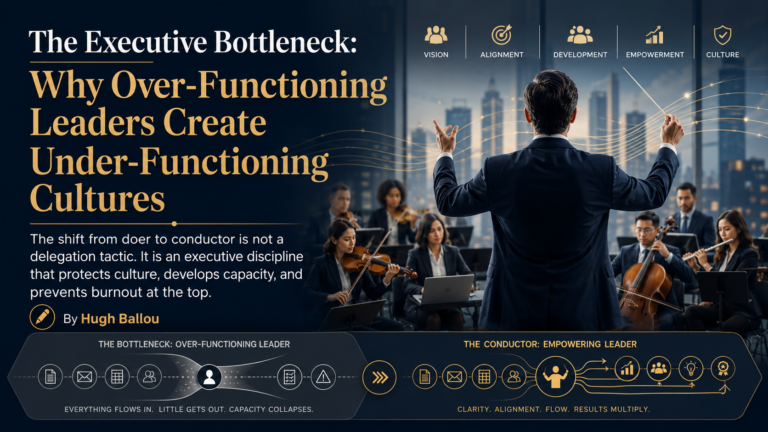 The Executive Bottleneck: Why Over-Functioning Leaders Create Under-Functioning CulturesBy Hugh Ballou
 C-Suite TV · 23 minWho Owns Your Health Data? Building Trust in the Future of Healthcare with Deborah Bussière
 C-Suite Radio · Unshelling Medicine: Self Care Benefits and Mental Health Tips for Healthcare Recipients 💊🩺Have You Lost Yourself to Caregiving?With Linda PernialUMP 74
 Chairman's Corner · Jeffrey HayzlettYour Best Performer Might Be Your Biggest Problem. And It’s Contagious.
Meet the founders, CEOs and operators behind stories like this one. Next reception: NYC Executive Reception, Tue, Nov 24.
Attend as a guestMembership: $100/mo →