With President’s Weekend upon us in the United States, it’s an opportune moment to delve into the essence of communication. Whether steering a household or a country, exceptional leadership finds its roots in effective communication.
A timeless biblical verse resonates, “Death and life are in the power of the tongue,” underscoring the profound impact words hold. The Conscious Parenting Revolution places a pivotal emphasis on the Art of Compassionate Communication. Within our core teachings, we empower parents and children alike with methods and tools for listening with love and speaking from the heart, fostering the repair of family relationships.
Central to our conscious parenting philosophy is the practice of supportive communication. This approach aims to uplift rather than tear down, irrespective of the circumstances — be it calm or stressful, charged or joyful.
For those moments when words seem elusive in communicating with your children, consider integrating some basic conscious parenting language for effective and nurturing communication.
 Be our guestYour next big opportunity could be in a room you're not in.Meet CEOs, founders and owners at a reception in your city or online. Your first event is on us.Request my guest seat →
Situation: You’re caught in an argument or a tense circumstance.
CPR Language: Instead of “You always” or “You never,” say “It seems/feels.”
When faced with a potential argument, take a step back. Rather than accusatory statements like “You never clean your room,” opt for a less aggressive approach such as “It seems that you’re having a hard time keeping your room tidy.” The shift from absolutes like “never” and “always” helps foster an open dialogue, encouraging your child to express the root of the issue.
Situation: A celebratory occasion, such as your child receiving high grades at school.
CPR Language: Instead of, “You’re so smart,” say, “Congratulations! I admire how hard you worked on that!”
Emphasizing acknowledgement over praise is a communication method we advocate. Rather than praising intelligence or appearance, celebrate the effort with statements like “Congratulations! I admire how hard you worked on that!” Acknowledgement fosters a connection to their own sense of accomplishment, promoting self-awareness.

Situation: Your child exhibited bad behavior.
CPR Language: Instead of, “As punishment you’ll…,” say, “Can you tell me what made you act/react in this way?”
Addressing bad behavior requires understanding its root. Instead of resorting to punishment, inquire about the cause. Was there a misunderstanding or an unmet need? This approach facilitates finding solutions together, emphasizing connection over judgment.
Situation: Describing your kid’s behavior.
CPR Language: Instead of, “You’re a mess,” say, “You made a mess.”
Distinguish between describing behavior and labeling the child. Use non-blameful descriptions to avoid undermining self-confidence or self-love. “You made a mess” focuses on the action, steering clear of negative labels.
Situation: You lost your temper/lashed out/made a mistake.
CPR Language: “I’m sorry.”
Contrary to traditional parenting beliefs, apologizing to children acknowledges our humanity. Saying “I’m sorry” communicates accountability and sets the stage for mending and healing.
In the realm of conscious parenting, words wield the power to bring comfort or devastation, joy or pain. Let us strive to communicate with our children using the love and compassion they inherently deserve. And finally, it’s essential to reflect on the question: How do you practice compassionate communication?
Love and Blessings,
Katherine
Opinions expressed by C-Suite Network contributors are their own.
 The CEO Who Built a Company Around Language Just Wrote the Book That Explains Why Language Is the Most Important Technology in Human HistoryBy Michael Beas
 Medigap Medicare Supplement InsuranceBy Jeffrey Cline
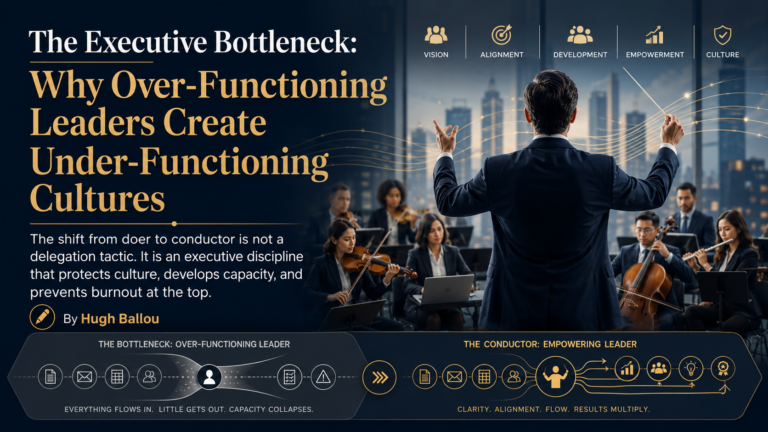 The Executive Bottleneck: Why Over-Functioning Leaders Create Under-Functioning CulturesBy Hugh Ballou
 C-Suite TV · 23 minWho Owns Your Health Data? Building Trust in the Future of Healthcare with Deborah Bussière
 C-Suite Radio · Unshelling Medicine: Self Care Benefits and Mental Health Tips for Healthcare Recipients 💊🩺Have You Lost Yourself to Caregiving?With Linda PernialUMP 74
 Chairman's Corner · Jeffrey HayzlettYour Best Performer Might Be Your Biggest Problem. And It’s Contagious.
Meet the founders, CEOs and operators behind stories like this one. Next reception: NYC Executive Reception, Tue, Nov 24.
Attend as a guestMembership: $100/mo →