As busy executives, we all seem to be in a constant race against time.
Time is both our most precious resource and our enemy.
We wonder why projects don’t get done on time. We’re always looking for more time in our schedules and wonder when we can find time to get the team together for a meeting. Then comes our personal time, but that is an entirely different story.
 Be our guestYour next big opportunity could be in a room you're not in.Meet CEOs, founders and owners at a reception in your city or online. Your first event is on us.Request my guest seat →
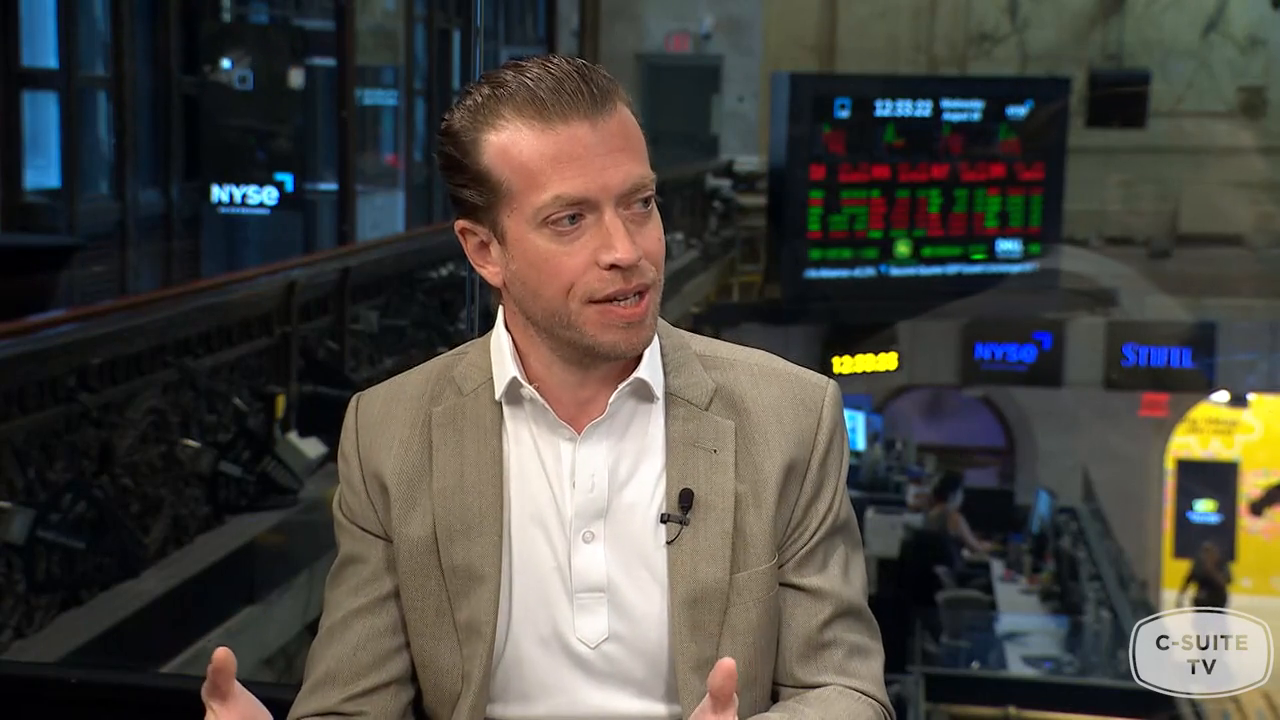
Managing time was a big theme during a conversation Tricia Benn, Chief Community Officer of the C-Suite Network and General Manager of The Hero Club, had with Josh Kaufman. He is best known as the author of the best-selling book, The Personal MBA, which recently celebrated its 10th anniversary.
Josh says the first thing you need to do to get control of your time is focus. While it may sound simple, there is some complex psychology involved.
“There’s this idea in cognitive psychology called monoidealism, where you have one, and only one thing, on your mind at any given time,” Josh said. “Your full focus and attention is on what you’re doing and nothing else. If you think of Nike’s brand slogan, “Just do it,” that’s a very nice encapsulation of what monoidealism is. What it feels like. The question is how to get there.”
How do you get there?
Josh says it takes an organizational shift. Managers and executives need to change the structure of the workday. He recommends blocking off specific times for specific things, like focusing on getting work done in the mornings and scheduling meetings for the afternoon.
“Blocking out time is the best thing you can do for yourself personally. Organizationally it gets even more effective,” Josh said. “Some of the most effective organizations that I’ve worked with have made large-scale changes in making this sort of behavior, having a period of time for focus, a period of time for communication.”
Nobody reading is guilty of over-communication. While communication is essential, it can bog a company down. Josh introduced to us the idea of communication overhead. Simply put, it’s the idea that the more people you communicate with within your organization, the more time it takes away from focusing on your work. Josh says this is why big companies tend to react slowly. There are many people, at different levels, in various departments, that need to know about the progress of a project. In the book, Josh recommends keeping your team as small as possible, so you don’t spend a lot of time communicating with others.
So now that we know how to structure our days, how should we get work done?
It doesn’t matter if we use fancy task-management software or an old-fashioned to-do list, we all use different metrics to track our work. No matter your method, there are times those lists can be overwhelming. With this in mind, Josh recommends breaking your day down into MITs – which stands for Most Important Tasks.
“The general idea is you have your big system, and at the beginning of the day or the evening before go through that system and pick three things that would make the biggest difference in moving your projects forward, getting things off your plate, helping you maintain a positive sense of momentum,” Josh said.
He continued, “Take a 3×5 index card, write those things down then as you’re working, you don’t work from the big system. That’s distracting. You work from the 3×5 index card.”
While organizing yourself is crucial, so is organizing your team. Josh says to not only make these practices company-wide, but you should share them with your peers.
“Anything you can do to help them manage their attention, energy, effort well as well as bake into the organization as much as possible — practices, systems, procedures that make it much easier for the folks you work with to do the same, that is going to be beneficial,” Josh said.
Practice in any discipline is essential, so making a conscious effort to make those changes. Not only do these time management skills take practice, so does the art of business. While book learning is important, it doesn’t make up for real-world experience. Josh says this was one of the original motivations behind The Personal MBA. The book focuses on what Josh calls “a small set of techniques that can make an enormous difference” in three areas:
- Principles of business – these are the basics of business, no matter what the size
- Understanding people – People make up businesses, and businesses exist for people. Josh says a little knowledge of psychology can go a long way towards making your business and decision-making better
- Understanding Systems – Josh says businesses are complex systems that operate inside other complex systems, like industries, governments, and societies
“There’s a big difference between credentialing and knowledge, skill, and experience. Just sitting in a classroom doesn’t really get you there. You have to fully understand what’s going on, what’s important, how to make things better,” Josh said.
These are just the highlights of a great in-depth conversation guest host, Tricia Benn, had with Josh.
If you’d like to hear more about getting your team aligned and managing your time, listen to the complete interview here.
 The CEO Who Built a Company Around Language Just Wrote the Book That Explains Why Language Is the Most Important Technology in Human HistoryBy Michael Beas
 Medigap Medicare Supplement InsuranceBy Jeffrey Cline
 The Executive Bottleneck: Why Over-Functioning Leaders Create Under-Functioning CulturesBy Hugh Ballou
 C-Suite TV · 23 minWho Owns Your Health Data? Building Trust in the Future of Healthcare with Deborah Bussière
 C-Suite Radio · Unshelling Medicine: Self Care Benefits and Mental Health Tips for Healthcare Recipients 💊🩺Have You Lost Yourself to Caregiving?With Linda PernialUMP 74
Meet the founders, CEOs and operators behind stories like this one. Next reception: NYC Executive Reception, Tue, Nov 24.
Attend as a guestMembership: $100/mo →