A practical guide for executives, offered to fellow C-Suite Network members
By Rich Goldstein, Patent Attorney, Goldstein Intellectual Property
As a fellow C-Suite Network member, I hear some version of the same question almost every week: “Should we patent this?”
Sometimes the answer is yes. More often, the better question is which kind of protection fits what you are actually trying to protect. Filing for the wrong one is one of the most expensive early mistakes a business can make, and skipping the right one can quietly cost far more.
 Be our guestYour next big opportunity could be in a room you're not in.Meet CEOs, founders and owners at a reception in your city or online. Your first event is on us.Request my guest seat →
Here is a quick map of the four tools, in plain language.
PATENTS PROTECT HOW SOMETHING WORKS
A patent covers a new and useful invention: a product, a machine, a process, or in some cases an ornamental design. It gives you the right to stop others from making, using, or selling that invention for a limited term. Not every idea qualifies. The invention has to meet specific legal criteria, including being new and not obvious.
Watch the clock. Showing your invention publicly, in a demo, a crowdfunding page, or a widely shared pitch deck, can start a deadline on your patent rights. In many countries it can end them.
Executive example: a proprietary manufacturing method, or a hardware feature a competitor could reverse engineer from your product.
TRADEMARKS PROTECT WHAT CUSTOMERS RECOGNIZE
Your company name, logo, tagline, and product names. Trademark law exists to prevent customer confusion, so it protects the identity people associate with you. Registration strengthens your position and makes enforcement far more practical.
Executive example: a product line name that copycats start using on Amazon.
COPYRIGHT PROTECTS ORIGINAL EXPRESSION
Books, training programs, videos, website copy, marketing materials, and software code. Copyright protects the expression, not the underlying idea. It exists from the moment the work is created, and registration adds important enforcement advantages.
Executive example: your onboarding curriculum or a published leadership framework. One caution: work created by outside contractors may not belong to your company without a written assignment.
TRADE SECRETS PROTECT WHAT YOU KEEP CONFIDENTIAL
Formulas, pricing models, customer data, and internal processes. A trade secret is protected as long as it stays secret and you take reasonable steps to keep it that way, through NDAs, access controls, and employee agreements. There is no registration. The tradeoff: it does not protect you if someone develops the same thing independently or reverse engineers it.
In some cases a trade secret is the smarter choice than a patent, because a patent requires you to publicly disclose how your invention works.
A FAST WAY TO SORT IT
Ask yourself: if a competitor copied us tomorrow, what would hurt the most?
- How it works: patent, or trade secret if it can stay hidden
- What customers call it: trademark
- What we wrote, filmed, or coded: copyright
- What only our team knows: trade secret
Most businesses need more than one. The goal is not to protect everything. It is to spend only on the protection that supports your business goals, and to skip the protection you do not need.
A MEMBER BENEFIT
Exclusively for C-Suite Network members: take the 2 minute Member IP Map to see which of the four buckets your business falls into, then book a complimentary 30 minute IP Map session with my team. We will sort what you have built, tell you plainly where to start, and tell you where you do not need to spend anything.
>> Take the 2 min Member IP Map
This article is for general information only and is not legal advice. Reading it does not create an attorney client relationship.
Opinions expressed by C-Suite Network contributors are their own.
 The Boardroom Needs the Ground: By Mark Madrid
 How Fractional Executives can Help Your Company Thrive: Key FactsBy Paul Whitley
 Do Not Cut 25% of Your Workforce YetBy Mahesh M. Thakur
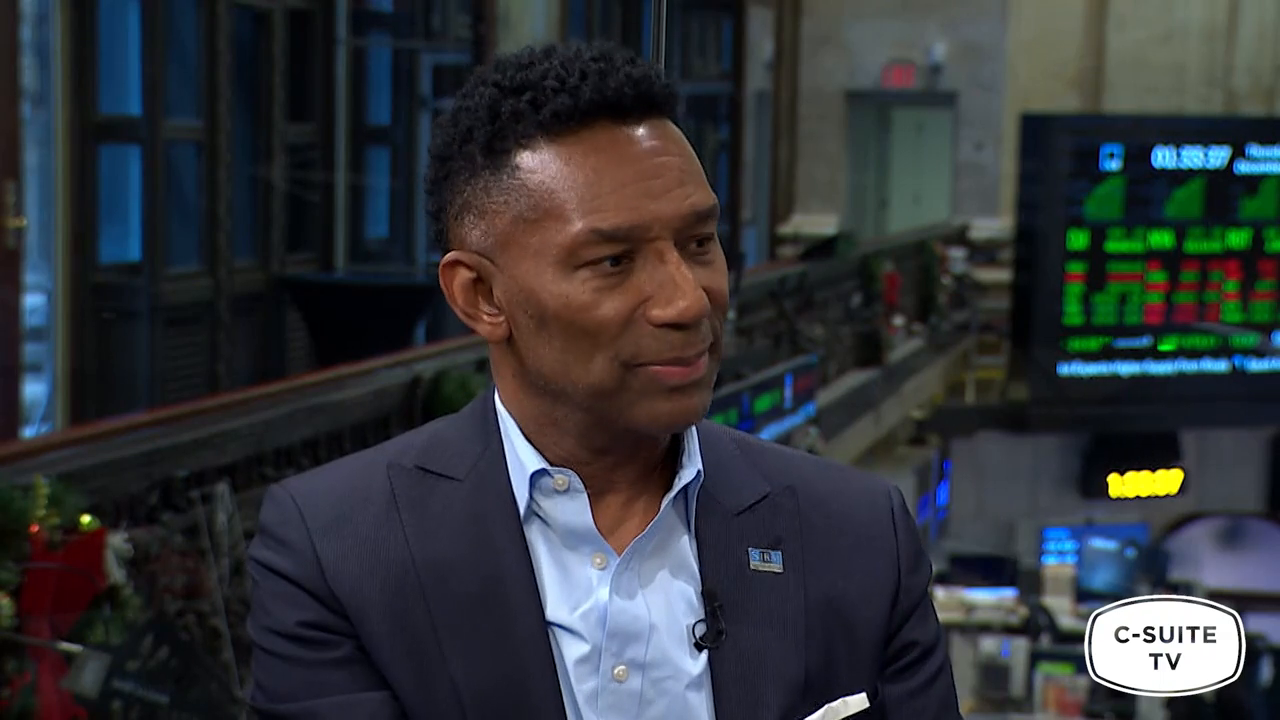 C-Suite TV · 22 minProject Calm: Johnny C. Taylor Jr. on Leadership, Culture, and the Future of Work
 C-Suite Radio · Leadership Without Losing Your Soul: Master Communication & Management Skills To Boost Productivity, Teamwork & Ease Overwhelm380 Stop Doing All the Thinking: 4 Leadership Communication Skills That Get Your Team Solving Problems
 Chairman's Corner · Jeffrey HayzlettYour Best Performer Might Be Your Biggest Problem. And It’s Contagious.
Meet the founders, CEOs and operators behind stories like this one. Next reception: NYC Executive Reception, Tue, Nov 24.
Attend as a guestMembership: $100/mo →