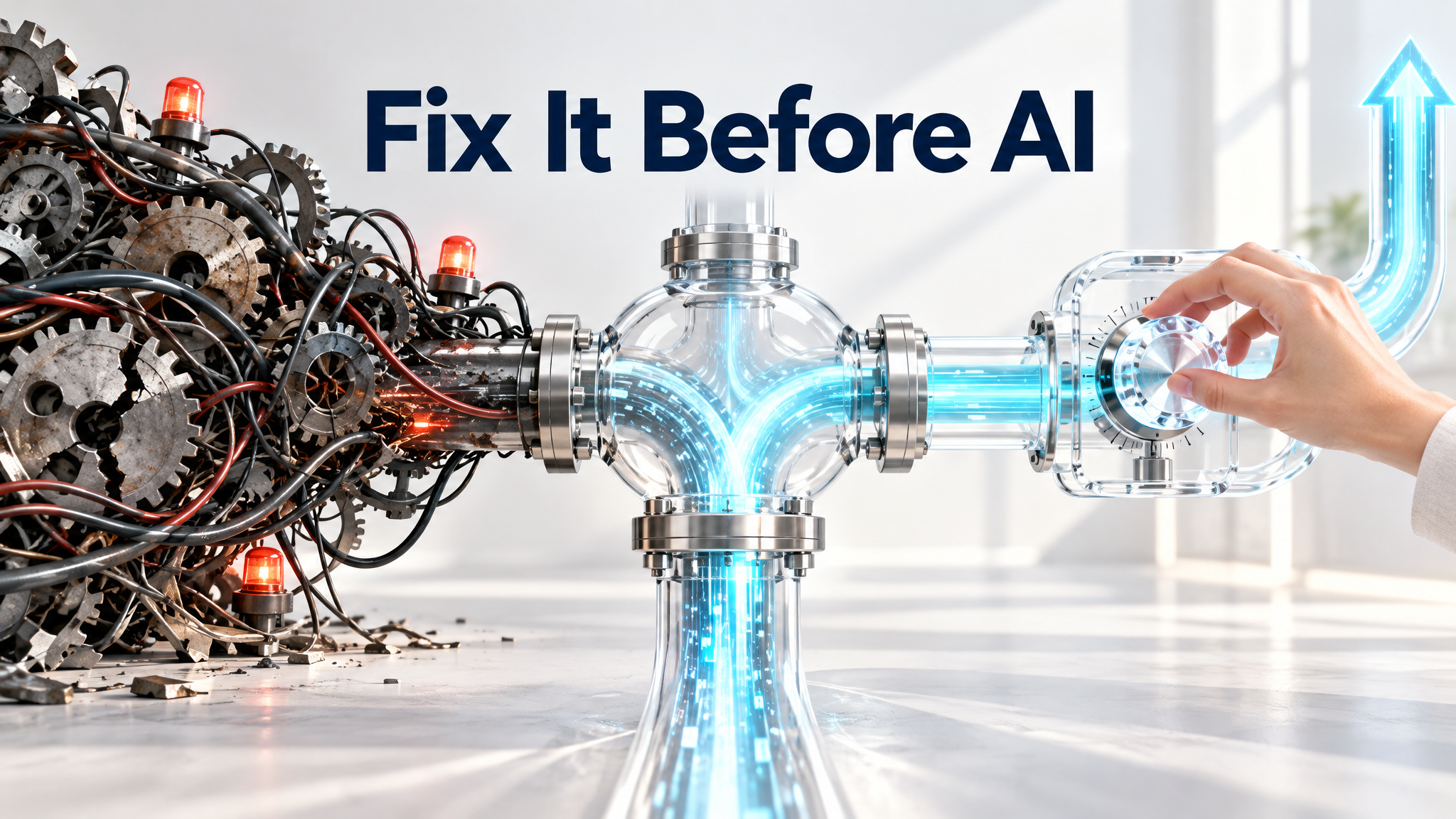
A broken process does not become intelligent because you add AI. It becomes faster, more expensive, and considerably harder to explain at the next executive meeting. That is not transformation; it is automated dysfunction with a technology budget.
Strategic AI implementation begins well before anyone selects a platform, approves a pilot, or asks what competitors are using. It starts with an unglamorous executive question: What business problem are we trying to solve, and is the business itself prepared to solve it? If leaders cannot answer that clearly, AI will not provide clarity on their behalf.
My conversation with Rupali Kumbhani, a global transformation leader and strategic AI adviser working through her consulting practice, reinforced a point too many organizations are still avoiding. AI is not the strategy. It is one component of a strategy, and its value depends on the quality of the decisions, processes, data, and people surrounding it.
That distinction matters because companies are under pressure to demonstrate AI progress. Pressure encourages activity, but activity is not value. Buying tools, launching disconnected pilots, and asking employees to experiment may produce motion; none of it guarantees better execution, stronger margins, faster decisions, or a more valuable customer experience.
The AI Tool Question Is Usually the Wrong First Question
Kumbhani described advising a banking CEO who was preparing for a product launch. His first question was which AI tool the organization should use to implement the launch. It sounds like a reasonable question until you recognize how much strategic work it skips.
The previous product launch had not performed as intended. Before discussing technology, the leadership team needed to examine why it had failed, which customers it was trying to reach, what patterns existed in the available data, and what needed to change in the launch strategy. AI could potentially help analyze information, but it could not substitute for defining the problem.
This is where many AI investments lose the plot. Leaders start with the tool because tools feel tangible, budgets can be approved, vendors can be compared, and pilots can be announced. Diagnosing operating failures is messier because it may expose weak assumptions, poor handoffs, conflicting incentives, or decisions that senior leaders would prefer not to revisit.
Technology selection feels like progress without requiring the organization to confront those conditions. Unfortunately, AI is particularly effective at magnifying what already exists. Give it a sound process, relevant data, appropriate controls, and knowledgeable people, and it may accelerate value. Give it a failed process, and you get what I call “super fast bad.”
Strategic AI Implementation Requires Process Discipline
Executives often frame the AI business case around doing more with less. There is nothing inherently wrong with improving productivity or reducing unnecessary work. The problem begins when “more with less” becomes permission to automate before understanding what the work produces, why it exists, and where it breaks.
A process should not be automated simply because it can be automated. Leaders first need to determine whether it contributes to customer value, decision quality, revenue, risk management, employee effectiveness, or another defined business outcome. If the process is redundant, poorly designed, or disconnected from strategy, automation merely institutionalizes the defect.
The financial consequences are broader than a disappointing technology return. A poorly chosen AI investment consumes implementation capacity, leadership attention, training time, integration resources, and employee goodwill. It can increase operating complexity while margins decline, which is an impressive outcome only if the goal was to make the business worse in several categories at once.
This is why strategic AI implementation must be connected to process improvement. Before approving an initiative, leaders should be able to describe the current process, its failure points, the people affected, the desired outcome, and the evidence that AI is appropriate. The objective is not to create a document thick enough to stun an auditor; it is to establish enough operational truth to make a responsible investment decision.
AI should enter the conversation after the problem is understood. Not before.
Human-Centered AI Is a Performance Strategy
The case for human-centered AI is sometimes treated as a cultural or ethical consideration that sits beside the “real” business case. That is a false separation. Trust, learning, adoption, and subject-matter expertise directly influence whether an AI investment delivers business value.
Employees are not neutral observers of transformation. They interpret leadership behavior, look for signals about what the change means, and decide how much energy to invest in making it work. When AI is introduced primarily through the language of labor reduction, people reasonably conclude that helping the initiative succeed may help eliminate their own roles.
That fear has operating consequences. Employees become less willing to challenge flawed outputs, share practical knowledge, test new approaches, or identify risks. The organization may have purchased advanced technology while quietly suppressing the human judgment required to use it well.
Kumbhani’s position is straightforward: organizations should develop people to work more effectively with AI rather than assume AI can fully replace their expertise. A professional working in healthcare, manufacturing, banking, or another specialized environment brings contextual knowledge that a tool cannot be trusted to reproduce completely. AI may reduce administrative work or accelerate analysis, but human interpretation and accountability remain necessary.
The leadership choice is not simply whether to adopt AI. It is whether to build capability or create fear. One approach treats employees as a source of expertise that can be amplified; the other treats them as a cost category waiting for a software update.
Only one of those approaches creates the conditions for sustainable adoption.
Governance Should Accelerate Better Decisions
AI governance is frequently presented as a restrictive layer designed to stop people from doing dangerous things. Controls are necessary, but governance that exists only to say no will encourage employees to avoid the process or use unsanctioned tools. Effective governance should make responsible experimentation easier, not bury it beneath ceremonial approval.
Kumbhani advocates a cross-functional governance model in which leaders from different departments review proposed AI uses. Teams should explain the problem they are solving, the expected return, and the associated risks. That creates a more informed basis for deciding whether to invest, adapt an existing capability, or decline the request.
Cross-functional visibility also reduces duplication. If one department has already evaluated or adopted a tool that addresses a similar need, another department may be able to use the same capability with a different process. Without that visibility, organizations can accumulate overlapping vendors, inconsistent controls, fragmented data practices, and several versions of the same lesson purchased at full price.
Good governance also addresses leadership concerns about data exposure, security, intellectual property, bias, and ethical use. These are not reasons to avoid AI; they are reasons to define boundaries and accountability. Algorithms are created using human choices and human-produced information, so AI can reflect the biases and defects embedded in those inputs.
Human checkpoints remain essential. Leaders must define where AI-generated material requires review, who owns the final decision, and what happens when an output is inaccurate or inappropriate. Delegating work to AI does not delegate accountability, regardless of how persuasive the output sounds.
Enterprise AI Adoption Depends on Relevant Learning
Telling employees to “learn AI” is not a workforce strategy. It is an open-ended assignment added to workloads that are already full. The technology changes rapidly, the available tools are numerous, and most employees do not have unlimited time to determine which developments matter to their roles.
Organizations should narrow the learning problem. Instead of expecting everyone to explore everything, leaders can identify the tools and use cases most relevant to specific functions. Training can then focus on how those capabilities support actual work, where they fail, and what responsible use looks like in the organization.
This approach changes the employee experience. People are not simply told that AI is coming; they are given a structured opportunity to evaluate whether it improves their work. They can identify weaknesses, contribute expertise, and make informed choices about where the technology provides value.
That participation creates better adoption data than executive enthusiasm alone. Employees closest to the work often know which tasks consume time without improving outcomes, which decisions require context, and which process failures technology will not fix. Ignoring that knowledge in an AI transformation is not bold leadership. It is paying for expertise and then designing the change as if the expertise does not exist.
Learning also signals intent. When an organization invests in helping people build relevant capabilities, employees are more likely to see transformation as an investment in their growth rather than a search for their replacement. That does not eliminate every difficult workforce decision, but it creates a more credible foundation for trust.
Measure Business Value, Not AI Activity
A portfolio of pilots is not proof of strategic progress. Neither is the number of licenses purchased, prompts submitted, or employees who attended a demonstration. Those measures may describe activity, but they do not establish business value.
The relevant measures depend on the problem being solved. Leaders might examine decision speed, cycle time, error rates, process cost, employee capacity, customer friction, revenue contribution, risk exposure, or adoption within a defined workflow. The metric should connect the AI-enabled change to an outcome the business already considers important.
This requires establishing the current state before implementation. If the organization does not know how long a process takes, where errors occur, or what the existing cost is, it will struggle to demonstrate improvement. Declaring victory based on enthusiasm is not measurement; it is optimism wearing a dashboard.
Leaders should also be willing to stop an initiative when the evidence does not support continued investment. AI has no special exemption from portfolio discipline. A pilot that reveals weak data, poor process readiness, unacceptable risk, or limited user value has still produced useful information, provided the organization acts on it.
The goal is not to prove that the original technology decision was correct. The goal is to make the next business decision better.
Mindful Implementation Is Not Slow Implementation
Some executives hear words such as mindful, responsible, or human-centered and assume they are code for delay. That assumption deserves a challenge. Moving quickly without a defined problem, usable data, workforce readiness, or governance does not create speed; it creates rework.
Mindful implementation means being deliberate about where AI belongs and what conditions it requires. It means distinguishing between individual productivity tools and enterprise capabilities integrated into business operations. It also means accepting that implementation success depends on organizational change, not just technical deployment.
Leadership behavior sets the tone. If executives chase every new tool, reward visible experimentation without measured outcomes, or speak about employees primarily as costs to remove, the organization will mimic those priorities. If leaders demand a clear problem statement, involve affected people, fund relevant learning, and maintain accountability, the organization will learn to approach AI with the same discipline.
The technology will continue to change. That makes strategic clarity more important, not less.
The Executive Challenge: Diagnose Before You Automate
Strategic AI implementation should begin with one live business process, not another enterprise-wide declaration. Choose a process that matters to customers, employees, cost, risk, or growth. Map how it works, identify where it fails, establish the current performance baseline, and speak with the people who understand it.
Then ask whether AI is the right intervention. If it is, define the required human checkpoints, governance conditions, learning needs, and measurable outcome before selecting the tool. If it is not, fix the process without forcing AI into the answer.
The next competitive advantage will not come from being able to say your company uses AI. That distinction is disappearing quickly. It will come from knowing where AI creates value, where human expertise must lead, and where the smartest decision is to repair the business before accelerating it.
This week, take one proposed AI initiative and remove the tool name from the discussion. If the business case collapses, you never had an AI strategy. You had a shopping list.
Listen to the podcast episode on C-Suite Radio: Disrupt & Innovate | C-Suite Network
Watch the episode: The Human Element in AI Strategy
Check our websites: LcubedConsulting.com and AI ValuePath™
This article was drafted with the assistance of an AI writing assistant, Abacus.AI’s ChatLLM Teams, the image was generated with Abacus AI Studio. Lisa L. Levy edited for accuracy, tone, and final content.