Quick take
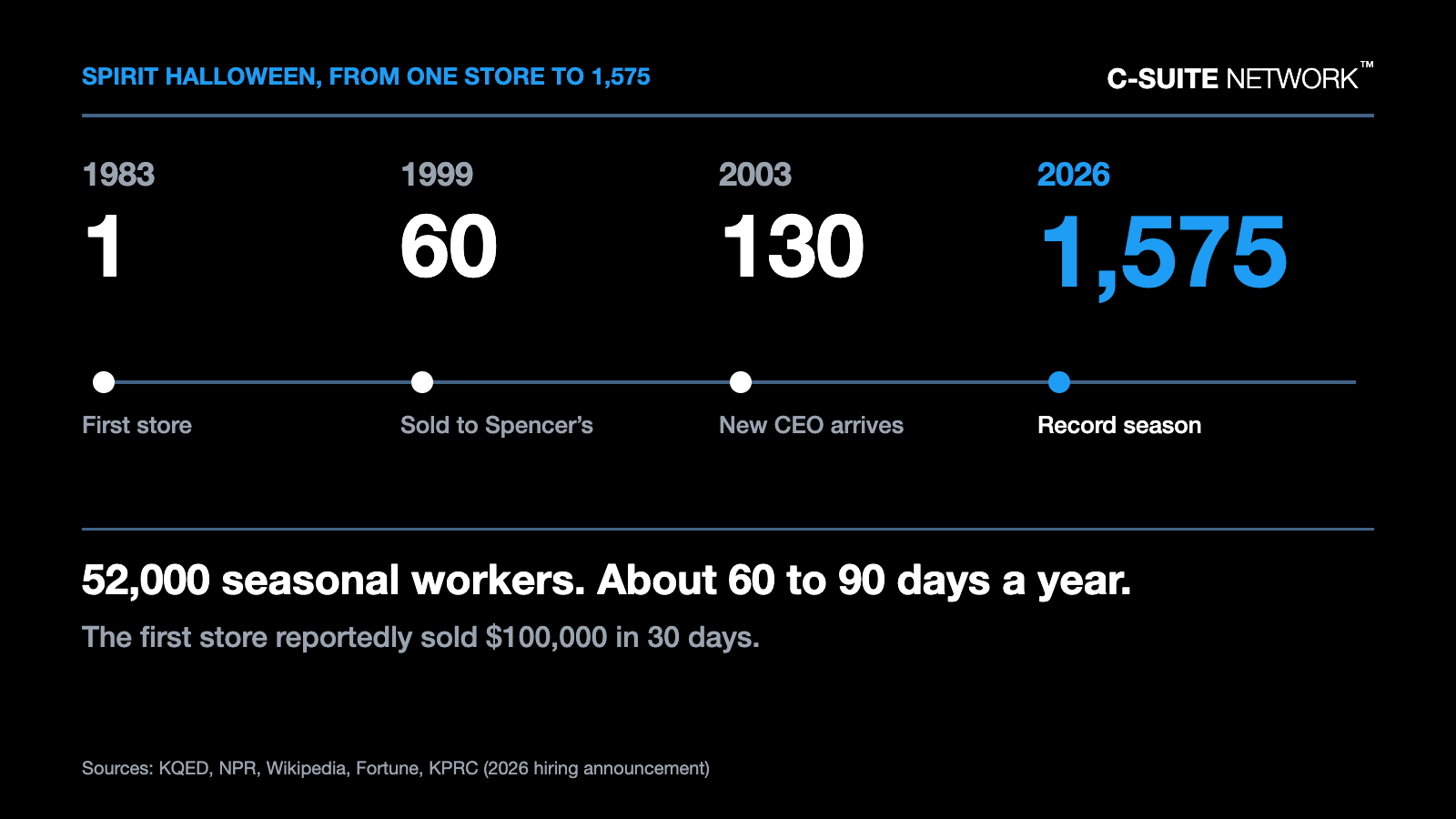
- In 1983, a California clothing retailer named Joe Marver saw a costume shop in his mall close. He put his own inventory in storage, filled a space with Halloween gear and reportedly sold $100,000 in 30 days.
- That one store became Spirit Halloween: a record 1,575 locations and 52,000 seasonal workers this year, in a business that’s open about two to three months a year.
- Why it matters now: Americans are expected to spend a record $13.5 billion on Halloween this year. Starting this weekend, Spirit’s stores disappear. The real business behind them is a lesson in renting only the part of the year that pays.
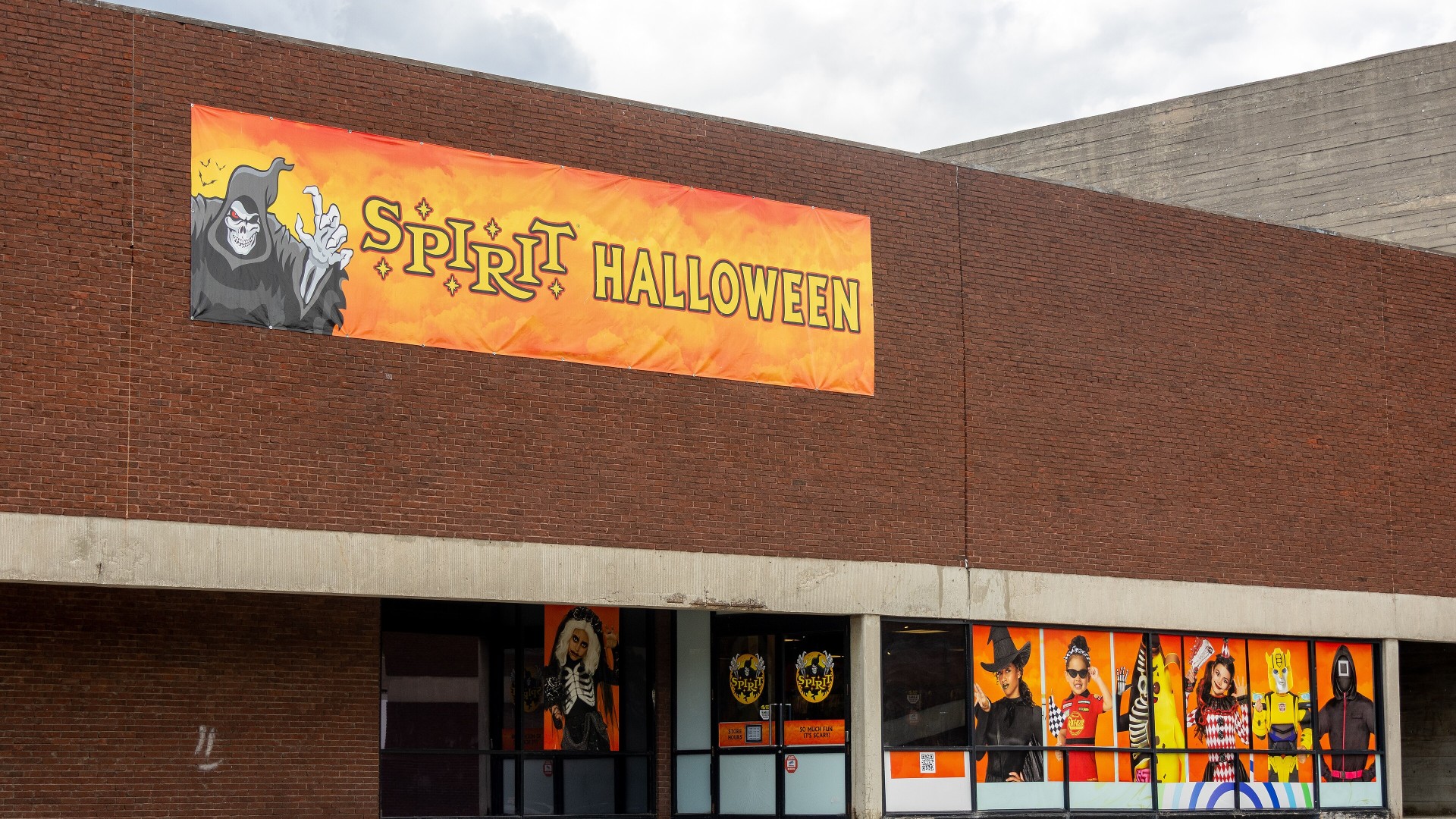
Every August, empty stores across America come back to life with a giant orange sign. Every November, they go dark again. Most people never think about who’s behind it. It started with one man and one closed store.
The store that closed
In 1983, Joe Marver ran a party goods and women’s apparel business in California’s East Bay. At the Castro Valley mall, a dancewear store that sold costumes went out of business. Marver saw an opening. He went to a trade show in Chicago, bought Halloween merchandise and, in his words, put “all of my clothing in storage” to make room.
The name wasn’t about ghosts. It came from his clothing store, Spirit Women’s Discount Apparel. The first Halloween store reportedly sold $100,000 of merchandise in 30 days, which is close to $300,000 in today’s money, according to NPR.
“I didn’t invent temporary sales,” Marver told NPR, “but I feel like I invented temporary Halloween.”
From one store to 1,575
Marver grew slowly, bringing in friends and family to run locations. By 1999 he had about 60 seasonal stores. That year he sold the business to Spencer’s Gifts, the mall novelty chain.
Then it took off. When Spencer’s CEO Steven Silverstein arrived in 2003, Spirit had 130 stores. This year it opened a record 1,575 across the US and Canada and hired more than 52,000 seasonal workers to staff them.
How much does it make?
Spirit is private and doesn’t publish sales. But the credit rating agency Moody’s has put numbers on it. Moody’s estimated that Spencer’s and Spirit together brought in about $1.9 billion in 2023, with Spirit the bigger of the two. In other words, the pop-up that’s open a few months a year now outsells the mall chain that’s open all year and bought it.
Here’s the rough math. If Spirit is more than half of $1.9 billion, that’s more than $950 million. Spread across roughly 1,500 stores, that’s more than $630,000 per store, earned in a season of about 60 to 90 days. That works out to somewhere between $7,000 and $10,500 a day, per store, for a business that doesn’t exist most of the year.
The real business is real estate
Costumes are what Spirit sells. Empty buildings are what makes it work.
Spirit’s real estate team hunts year-round for vacant spaces, typically 7,000 to 10,000 square feet, often the shells left behind by retailers that went under. Landlords would rather sign a tenant for five or 10 years than three months, so Spirit makes it easy for them to say yes. It reportedly pays above-market rent and agrees to leave if a permanent tenant shows up.
The deal itself is short in every sense. Spirit’s ideal lease runs about three months, from mid-July to mid-November. The contract is often one or two pages, compared with about 40 pages for a typical long-term retail lease. Spirit takes the space mostly as-is and spends little on build-out. It only needs the basics: air conditioning, bathrooms and lights. A store can go from empty box to open in about nine to 11 days.
Timing is the secret weapon. Most retailers sign leases at the start of the year. By midsummer, when Spirit goes shopping for space, there’s almost no competition. And every time a big-box chain goes bankrupt, Spirit gets more empty buildings to choose from. Other retailers’ bad years are its supply chain.
But here’s the twist: Spirit doesn’t need malls to be dying. It needs empty space, which is a different thing. National retail vacancy was just 4.4% this spring, close to historic lows, and Spirit still opened a record number of stores. It rents in malls, strip centers, freestanding buildings and downtowns, anywhere from 5,000 to 50,000 square feet. What it feeds on is churn: the stores that close every year as chains like Joann, Big Lots and Party City shrink. When there’s less churn, it feels it. One shopping center owner told CoStar it now has a handful of Spirit stores, down from about a dozen a year earlier, simply because it has fewer empty spaces.
It also only pays for the part of the year that pays. More than 90% of sales happen between Labor Day and Halloween. A year-round store would carry nine months of rent, payroll and lights for a few weeks of real demand. Spirit carries none of that. After Halloween, it’s even testing the same playbook for Christmas, with 30 holiday pop-ups last season.
What it does the other nine months
The stores vanish. The company doesn’t. Spirit runs out of the same New Jersey headquarters as its parent, Spencer’s, which operates about 600 year-round mall stores. Spirit doesn’t disclose how many people work there year-round. What it does say: it handles its own sourcing, design and manufacturing, which is why the animatronics in its stores are Spirit’s own. Its real estate team starts planning deals about a year ahead. The online store sells all year. Unsold costumes in good shape are stored for next season, and many seasonal workers are offered jobs at Spencer’s.
Why not just run a year-round holiday store?
Because that business already existed, and it just died. Party City sold party and holiday supplies year-round for nearly 40 years. In December 2024 it announced it would close nearly 800 stores after a bankruptcy and $1.7 billion in debt, squeezed by Amazon, Walmart, Costco and, notably, seasonal pop-ups like Spirit.
The math explains why. Halloween is one of the few holidays where people need things they can’t get anywhere else: a full costume, a six-foot animatronic, a yard of fog. A year-round store would pay rent and staff through months like March and June, when nobody is shopping for any holiday at all. Christmas is bigger than Halloween, but every retailer in America goes all-in on it, so a specialty store has to fight Walmart, Target and Amazon for every dollar.
Spirit is testing it anyway, carefully. Spirit Christmas started with a handful of Northeast stores two years ago, grew to 30 last season and plans 43 stores in 15 states this year. That’s 43, compared with 1,575 for Halloween. The company is proving the second season before it bets the real estate on it.
How to apply this to your business
- Rent the peak, not the year. If most of your sales come in a few months, ask whether you need to pay for the other nine. Pop-ups, short leases, shared space and seasonal staff can turn fixed costs into variable ones.
- The closed store next door is an opportunity. Marver didn’t invent demand. He noticed a costume seller disappear and stepped into the gap it left. Watch what’s closing in your market and ask who’s now going unserved.
- Make it easy for the other side to say yes. Spirit wins leases by solving the landlord’s problem: paying more and promising to leave when a long-term tenant arrives. Find the deal that helps the person across the table.
- Timing can beat money. Spirit shops for space when nobody else is. In your market, when are your competitors not buying, not hiring or not advertising?
Before Your Next Meeting
- Pull 12 months of sales by week. Circle the weeks that make your year.
- List every fixed cost you carry through your slow months, and ask which ones could become seasonal.
- Drive past the empty storefronts in your town and ask: what would sell here for 60 days?
Sources: KQED; NPR; The Hustle; Fortune; KPRC Click2Houston on 2026 hiring; Wikipedia; National Retail Federation 2026 forecast, via Talk Business; Bisnow; CoStar; Modern Retail; CNBC; Spencer Gifts (Wikipedia); IBJ on Party City; The Daily Record on Spirit Christmas. Featured photo: Dillan Payne / Wikimedia Commons, CC BY-SA 4.0.