The quick take:
- The U.S. has about one job opening for every unemployed person, yet hiring has been stuck near 3.3% of the workforce a month for more than two years.
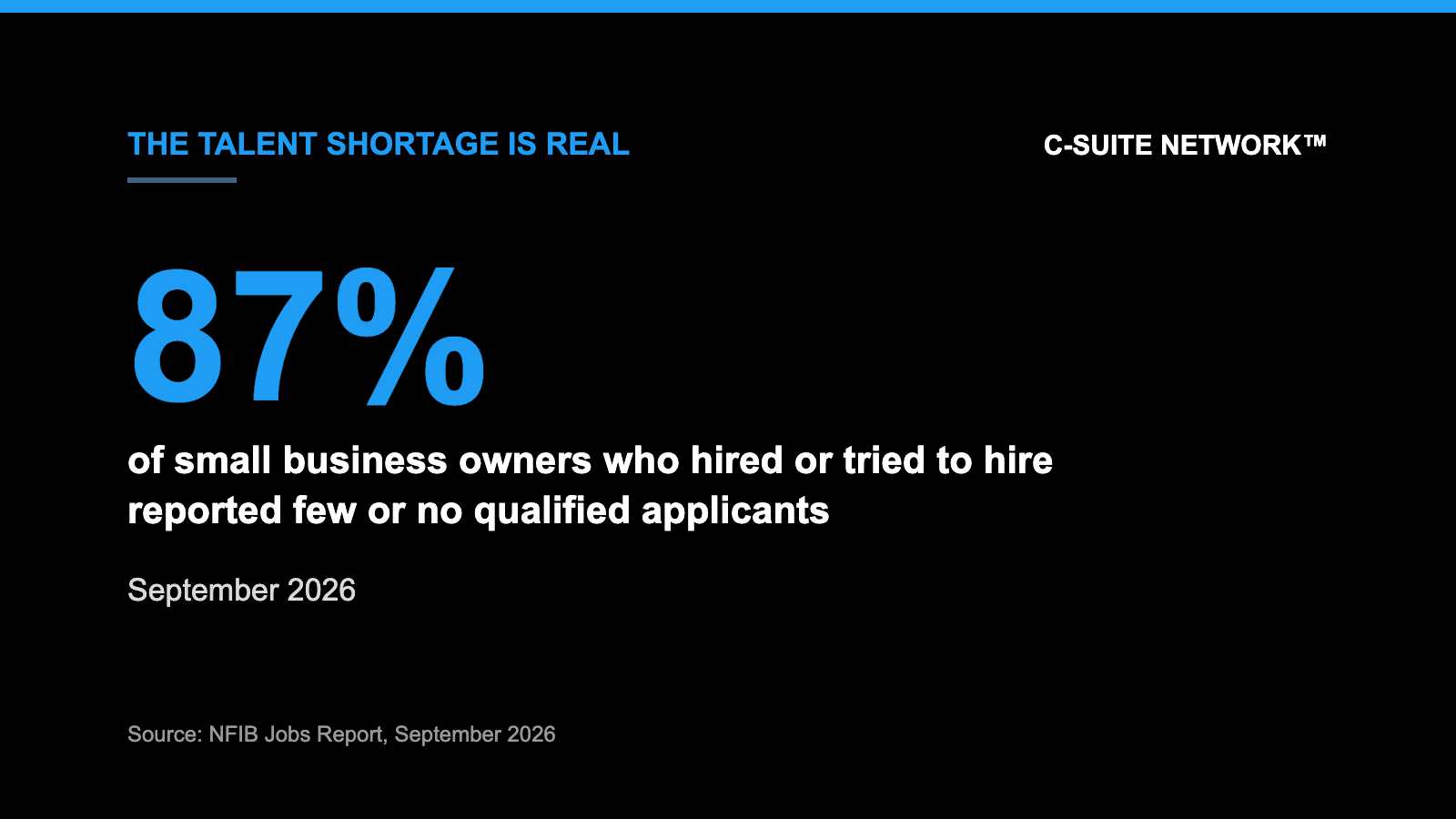
- 87% of small business owners who tried to hire in September got few or no qualified applicants.
- Why it matters now: the good people are staying put, health care is soaking up the hiring, and AI has turned applying for a job into a fire hose.
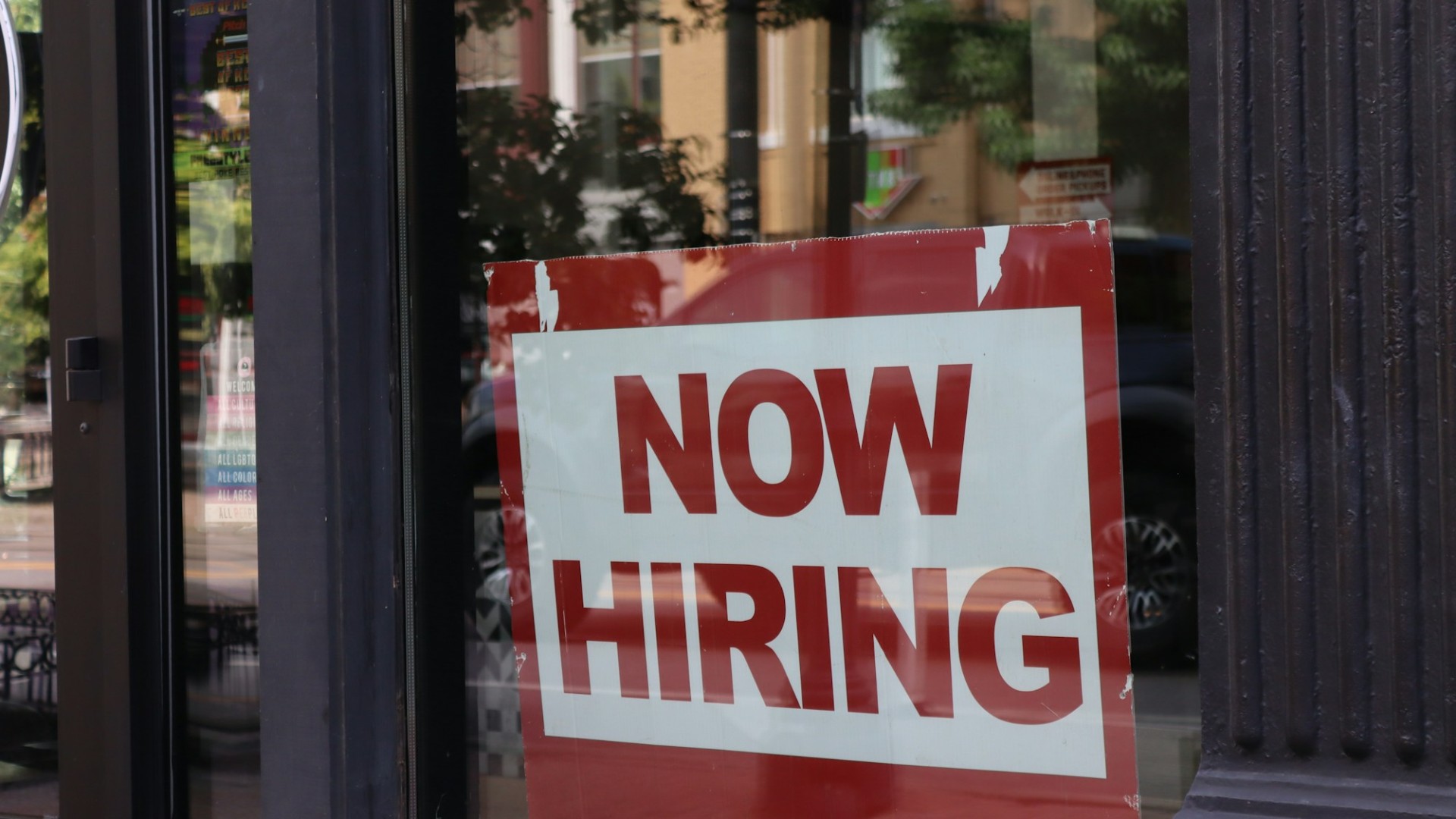
Ask anyone looking for work right now and you will hear the same thing: there are no jobs.
Ask any owner and you will hear the opposite: there is nobody to hire.
One of them has to be wrong.
 Be our guestYour next big opportunity could be in a room you're not in.Meet CEOs, founders and owners at a reception in your city or online. Your first event is on us.Request my guest seat →
Neither is.
The job seekers are not imagining it
The U.S. has about one job opening for every unemployed person, according to August government data analyzed by KPMG. On paper, that is a fit.
The problem is that nothing is moving. Employers have been hiring at roughly 3.3% to 3.4% of the workforce a month for more than two years. People are quitting at a rate of 1.9%, near historic lows.
Economists call it a “low-hire, low-fire” market. Indeed’s Hiring Lab says it is “starting to look less like a phase and more like the new normal.”
KPMG senior economist Matthew Nestler put it plainly: “if you have a job, you are likely to keep it; if you do not have a job, it is very challenging to find a new one.”
The owners are not imagining it either
In September, 32% of small business owners had job openings they could not fill, according to the NFIB. Among owners who hired or tried to hire, 87% got few or no qualified applicants.
Read that again. Nearly nine in 10.
A ManpowerGroup survey of more than 6,000 U.S. employers found 69% struggle to find skilled people. It is worst in manufacturing (75%) and in professional and technical services (72%). The hardest roles to fill: operations and logistics, sales and marketing, and front-office jobs that face customers.
So where did all the good people go?
Mostly nowhere. That is the problem.
With quits near historic lows, strong employees are staying put. The great candidate you want is probably employed, comfortable and not reading job boards.
And the hiring that is happening is lopsided. Health care accounted for about 42% of U.S. job gains in the first nine months of 2026, according to the Atlanta Fed.
Translation: unless you run a hospital, you are fishing in a pond with fewer fish and a lot more bait.
Then everybody automated
Job seekers who could not get callbacks did the logical thing. They sent more applications, faster.
LinkedIn was fielding about 11,000 applications a minute in 2025, up 45% in a year, The New York Times reported, with AI tools “contributing to the deluge,” according to eWeek. In a Gartner survey of 3,290 job candidates, 39% said they used AI during the application process.
Employers answered in kind. Chipotle’s CEO told Fortune its AI hiring assistant cut hiring time by 75%. LinkedIn rolled out an AI Hiring Assistant that screens candidates.
So now AI writes the application and AI reads it. The humans meet at the end, if they are lucky. And some of the applicants are not even real people.

Even when you find the right person, you may not get them. In Gartner’s survey, only 51% of candidates accepted the offer from their most recent application, down from 74% in 2023.
What every owner should know right now
The best candidates are not applying. They are employed and staying put. Referrals, customers, vendors and peers are where you will find them.
More applicants does not mean more choice. A pile of AI-polished résumés all look the same. Write job posts specific enough that a generic application obviously does not fit.
Speed matters. When half of candidates say no to offers, a slow process hands your pick to someone else.
Meet people. In Gartner’s survey, 62% of candidates said they were more likely to apply for a role that required in-person interviews. The real ones want to be seen.
Keep the good ones you have. In a market where nobody moves, replacing a strong employee is harder than it has been in years.
There is a job for every job seeker and a worker for every opening, on paper.
The trick is finding each other before the machines bury you both.
Before Your Next Meeting
- Where did our last three great hires come from, and are we spending our time there?
- Would a stranger reading our job post know exactly who we want, and who we do not?
- How many days does it take us to go from first interview to offer, and who could beat us to it?
- Who on our team would be hardest to replace right now, and when did we last tell them so?
 The Boardroom Needs the Ground: By Mark Madrid
 How Fractional Executives can Help Your Company Thrive: Key FactsBy Paul Whitley
 Do Not Cut 25% of Your Workforce YetBy Mahesh M. Thakur
 C-Suite TV · 22 minProject Calm: Johnny C. Taylor Jr. on Leadership, Culture, and the Future of Work
 C-Suite Radio · Leadership Without Losing Your Soul: Master Communication & Management Skills To Boost Productivity, Teamwork & Ease Overwhelm380 Stop Doing All the Thinking: 4 Leadership Communication Skills That Get Your Team Solving Problems
Meet the founders, CEOs and operators behind stories like this one.
Attend as a guestMembership: $100/mo →