
We love our heroes and star performers. I love them too. There is very often a mystique about a hero or star. I watched an interview with Medal of Honor recipient Army Staff Sergeant Salvatore Guinta. Guinta stepped into the line of fire to help two comrades on the battlefield in Afghanistan. He acted seemingly without fear in the face of incredible danger. He succeeded. He is clearly a hero in every sense of the word. However, predictably, he didn’t see himself in that way. He claimed to behave the way he was trained and that every other soldier is expected to behave that same way. He followed principles.
In January of 2009 “Sully” Sullenberger landed a USAIR flight in the Hudson after both engines shut down from a bird strike. He was honored by everyone including the President of the United States, his hometown, and 60 Minutes. He was called a true America hero by many in the press. His actions were called a miracle. He claimed that he and his crew were only doing their jobs. He said, “But I know I can speak for the entire crew when I tell you we were simply doing the job we were trained to do.” Sullenberger followed processes based upon solid and proven principles.
Why is it so often that our heroes are so modest and downplay their star qualities and give away their accolades? They know something that we often forget. They have a system supporting them.
 Be our guestYour next big opportunity could be in a room you're not in.Meet CEOs, founders and owners at a reception in your city or online. Your first event is on us.Request my guest seat →
In the case of Sullenberger the flight crew was thoroughly trained to react quickly and decisively in an emergency situation. Sullenberger took control of the plane and instructed his co-pilot to read through the appropriate check lists. The check lists and the cooperation of the co-pilot did as much to save all 155 people as did Sullenberger. They all played a significant role in the coordination of a successful heroic event. Sullenberger did NOT act alone. He could not have possibly done it alone yet we still want to hold him up as some super natural champion. Heroes understand systems. The general public doesn’t yet appreciate the influence a system has on performance. We don’t yet think in terms of systems.
There are three reasons why we should not treat star performers differently whether it is in the military, the airlines or in our organizations. First, doing so ignores the overall system interactions that helped contribute to the successes. We can forget the catcher who snags a wild pitch to save a perfect game for the star pitcher. We ignore the co-pilot’s role of reading and fulfilling the emergency engine startup check list or the flight attendant who keeps the passengers form panicking even though they need to stand on the wing of a jet in the middle of the Hudson River. System interactions contribute greatly to a hero’s success. Acknowledging this helps us engage others and understand a bigger picture.
Second, treating “stars” differently prevents us from duplicating successes in the future. By giving all the credit to one person that event becomes a “person dependent event” not a system dependent event. If the success is great don’t we want to duplicate it as much as possible? Sullenberger is now retired. Does that mean we cannot teach others to duplicate his actions? Why can’t we have 100 heroes in USAIR and not just one?
Finally, treating heroes and stars differently prevents us from learning. It creates a barrier to learning. Aren’t we are saying, “We just couldn’t have done it without them?” Instead, isn’t it more important to acknowledge their accomplishments and the system interactions and ask, “What can we learn from this?” Isn’t it just as important to learn from our successes as it is to learn from our mistakes?
So much time and effort is spent now on looking for ways to keep our star performers in our organizations. We court them, provide opportunities for them, we lavish them with praise and bonuses just to be sure we them happy. The next time you see a star being honored think about what we might be missing. What other system interactions need to be honored and who else needs to be engaged? How can we duplicate that same set of circumstances and interactions such that we duplicate the success? Finally, ask, what can we learn? If we want continued success and continued engagement in our organizations we need to stop treating our heroes so differently.
Check out the interview on C-Suite Best Seller TV to learn more about how to stop leadership malpractice and replace the typical performance review: https://www.c-suitetv.com/video/best-seller-tv-wally-hauck-stop-the-leadership-malpractice/
Wally Hauck, PhD has a cure for the “deadly disease” known as the typical performance appraisal. Wally holds a doctorate in organizational leadership from Warren National University, a Master of Business Administration in finance from Iona College, and a bachelor’s degree in philosophy from the University of Pennsylvania. Wally is a Certified Speaking Professional or CSP. Wally has a passion for helping leaders let go of the old and embrace new thinking to improve leadership skills, employee engagement, and performance.
For more, read on: https://c-suitenetwork.com/advisors/advisor/wally-hauck/
Opinions expressed by C-Suite Network contributors are their own.
 The Boardroom Needs the Ground: By Mark Madrid
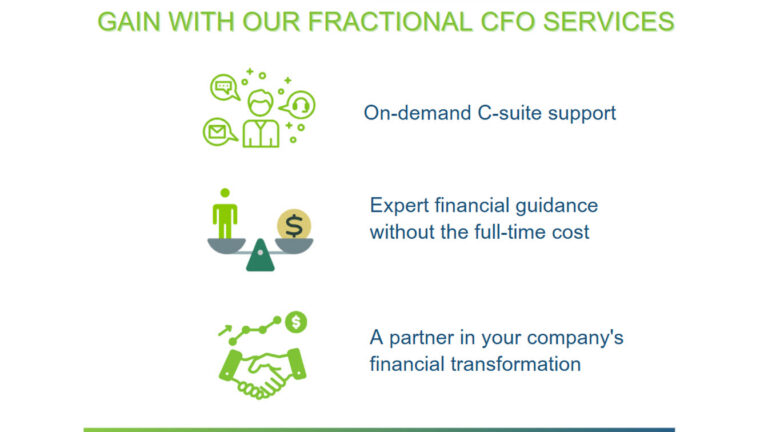 How Fractional Executives can Help Your Company Thrive: Key FactsBy Paul Whitley
 Do Not Cut 25% of Your Workforce YetBy Mahesh M. Thakur
 C-Suite TV · 22 minProject Calm: Johnny C. Taylor Jr. on Leadership, Culture, and the Future of Work
 C-Suite Radio · Leadership Without Losing Your Soul: Master Communication & Management Skills To Boost Productivity, Teamwork & Ease Overwhelm380 Stop Doing All the Thinking: 4 Leadership Communication Skills That Get Your Team Solving Problems
 Chairman's Corner · Jeffrey HayzlettYour Best Performer Might Be Your Biggest Problem. And It’s Contagious.
Meet the founders, CEOs and operators behind stories like this one. Next reception: NYC Executive Reception, Tue, Nov 24.
Attend as a guestMembership: $100/mo →