By: Tricia Benn
Every owner I know has one. The hire you’re sure about. Great résumé, great interview, great gut feeling. And then, slowly, the team around them starts to change.
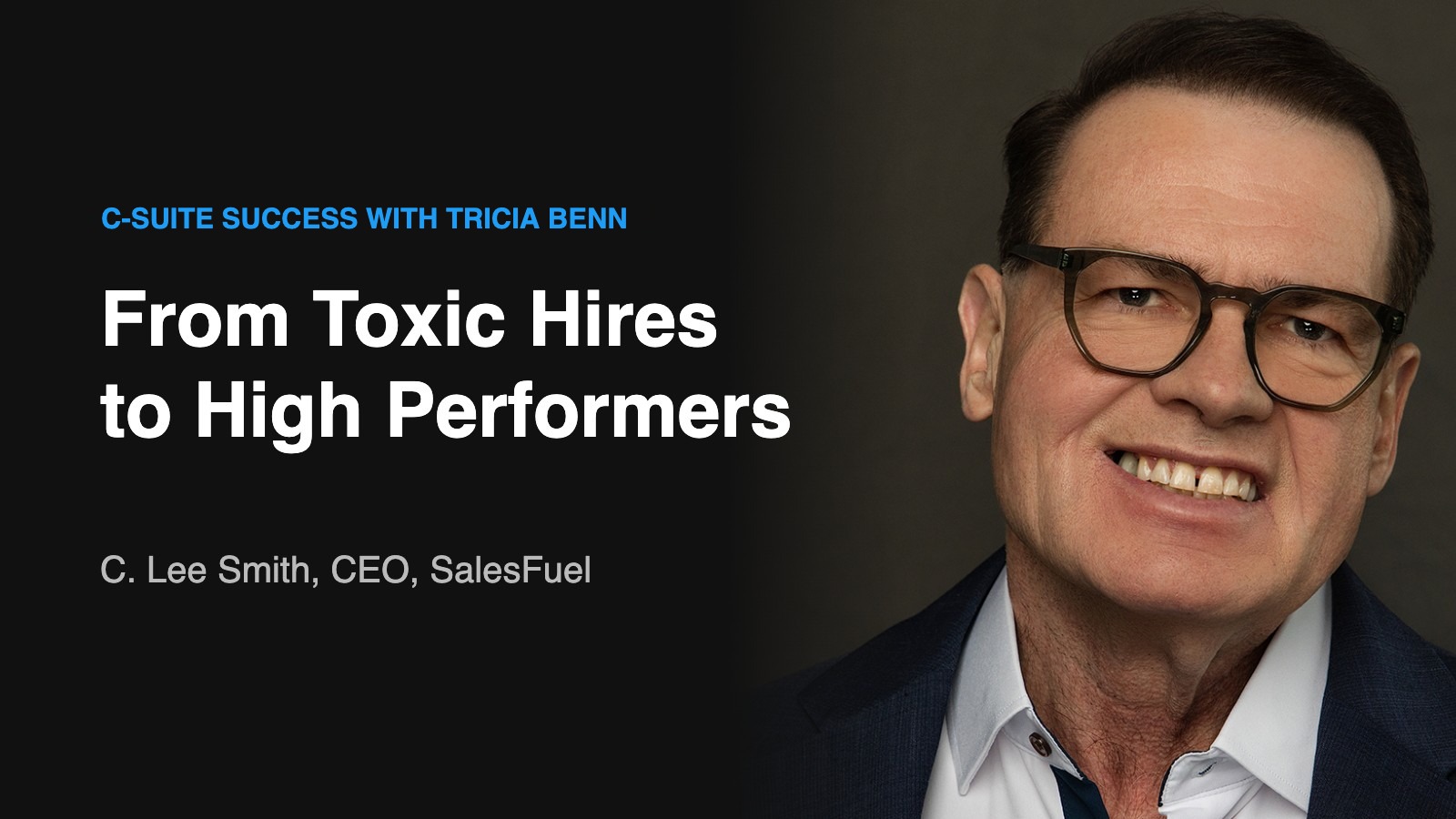
When I sat down with my longtime friend C. Lee Smith, CEO of SalesFuel, a sales research firm, for C-Suite Success, he told me about his.
“I made a bad hire and that bad hire then hired other bad people,” Lee said. “It turns out that bad hire wasn’t just a bad hire. They were a toxic hire.”
Lee has more than 30 years in the sales industry. He built tools like AdMall, SalesCred and TeamTrait, he wrote the books Hire Smarter, Sell More and SalesCred, and he hosts the Manage Smarter podcast on C-Suite Radio. And still, it happened to him.
One Person Divides the Whole Team
What struck me most was how Lee described the math of a toxic hire. “The actions of that one person then actually decrease the productivity and the motivation and the morale of other people around them,” he said. “And the very best people, of course, conversely, then elevate the performance of everybody else around them.”
He called it a multiplying factor, then corrected himself: “or I should say maybe a dividing factor.”
And the cost doesn’t end when the person leaves. “If you get it wrong, you’re going to spend a lot of months trying to clean that up,” he said, “and then you have to clean up the damage that’s been caused in its wake for many more months after that.”
That experience sent Lee into psychometrics, the science of how people are wired. Through his research, he has identified 13 different types of toxic personalities. As he put it, “everybody that I talked to that’s been in business for any length of time has made a hiring decision that they’ve regretted.”

Your Best People Don’t Match Your Job Posting
This was the moment in our conversation I keep coming back to.
When companies ask Lee to help them “hire more people like Joe,” he asks for two to five people who have done the job excellently, then profiles them. “Invariably, what I’ve noticed is that the people that are most successful doing the job in their company do not match up with what’s on the job posting,” he said.
The posting, he explained, “is very sterile and can really apply to just about any company in the world, but each company, each team has its own identity.”
So his advice: understand what makes your best people successful, then go back and rewrite the job description so you attract more of them.
For any leader building a team, that is a gift. We spend so much time writing job descriptions that sound like everyone else’s, and then wonder why we attract people who fit everyone else’s company.
It Starts and Ends With Trust
Lee believes great leadership “starts with trust. Maybe even starts and ends with trust.” And the pathway to trust, he said, is credibility.
SalesFuel’s own survey work found that only 26% of Americans who work full time for someone else think CEOs of large companies are credible in their words and actions. Small business CEOs fare better, ranked nearly twice as credible. But Lee was quick to add: “Your title means nothing.”
So he earns trust the hard way. He brings his remote team together twice a year. He sets company goals at the annual meeting and reports progress against them at midyear. And he shares the company’s financial numbers with everyone, which he admitted is “sometimes a little nervy.” The reason? “So that if I deliver a message that maybe not what they want to hear, they know where I’m coming from and they know they can trust that.”
He also reminded me that the CEO is “the number one salesperson” in any company, the person who has to convince employees, investors, the board, the bank and the first customers.
You Either Hired It, Caused It or Allowed It
Lee was honest about what the toxic hire did to him as a leader. He shared a line from a drama researcher he interviewed on his podcast: “You either hired it, you caused it or you allowed it.”
“It really tested my mettle as a leader,” he said. “I had to grow as a leader, quite frankly, then to overcome that situation because I felt like I was not totally equipped.” He worked with an executive coach who helped him see his own habits: cutting people off, not showing appreciation for their ideas, brushing off compliments instead of simply saying thank you.
His advice for anyone in the middle of it: “If you’re going through hell, don’t stop.” You will come out the other side a stronger leader.
That is the truth about scaling a business. It pulls on everything you have, good and bad. And the leaders who grow are the ones willing to look honestly at both.
My Questions for You
- Are you clearly communicating your vision to everyone on your team?
- Do your job descriptions describe your best people, or anyone’s?
- Are you treating your hardest leadership challenges as opportunities to grow?
- What steps are you taking to build trust?
Lee also writes for C-SUITE NETWORK™ on hiring and sales leadership, including How to Hire Your Next Sales Star.
Listen to the entire episode of C-Suite Success.