For many real estate investors, owning rental properties begins as a practical way to build long-term wealth. Over time, however, managing those properties can become demanding. Maintenance issues, tenant turnover, and operational responsibilities can take up more time than many investors expected.
When investors begin considering the sale of a property, another major factor often appears: taxes.
Capital gains taxes and depreciation recapture can significantly reduce the proceeds from the sale of appreciated real estate. Because of this, many investors begin exploring strategies that may allow them to defer taxes while remaining invested in real estate.
One structure that often enters the conversation is the Delaware Statutory Trust, commonly referred to as a 1031 DST.
What Is a 1031 DST?
A DST refers to a Delaware Statutory Trust that holds title to real estate assets and allows investors to purchase beneficial interests in the trust.
Under IRS guidance, certain DST investments qualify as replacement property for a Section 1031 exchange. This means eligible investors may be able to sell an investment property and reinvest the proceeds into a DST while deferring capital gains taxes.
In practical terms, the structure allows investors to remain invested in real estate while transitioning into a passive ownership position.
Many investors find this appealing because it can remove the day-to-day responsibilities associated with managing rental property while maintaining exposure to real estate income and potential appreciation.
Why Some Investors Consider Passive Real Estate
Rental property ownership can require ongoing oversight. Repairs must be coordinated, tenants must be managed, and unexpected issues often arise.
I often refer to these challenges as the “three T’s” of real estate ownership:
Toilets, tenants, and trash.
For investors who have spent years managing properties directly, the opportunity to transition into a more passive structure can be attractive. Instead of actively managing a property, investors hold beneficial interests in real estate that is operated by professional asset managers.
In many DST offerings, investors receive periodic income distributions from the underlying property while the operational responsibilities are handled by the sponsor or management team.
How a 1031 DST Fits Into a 1031 Exchange Strategy
A 1031 exchange allows eligible real estate investors to defer capital gains taxes by reinvesting the proceeds from a property sale into another qualifying real estate investment.
Historically, many investors completed exchanges by purchasing another property and continuing to manage it directly.
DSTs provide an alternative approach.
Instead of acquiring and operating a property themselves, investors may allocate exchange proceeds into fractional ownership interests of institutional-grade real estate held within the DST structure.
This allows investors to remain invested in real estate while potentially reducing management responsibilities.
Potential Benefits of DST Structures
Investors sometimes explore DST structures for several reasons:
Passive Ownership
Property management responsibilities are typically handled by professional operators.
Real Estate Diversification
Some investors allocate capital across multiple DST offerings to gain exposure to different properties or geographic regions.
Potential Income
DST investments may generate periodic distributions derived from the performance of the underlying property.
1031 Exchange Eligibility
Certain DST structures qualify as replacement property within a 1031 exchange.
These characteristics can make DSTs an option some investors consider when transitioning away from direct property ownership.
Important Considerations Before Investing
As with any investment strategy, Delaware Statutory Trusts involve considerations that investors should understand carefully.
DST investments are typically illiquid and designed for long-term holding periods. Returns can fluctuate depending on property performance, market conditions, and management execution.
Because of these factors, investors should evaluate how a DST fits into their overall financial plan and review the structure with qualified tax and financial professionals.
A Different Stage of Real Estate Investing
Many investors who explore DST structures are not abandoning real estate. Instead, they are entering a different phase of ownership.
After years of managing properties directly, some investors simply want to remain invested in real estate while shifting away from operational responsibilities.
For those investors, passive structures like DSTs may offer a way to stay invested while simplifying the role they play in the process.
Final Thoughts
Real estate has long been a core component of many investors’ portfolios. As circumstances evolve, the way investors participate in real estate can evolve as well.
Understanding how structures such as 1031 exchanges and Delaware Statutory Trusts work may help investors explore ways to reposition their assets while considering both tax implications and lifestyle goals.
If you are approaching a property sale or evaluating a potential 1031 exchange, having a conversation can often be a helpful starting point.
You can schedule a free consultation here:
https://www.1031dstgroup.com/free-consultation and Download our free eBooks!
Or call me directly at +1 (801) 815-6619.
I am based in Salt Lake City, Utah, with an additional office in Dallas, Texas. Our team works with investors across all 50 states, helping individuals explore tax-advantaged real estate and private market strategies that may align with their financial goals.
Disclosure:
This content is provided for educational purposes only and should not be construed as investment, legal, tax, or accounting advice. Investors should consult their financial professional regarding their specific circumstances before making any investment decision.
Portions of the written content in this article were assisted by artificial intelligence (AI) technology tools and reviewed by 1031 DST Group for quality and compliance. A 1031 exchange may not be suitable for all investors and may involve risks, including the potential for loss of principal. Always consult with a qualified tax advisor or financial professional. Some investments such as Alternative investments and DSTs involve significant risks and may be illiquid, speculative, and suitable only for accredited investors*.
*Accredited investors are defined under SEC Rule 506 of Regulation D. Generally, an investor is deemed accredited if their net worth is greater than $1,000,000 exclusive of their primary residence and/or their annual income exceeds $200,000 for the current and past two years. Click here to learn more.
Ray DeWitt is a Registered Representative of Realta Equities, Inc. and an Investment Advisory Representative of Realta Investment Advisors, Inc. Investment Advisory Services are offered through Realta Investment Advisors Inc., an SEC registered investment advisor. Securities are offered through Realta Equities, Inc., Member FINRA/SIPC. Neither Realta Equities, Inc. nor Realta Investment Advisors Inc. is affiliated with C-Suite Network Or 1031 DST Group. Realta Wealth is the trade name for the Realta Wealth Companies. The Realta Wealth Companies are Realta Equities, Inc., Realta Investment Advisors, Inc., and Realta Insurance Services, which consist of several affiliated insurance agencies.
Opinions expressed by C-Suite Network contributors are their own.
 The Boardroom Needs the Ground: By Mark Madrid
 How Fractional Executives can Help Your Company Thrive: Key FactsBy Paul Whitley
 Revenue Fixes a Lot: What Business Leaders Get Wrong About Sales, Tools, and PerformanceBy Lisa L. Levy
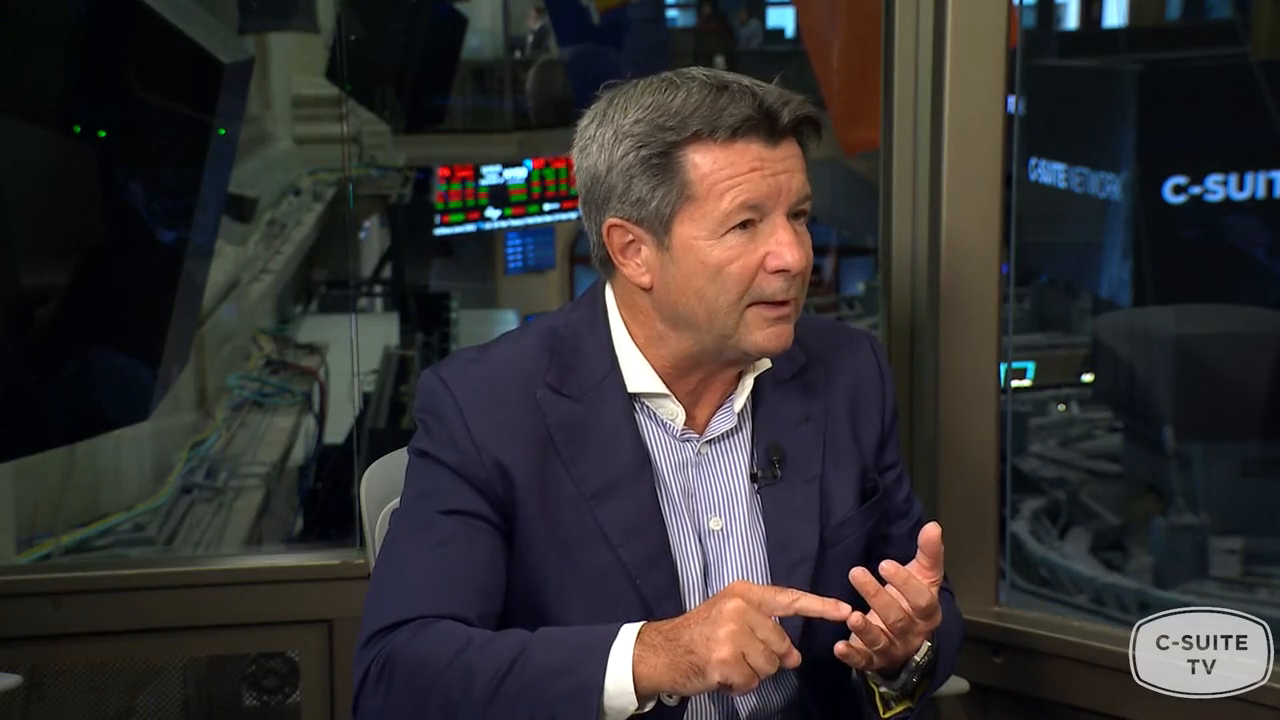
 C-Suite TV · 23 minRetire from Management, Not from Income: Tax-Smart Investing with Ray DeWitt
 C-Suite Radio · Epic Real Estate InvestingMedicare Takes Your COLA. Medicaid Liens Your Paid-Off House.
 Chairman's Corner · Jeffrey HayzlettThe Typical Small Business Still Sells for Less Than a House. Wall Street Just Figured Out Why That’s a Bargain.
Meet the founders, CEOs and operators behind stories like this one. Next reception: Fort Worth Executive Reception, Tue, Nov 17.
Attend as a guestMembership: $100/mo →