


Saturday, December 6, 2025
spot_img
HomeOperationsBest PracticesEnterprise Change Management Coach

Enterprise Change Management Coach

Enterprise Change Management (ECM)


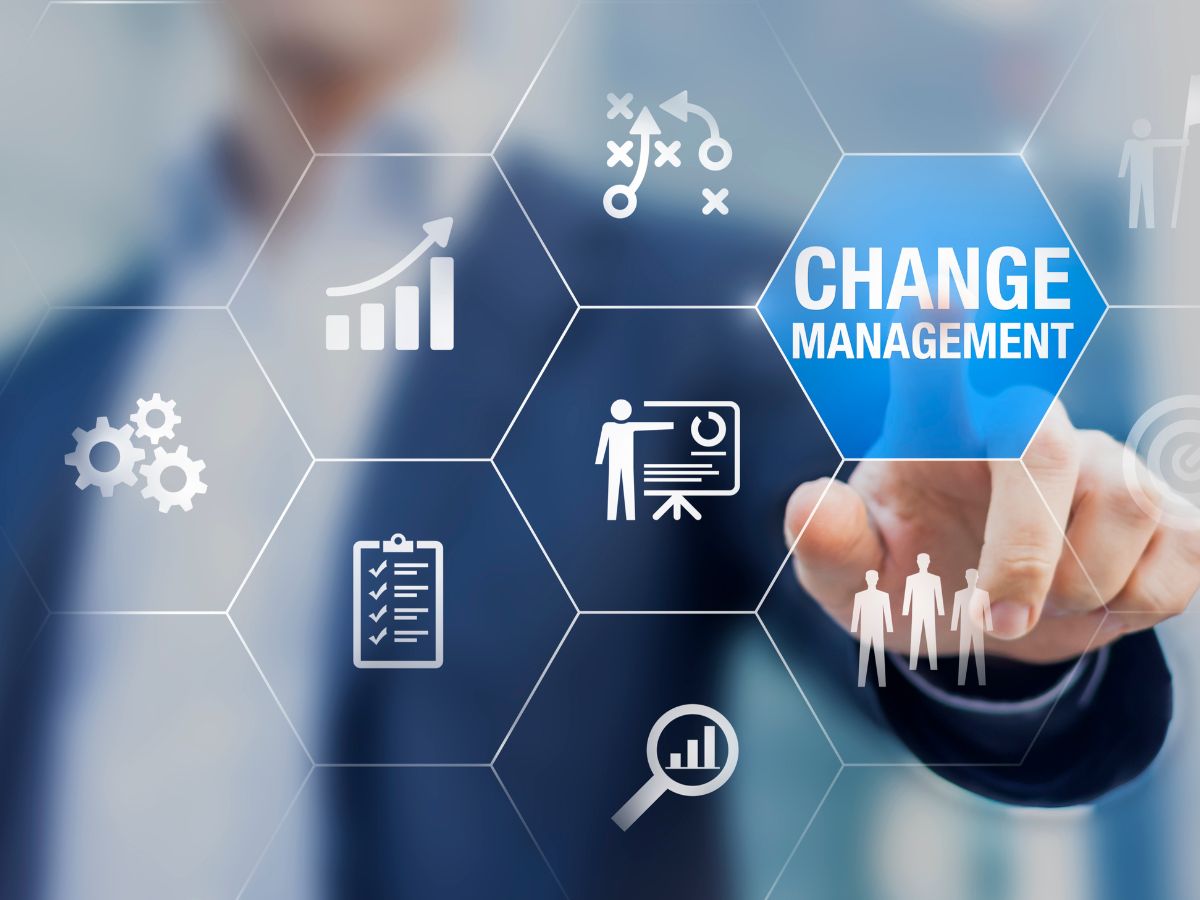
Enterprise Change Management (ECM) is a structured approach and set of processes that organizations use to manage and implement changes effectively within their business environment typically led by an Executive Change Coach to help the C-Suite plan and prepare for the change. It is a crucial discipline for businesses and institutions to adapt to new strategies, technologies, or organizational structures while minimizing disruptions and ensuring that employees can successfully transition to the new way of doing things.


Featured Amazon Product


Changes Cards: Feelings, Relationships, School, and Family Achievement

Changes Cards: Feelings, Relationships, School, and Family Achievement

The Changes Cards are designed to help children and adolescents discuss their feelings, relationships, school, and family achievement in a therapeutic setting. They are a useful tool for counselors and therapists to facilitate meaningful conversations.

Buy Now on Amazon

ECM typically involves the following key elements:

  1. Change Strategy: Developing a clear plan and strategy for the proposed change. This includes defining the goals, objectives, and expected outcomes of the change initiative.
  2. Change Leadership: Identifying and empowering leaders and champions who will guide and support the change process. Effective communication and visible leadership are essential in gaining buy-in from employees.
  3. Change Communication: Developing a communication plan to keep all stakeholders, including employees, informed about the change, its rationale, and its progress. Clear and transparent communication is crucial for managing resistance and uncertainty.
  4. Change Readiness: Assessing the organization’s readiness for change, including evaluating the capabilities, resources, and skills needed to implement the change successfully.
  5. Change Impact Analysis: Identifying how the proposed changes will affect different aspects of the organization, such as processes, workflows, and roles. This analysis helps in planning for mitigation strategies.
  6. Change Implementation: Executing the change plan, which may involve process redesign, training, technology adoption, and other activities necessary to bring about the desired changes.
  7. Change Monitoring and Feedback: Continuously monitoring the progress of the change initiative, collecting feedback from employees and stakeholders, and making adjustments as needed.
  8. Change Evaluation: Assessing the effectiveness of the change initiative against the established goals and objectives. This step helps in determining whether the desired outcomes have been achieved.

ECM is an essential practice for organizations looking to adapt to evolving market conditions, improve efficiency, and stay competitive. It is particularly relevant in healthcare settings, where changes in regulations, technologies, and patient care practices require careful management to ensure quality care and patient safety.

Enterprise Change Management Coach

An Enterprise Change Management (ECM) Coach plays a crucial role in helping enterprises, especially the C-suite executives, prepare for and navigate the complexities of organizational change. Here are ways in which an ECM Coach can assist in this process:

  1. Change Strategy Development: An ECM Coach works closely with the C-suite to develop a clear change strategy aligned with the organization’s goals and objectives. They help define the vision for the change, set priorities, and create a roadmap for implementation.
  2. Leadership Alignment: The coach helps senior leaders within the C-suite align their vision and messaging about the change. This ensures that key leaders are on the same page and can effectively communicate and model the desired behaviors for employees.
  3. Change Leadership Development: The coach identifies potential change champions within the C-suite and provides coaching and support to enhance their change leadership skills. This includes helping them understand their role in driving the change, managing resistance, and fostering a culture of adaptability.
  4. Communication Planning: Effective communication is vital during change initiatives. The coach assists the C-suite in developing a comprehensive communication plan that addresses the needs of different stakeholders. This includes crafting key messages, determining the timing of communications, and selecting the appropriate channels.
  5. Stakeholder Engagement: An ECM Coach helps the C-suite identify and engage with key stakeholders both within and outside the organization. They assist in building relationships, gathering feedback, and addressing concerns to ensure a smoother transition.
  6. Change Readiness Assessment: The coach helps assess the readiness of the C-suite and the organization as a whole for the proposed changes. They identify any gaps in skills, resources, or knowledge and work with the C-suite to address them.
  7. Conflict Resolution: During times of change, conflicts can arise within the C-suite or among senior leaders. The ECM Coach facilitates conflict resolution processes to ensure that any disagreements do not hinder the progress of the change initiative.
  8. Performance Metrics and Monitoring: Together with the C-suite, the coach defines key performance indicators (KPIs) to measure the success of the change. They establish mechanisms for monitoring progress and provide regular feedback to the C-suite to make informed decisions.
  9. Continuous Improvement: An ECM Coach promotes a culture of continuous improvement within the C-suite by encouraging feedback, learning from experiences, and adjusting the change strategy as needed.
  10. Sustainability: Once the change is implemented, the coach helps the C-suite ensure that the new practices and behaviors become ingrained in the organization’s culture, and the change is sustained over the long term.

Overall, an ECM Coach serves as a trusted advisor and guide for the C-suite, offering expertise in change management methodologies and strategies. They help the C-suite navigate the challenges of change, enhance leadership capabilities, and increase the likelihood of successful change implementation within the enterprise.

Hiring a Change Management Company

Hiring a change management Coach, Consultant or Company is a crucial decision for any organization looking to implement significant changes. To ensure that you choose the right partner, consider the following checklist:

  1. Define Your Needs and Objectives:
    • Clearly outline your organization’s goals and objectives for the change initiative.
    • Identify the specific areas where you need assistance from a change management coach or company.
  2. Experience and Expertise:
    • Evaluate the coach or company’s experience in change management.
    • Assess their expertise in your industry or sector, as industry-specific knowledge can be valuable.
  3. Credentials and Certifications:
    • Check if the coach or company holds relevant certifications in change management, such as Prosci, ACMP, or similar credentials.
  4. References and Case Studies:
    • Ask for references and case studies from past clients who have undertaken similar change initiatives.
    • Contact these references to inquire about their experiences and outcomes.
  5. Methodology and Approach:
    • Understand the coach or company’s approach to change management.
    • Ensure their methodology aligns with your organization’s values and culture.
  6. Customization:
    • Determine if the coach or company can tailor their approach to meet your organization’s unique needs and challenges.
  7. Communication and Collaboration:
    • Assess their communication style and ability to collaborate effectively with your team.
    • Ensure they can work closely with your leadership and staff.
  8. Change Leadership Support:
    • Inquire about their ability to support your C-suite and senior leadership in driving the change.
    • Verify their experience in coaching leaders through change initiatives.
  9. Training and Workshops:
    • Determine if they offer training and workshops to build change management capabilities within your organization.
  10. Resource Allocation:
    • Clarify the resources required from your organization, such as time commitments, personnel, and access to data.
  11. Cost and Budget:
    • Obtain a detailed cost proposal, including fees, expenses, and any additional charges.
    • Ensure the pricing aligns with your budget constraints.
  12. Timeline and Milestones:
    • Define the project timeline and specific milestones.
    • Ensure the coach or company can meet your desired implementation schedule.
  13. Feedback and Continuous Improvement:
    • Discuss how they gather and incorporate feedback during the engagement.
    • Inquire about their approach to continuous improvement throughout the change process.
  14. Contract and Legal Considerations:
    • Review the contract thoroughly, including terms, deliverables, and termination clauses.
    • Consider legal aspects, such as confidentiality and data protection.
  15. Alignment with Values and Culture:
    • Ensure that the coach or company’s values align with your organization’s culture and principles.
  16. References and Background Checks:
    • Conduct background checks on the coach or company to verify their reputation and history.
  17. Exit Strategy:
    • Define an exit strategy in case the partnership does not meet your expectations.
  18. Measuring Success:
    • Establish key performance indicators (KPIs) to measure the success of the coaching or consulting engagement.
  19. Flexibility and Adaptability:
    • Assess their ability to adapt to unforeseen challenges or changes in project scope.
  20. Legal Agreements:
    • Have a legal agreement in place that covers all aspects of the engagement, including confidentiality, intellectual property, and dispute resolution.

By thoroughly evaluating potential change management coaches or companies against this checklist, you can make an informed decision that aligns with your organization’s needs and ensures a successful change management initiative.


Jeffrey Cline
Jeffrey Clinehttps://KeyWordCalls.com
Jeffrey Cline Serial Entrepreneur & Tech Geek (972) 800-6670
"A Rising Tide Lifts All Boats" #ARTLAB
HOT TOPICS TV: (WATCH NOW) Branding, Start-ups, Marketing, SEO, Growing a business, Scale, Technology TV & Podcast Interviews with Tricia Been. | TV & Podcast Interviews with Jeffrey Hayzlett The future of business and the role technology will play! INNOVATION IS KEY!  **Watch Video** 23 Seconds To ensure long-term success in an increasingly digital and connected world, there is an urgent need for a dedicated technical innovation lab that will serve as the cornerstone of our innovation strategy. Such a syndication or lab will keep us ahead of the rapidly evolving technology trends in AI, ML, NLP, and Big Data. This is not just about staying competitive; it's about setting the industry standard and shaping the future. A technical innovation lab will provide a focused environment for R&D, attract top-tier talent, enable rapid innovation, and offer the agility to adapt to market changes. This is not merely an operational upgrade; it's a strategic imperative that will yield a high return on investment and ensure sustainable growth and risk mitigation. In the fast-moving landscape of today's business, an investment in a technical innovation lab is an investment in the future. WINNING TOGETHER! Case Study (Download C-Suite Network Fast Start Program Case Study) [caption id="attachment_210768" align="alignnone" width="425"] Grow your digital business or scale your brick-and-mortar with C-Suite Fast Start Program and Authority Booster service[/caption] By becoming pioneers in technological innovation, we don't just ensure our survival; we pave the way for a future where we set the benchmarks for excellence, relevance, and profitability. Cross Industry Innovation Council brings together executive leaders in a unique Master Mind setting to allow the geeks, developers and technical brain trusts to form and rank opportunities to create upside longtime value add for all network members and share holders.  These are the leaders responsible for business development, innovation, research and technology, and strategic marketing. We meet to optimize ways in which innovation can be harnessed to meet stakeholder goals from across the enterprise. Recent transformational changes in technology and business practices make it increasingly important to share experience with colleagues facing similar challenges in other industries. Topics How do I turn digital transformation into tangible business results? How to incorporate sustainability and circular into my innovation program? How do I create a true culture of innovation going beyond processes as design thinking? How to better connect Asia to the rest of the world in global ecosystems? Senior leaders with strategic innovation responsibilities, executives in C-suite (CTO, CIO), business unit innovation leaders, and senior functional experts in R&D or business/strategy development. OVERVIEW: In an age where Artificial Intelligence (AI), Machine Learning (ML), Natural Language Processing (NLP), and Big Data are no longer buzzwords but essential components of competitive advantage, the need for a cutting-edge technical innovation lab is more crucial than ever. Traditional business models are being disrupted, customer expectations are evolving, and the speed of technological change is accelerating. In this landscape, innovation is not a luxury; it's a necessity for survival and long-term success. The Urgency of Now The business environment has never been more volatile. We are at a pivotal point where companies who are not investing in technology and innovation will find themselves outpaced and outmaneuvered. The Competitive Landscape Businesses are leveraging AI for predictive analytics, automating processes through ML, enhancing customer experience with NLP, and harnessing Big Data for actionable insights. Those who don't innovate will become irrelevant. Intellectual Property and Innovation A technical innovation lab provides the perfect ground for research and development, creating a pipeline of proprietary technologies that offer significant competitive advantages. Talent Attraction and Retention Top talent in tech fields are drawn to environments where they can work on groundbreaking projects. An innovation lab becomes a magnet for the best minds in the industry. Speed to Market Having an in-house innovation lab allows for rapid prototyping and deployment, ensuring that you're the first to market with new features, products, or services. Adaptability In a rapidly changing landscape, the ability to pivot quickly is crucial. An innovation lab provides the agility and flexibility needed to adapt to market changes and consumer demands swiftly. ROI and Long-Term Viability The lab is not just an expense; it's an investment. By staying ahead of technological trends, you are setting up the business for sustainable growth, increased market share, and higher profitability. Risk Mitigation Being at the forefront of technology also allows for better risk assessment and mitigation strategies, particularly in dealing with cybersecurity threats and compliance issues. Executive Summary: Importance to Digital Marketing and Advertising In today's hyper-connected world, the fields of digital marketing and advertising are undergoing seismic shifts due to advancements in AI, ML, NLP, and Big Data. A technical innovation lab isn't just a 'nice-to-have'; it's an absolute necessity for anyone looking to excel in the digital space. Here's why: Data-Driven Insights: With AI and Big Data, a technical innovation lab can extract actionable insights from an ocean of data. This allows for highly targeted, efficient, and effective marketing campaigns. Personalization at Scale: Machine Learning algorithms can analyze customer behavior and preferences in real-time, enabling unprecedented levels of personalization, which is key to customer engagement and loyalty. Automated Customer Interactions: Through NLP, chatbots can handle customer service inquiries, lead generation, and even sales processes around the clock, providing a consistent brand experience. Rapid Adaptation: The speed at which consumer behavior and market conditions change is breathtaking. An innovation lab enables you to quickly adapt your marketing strategies, ensuring you're not left behind. Talent Magnet: In an industry where the war for talent is fierce, having a cutting-edge lab attracts the brightest minds who are interested in working on pioneering projects. Risk Mitigation: With the rise of data breaches and privacy concerns, being at the forefront of technology allows for advanced risk assessment and mitigation strategies in digital marketing practices. Long-term ROI: While setting up an innovation lab requires upfront investment, the long-term gains in customer acquisition, retention, and overall brand value far outweigh the initial costs. In summary, a technical innovation lab is an indispensable asset for staying competitive in the modern landscape of digital marketing and advertising. It enables companies to harness the full power of emerging technologies, attract top-tier talent, and most importantly, continually adapt and innovate in an ever-changing digital environment. Digital innovation and their respective use cases # Digital Innovation Use Case 1 Chatbots Customer service automation 2 Predictive Analytics Sales forecasting 3 AR Filters Social media engagement 4 Blockchain Supply chain transparency 5 IoT Sensors Inventory management 6 Voice Search Optimization SEO for voice-activated devices 7 Virtual Reality (VR) Employee training 8 Natural Language Processing Sentiment analysis 9 Machine Learning Algorithms Personalization of marketing content 10 5G Connectivity High-speed internet services 11 Drone Delivery Last-mile logistics 12 API Integrations Seamless app-to-app data sharing 13 Beacons Retail customer engagement 14 Smart Mirrors Virtual fitting rooms 15 E-Signatures Legal document verification 16 AI Copywriting Automated content generation 17 Data Lakes Centralized data storage 18 Digital Wallets Contactless payments 19 Quantum Computing Complex problem-solving 20 Serverless Computing Cloud resource optimization 21 Automated Surveys Customer feedback collection 22 RFID Tags Asset tracking 23 Geo-Fencing Location-based marketing 24 Responsive Web Design Multi-device website optimization 25 Gamification User engagement in apps 26 Robotic Process Automation Administrative task automation 27 AI Video Analytics Surveillance and security 28 Real-Time Analytics Live business dashboard 29 Facial Recognition Identity verification 30 Web Scraping Data extraction from websites 31 Progressive Web Apps Improved mobile web experiences 32 Sentiment Analysis Customer opinion mining 33 Social Listening Brand monitoring 34 SEO Automation Search engine ranking 35 Video Streaming Live events and webinars 36 Deep Learning Fraud detection 37 Crowd-Sourced Data Community-based information gathering 38 Edge Computing Local data processing 39 3D Printing Rapid prototyping 40 Smart Grids Energy consumption optimization 41 Near-Field Communication Mobile payments 42 Digital Twins Virtual representation of physical systems 43 Cybersecurity AI Intrusion detection 44 Data Encryption Secure data storage 45 Ephemeral Content Time-limited social media posts 46 Conversational Marketing Real-time customer engagement 47 Interactive Content Enhanced user engagement 48 Micro-Moments Instant customer decision-making 49 Biometric Authentication Secure user verification 50 Dark Social Private sharing analytics 51 Smart Cities Urban planning and management 52 Big Data Analytics Business intelligence 53 Augmented Analytics Automated data insights 54 Mobile-First Development App-centric customer experiences 55 Quantum Encryption Ultra-secure data transmission 56 Livestream Shopping Real-time eCommerce 57 Mixed Reality Blended virtual and physical experiences 58 Touchless Interfaces Gesture-based device control 59 Automated Translation Real-time language conversion 60 Generative Design AI-driven product designs 61 Autonomous Vehicles Self-driving cars 62 Cloud Kitchens Virtual restaurants 63 Subscription Models Recurring revenue streams 64 Zero Trust Security Conditional access controls 65 Open Banking Third-party financial service integration 66 Recommerce Platforms Second-hand eCommerce 67 Hyper-Personalization Individualized marketing 68 SEO A/B Testing Search ranking optimization 69 Ephemeral Computing Temporary cloud resources 70 Influencer Partnerships Brand promotion through social influencers 71 Wearable Tech Health and fitness monitoring 72 Social Commerce Shopping features in social networks 73 Containerization Software deployment optimization 74 Automated A/B Testing Performance comparison of different versions 75 Virtual Events Remote conferences and exhibitions 76 Crypto Payments Digital currency transactions 77 Ethical AI Bias-minimized algorithms 78 BYOD (Bring Your Own Device) Workplace flexibility 79 Affiliate Automation Automated partner commissions 80 Podcasting Audio content marketing 81 SMS Marketing Text-based promotions 82 Data Monetization Selling or leveraging data assets 83 Human-AI Collaboration Combined decision-making 84 Email Automation Automated email marketing campaigns 85 Instant Apps No-installation-required applications 86 Digital Nudges Behavioral prompts in apps and content for High Intent Taggs for-profit and non-profit marketing and advertising! 87 Frictionless Checkout Simplified payment processes 88 AI Content Curation Automated recommendation systems 89 Location-Based Services Geographical personalization 90 Volumetric Video 3D video capture and display 91 E-Sports Competitive video gaming 92 Drones Aerial photography and surveillance 93 Virtual Assistants Automated personal assistance 94 Smart Contracts Automated, blockchain-based contracts 95 Content Fragmentation Snackable content for mobile users 96 Account-Based Marketing Targeted B2B marketing 97 Native Advertising In-feed, non-disruptive ads 98 Ad Retargeting Remarket to previous website visitors 99 Click and Collect Online ordering with physical pickup 100 Haptic Technology Tactile feedback in virtual environments This extensive list illustrates the multitude of digital innovations that are transforming industries and consumer experiences, offering a plethora of opportunities for companies to excel and innovate but the INNOVATION COUNCIL will go to the next level and not only work on todays problems and solutions but future proof our ecosystem by building 3-5 years out on the bleeding edge of technology to stay in the forefront of technology as a TRUSTED LEADER! Most Frequently Asked Questions: How do I make the most out of the recession for my business? Related Topics: C-Suite Insurance Quotes Power Pages Trending Now! C-Suite Radio & Podcasts Publishing Active Niches Healthcare, Biotech, Wellness, Finance, Insurance, Conversational AI, Travel, Non-Profit, Ecomm Some Current Projects, Businesses and Board Seats 1-800-MEDIGAP, Genesys, Health IT Services, KeyWord Calls, Currio Care, Cuurio
RELATED ARTICLES
- Advertisment -spot_img

Most Popular