There is a quiet epidemic going on inside Western families right now. Adult children are walking away from their parents. They are going low contact. They are going no contact. One in four U.S. families is currently estranged from at least one member.
Most of the public conversation is loud. People are blaming the kids. People are blaming the parents. Nobody is fixing the part that actually breaks the family.
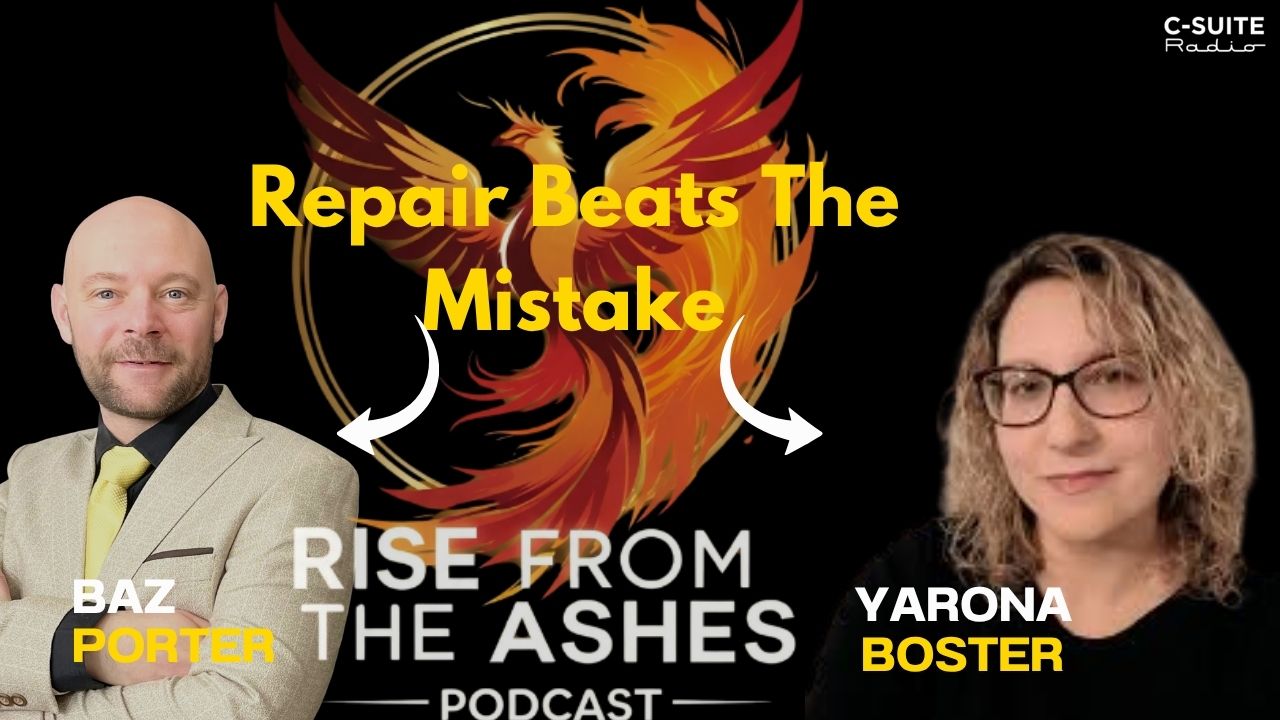
Yarona Boster has been working in this space for almost two decades. She is a communication strategist, a TEDx speaker, a death doula, and a two-time international bestselling author. Her new book is called Unspoken Signals: Essential Parenting Skills to Raise Emotionally Secure Children. In Part 2 of her conversation on Rise From The Ashes, she walks straight into the heart of why families fracture and what it actually takes to put one back together.
Her starting point is communication. But not in the way most leadership books mean it. She is talking about the signals you send when you are not even speaking. The ones your child reads from the way you sit at the table. The ones your team reads when you walk into the meeting carrying a bad phone call you swore you’d shake off.
She calls those unspoken signals. Her book is named for them.
She gives the example of her husband. He has a dry, sarcastic sense of humor. Her eight-year-old son doesn’t read sarcasm yet. So her husband says something he means as a joke, and her son hears it as a hit. Most parents in that moment would defend the intention. I didn’t mean it that way.
Yarona says that is the wrong move every time. You acknowledge what the child received first. You sit with what they felt. Only then do you explain what you meant. The order matters more than the words.
She zooms out from there into the bigger problem. We are all carrying hypervigilance now. Our nervous systems are stuck in survival mode. We make snap judgments because the platforms train us to. We swipe. We block. We move on. We do not stop to read the signal.
That carries into our homes. We miss the small things our kids are telling us. We miss what our partners are telling us. We miss what our teams are telling us. The misses pile up.
And then one day an adult child stops calling. And the parent doesn’t know why.
Yarona’s answer is not soft. She says you have to do two things, and both of them are hard.
First, you regulate yourself before you try to handle anything else. Your kid is crying. Your nervous system is firing. If you go in hot, the kid stays hot. You calm your own body first. Then you go in.
Second, you humanize yourself. You apologize. You tell your child you had a bad day. You tell them it wasn’t them. And — this is the part most parents skip — you tell them you’re glad to be home with them anyway, even on the bad day. You give them the gift of knowing their presence is the thing that makes the bad day softer.
The deeper truth underneath all of this is what she calls the repair. You are going to mess up. You are going to break something. The whole game is whether you come back.
She says it plainly: the repair is more important than the mistake.
She closes Part 2 with a new definition of success. Not the achievement kind. Not the end-goal kind. She says success is the quiet acknowledgement to yourself that you are still here, still trying, and still learning. That’s the whole thing.
Her book — Unspoken Signals: Essential Parenting Skills to Raise Emotionally Secure Children — is available now. Find her at yaronaboster.com and on LinkedIn and Instagram.
Questions listeners ask
Q: Why are so many adult children going no contact with their parents right now?
The cultural conversation points to a few things stacking on top of each other. People are more aware of what unhealthy family dynamics look like. They have more language for it. And they are less willing to stay in relationships where their attempts to set limits get dismissed. Yarona’s read is that most of these ruptures could have been prevented earlier, with smaller repairs that never happened.
Q: What does it mean to “regulate yourself first” as a parent?
Children mirror what they feel in the room. If you are spiked and anxious, they pick that up before you say a word. The work is calming your own nervous system before you try to calm theirs. Slower breath. Lower voice. Body softer. Once you are regulated, they can borrow that regulation from you. Try to soothe them while you are still spiked, and you will both stay spiked.
Q: What does Yarona Boster mean by “the repair is more important than the mistake”?
Every parent breaks something at some point. They lose their temper. They say the wrong thing. They miss the signal. The mistake is not the deciding moment. The deciding moment is what comes next — whether you go back, name what happened, apologize, and rebuild the connection. Kids who watch their parents repair learn how to repair their own future relationships.
Watch the full conversation on Rise From The Ashes. Subscribe on YouTube so the next story finds you:
https://www.youtube.com/@risefromtheashespodcast