


Why Should Nashville Property Owners Request Tree Care Before a Storm?
For Nashville property owners, the safest time to address a questionable tree is usually before a hanging limb, sudden lean, or split trunk becomes an emergency. Chop Nashville helps homeowners, commercial property managers, and HOAs evaluate trees that may be damaged, overgrown, declining, or too close to important parts of the property. A proactive visit can also give owners time to compare practical options, plan access around gates or landscaping, and schedule work before storm-related demand makes a concern more difficult to address. It is generally easier to make thoughtful decisions when a tree is stable, and the area beneath it can be inspected safely.
Middle Tennessee weather can bring strong thunderstorms, heavy rain, wind, and occasional ice or wet-snow loading. Those conditions can expose problems that were already developing in a tree, including dead wood, weak unions, trunk cracks, root damage, or decay. A professional assessment provides a clearer basis for deciding whether a tree needs pruning, support, removal, or ongoing observation.
The inspection can also help distinguish recent storm damage from longer-term decline. For example, a broken limb may be an isolated issue. In contrast, repeated dieback, cracks, fungal growth, or changes around the root flare may indicate a broader condition that warrants closer attention. Tree risk is not just about height or species. A healthy-looking mature tree beside a driveway, roofline, fence, sidewalk, or neighboring yard deserves a different level of attention than the same tree in an open area. Site conditions, past pruning, soil drainage, construction disturbance, and the potential target all matter. Research on urban trees and storms shows that tree condition, canopy conditions, neighborhood characteristics, and community vulnerability can all influence storm-related risk. Preparing before severe weather helps property owners make deliberate decisions rather than under the pressure of an active hazard. When a property needs a broader plan rather than a single service call, arborist consulting services can help clarify tree health concerns, preservation options, and future maintenance priorities.
How Does a Nashville Tree Risk Assessment Work?
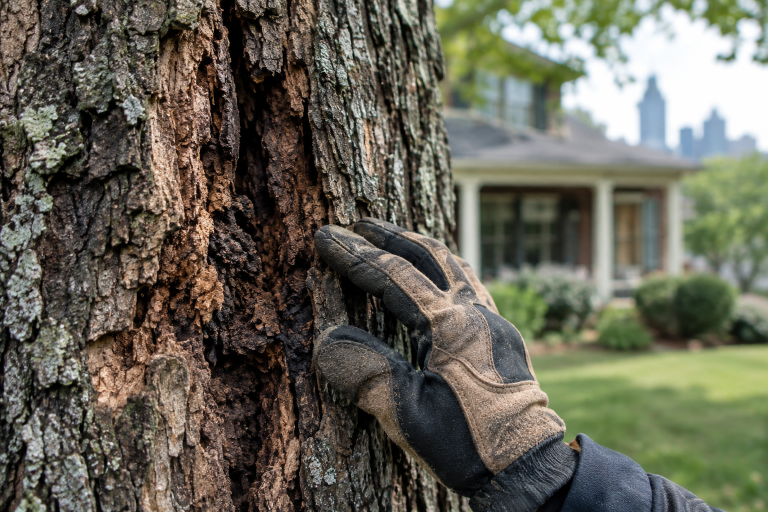
An assessment-led approach starts with the tree’s condition and location. An arborist may review the species, approximate age, size, canopy condition, trunk structure, root area, visible defects, and history of storm or construction damage. The surrounding space also matters, especially homes, parked vehicles, utility lines, roads, patios, fences, and neighboring properties. Common warning signs include dead branches, cracks, cavities, fungal growth near the base, thinning foliage, soil heaving around roots, a new or worsening lean, and branches with narrow or weak attachments. No single sign automatically means removal is required. The goal is to understand the level of concern and identify the most sensible next step. It is also important to consider whether the tree has changed recently. Fresh cracks, lifted soil, newly exposed roots, or branches that suddenly extend over a roof or parking area may warrant a faster review than conditions that have remained stable for years.
Which Services Can Address Common Tree Problems?
- Tree removal: Appropriate for dead, hazardous, unwanted, or unmanageable trees when preservation is no longer a reasonable option.
- Pruning and trimming: Can remove dead or overgrown limbs, improve clearance, and address selected structural concerns.
- 24/7 emergency tree service:Intended for fallen trees, storm-damaged limbs, and urgent hazards requiring professional response.
- Stump grinding and removal: Helps reclaim an area after removal for landscaping, access, or construction.
- Tree cabling and bracing: May support selected trees with weak unions or limbs that have preservation potential.
- Tree inventory and consulting:Useful for larger residential properties, commercial sites, and associations that need organized maintenance planning.
Each service should be selected for a defined purpose rather than as a one-size-fits-all response. For instance, pruning may improve clearance and remove dead wood, but it cannot correct every root, trunk, or decay concern. Likewise, support hardware may reduce strain on selected limbs, but it requires appropriate installation and periodic inspection.
Chop Nashville also offers planting, transplanting, land clearing, and specialized equipment for complex work. This range matters in a growing city where a backyard tree may sit between a home, detached garage, fence, landscaping, and a narrow access point.
When Can a Tree Be Saved Instead of Removed?
Removal is not the only answer for every damaged tree. For example, a mature tree with a weak limb extending over a Nashville driveway may be a candidate for structural pruning or a support system if its trunk, roots, and remaining canopy are in suitable condition. The answer depends on the severity of the defect, the likelihood of failure, and what could be damaged if failure occurs. Preservation decisions should consider disease symptoms, root-zone disturbance, drainage, decay, branch structure, and the tree’s value to the site. Proper pruning can reduce specific concerns, while cabling or bracing may be considered for certain structurally compromised trees. If the risk remains unacceptable, removal may be the more responsible choice. A preservation recommendation should also include realistic follow-up expectations. Trees retained after corrective work may need monitoring after future storms, seasonal changes, or nearby construction, particularly when a defect cannot be eliminated. Ongoing observation helps property owners determine whether the original concern remains stable or is worsening.
How Does Nashville’s Urban Environment Affect Tree Health?
Urban trees often grow with limited rooting space, compacted soil, altered drainage, pavement, and nearby building activity. In Nashville, dense clay soil can hold water and create challenging conditions after extended rain. Changes to grading, trenching, or heavy equipment traffic can also damage roots without immediately affecting the canopy’s appearance. Because root damage and soil compaction may not be obvious from above ground, trees can appear normal for a period before showing reduced growth, thinning foliage, or dieback. Protecting the area beneath and beyond the canopy during construction can therefore be an important part of preserving a tree that is otherwise worth retaining. Protecting viable canopy can benefit the broader property and community. In a controlled street-tree study, researchers estimated a runoff reduction benefit of 6,376 liters per tree over a growing season with 42 storm events. That urban tree stormwaterresearch does not mean every Nashville tree performs the same way, but it reinforces why preservation is worth considering when safety and tree condition allow.
Why Is Chop Nashville Prepared for Complex Tree Work?
Complex tree work requires more than equipment alone. Chop Nashville states that it has multiple ISA Certified Arborists on staff, more than 10 years of experience, licensed and insured service, and 24/7 emergency availability. Its in-house GrappleSaw crane can support controlled work where access is tight or where limiting impact to surrounding property is especially important. For Nashville homes, businesses, HOAs, and managed properties, the practical advantage is a plan that matches the tree and the setting. A low-impact approach, proper equipment, and a defined work scope can help protect nearby landscaping and structures while addressing the actual hazard. Careful planning is especially valuable when branches are suspended above roofs, fences, vehicles, or landscaped areas. Establishing a controlled work zone, identifying access limitations, and matching the equipment to the site can reduce unnecessary disruption while keeping the work focused on the identified concern.
What Should You Do After Storm Damage?
- Keep people and pets away from fallen trees, suspended limbs, and damaged root areas.
- Stay clear of trees touching or near power lines, and contact the utility provider for electrical hazards.
- Photograph damage from a safe distance for insurance or service documentation.
- Report the tree’s location, visible damage, nearby structures, and access limitations when requesting help.
- Ask whether stabilization, pruning, or preservation is possible before authorizing removal, when conditions are safe enough for that evaluation.
- Do not attempt to cut, pull, or move limbs that are under tension or resting on another tree or structure.
Frequently Asked Questions About Nashville Tree Care
Does every storm-damaged tree need removal?
No. Some trees can be retained with pruning, cabling, bracing, or monitoring. A professional inspection helps distinguish a manageable defect from a more serious hazard.
What information should be included in a service request?
Include the address, tree location, approximate size, visible symptoms, nearby targets, photos taken safely, and whether the concern involves emergency work, pruning, removal, planting, or consultation.
Why schedule an inspection before storm season?
Pre-storm inspections can identify conditions that are easier to address before wind, saturated soil, or fallen limbs create an urgent access and safety problem.
They also allow property owners to prioritize multiple trees instead of reacting only to the most visible issue. A planned approach can address high-priority defects first while identifying trees that need routine pruning or future monitoring.
Make a Chop Nashville Request Before a Small Concern Grows
A timely Chop Nashville request can give Nashville property owners a practical path forward, whether the right solution is preservation, pruning, support, removal, planting, or long-term monitoring. Clear information and an assessment-first mindset help protect people, property, and the trees that continue to serve the landscape.
Conclusion
Proactive tree care helps Nashville property owners identify potential hazards before storms turn them into urgent problems. Through professional inspections, Chop Nashville can help determine whether a tree needs pruning, structural support, ongoing monitoring, or removal based on its condition and surroundings. Regular assessments are especially valuable for trees near homes, driveways, fences, and utility lines, where damage could affect people and property. By addressing warning signs early, protecting root zones, and following a clear maintenance plan, homeowners, HOAs, and commercial property managers can reduce avoidable risks while preserving healthy trees whenever practical. After severe weather, safety should always come first, with qualified professionals handling hazardous limbs and damaged trees.

