There is a particular kind of business advice that I have very little patience for.
You know the kind.
Throw more money into ads.
Post more content.
Work harder.
Hustle longer.
Launch faster.
Buy another template.
Try the next trend.
It is loud, exhausting, and often detached from the actual mechanics of building a profitable business.
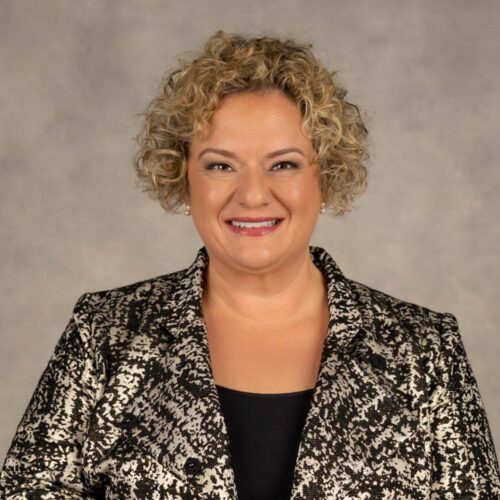
And that is exactly why my conversation with Cheryl Texeira mattered. Cheryl is a certified profit acceleration business coach and the founder of Ghost Light Business Coaching and Consulting. With a background in government systems design, she now helps service-based entrepreneurs unlock hidden profit, build a market-dominating position, and scale sustainably. Often, that work produces between $10,000 and $50,000 in additional monthly profit in just weeks—without increasing ad spend and without asking already overextended founders to work more hours.
Now that gets my attention.
Because too many entrepreneurs are trying to grow their businesses with the equivalent of wishful thinking and caffeine. They are grinding harder while paying too little attention to the one thing that actually determines whether their business is healthy:
profit.
Not revenue for vanity’s sake.
Not likes, clicks, or applause from strangers on the internet.
Not the illusion of momentum.
Profit.
Cheryl’s journey is interesting not just because of the businesses she helps or the results she creates, but because she brings something many entrepreneurs desperately need and rarely get enough of: operational discipline with a growth mindset.
In other words, she is not just helping founders make more money. She is helping them become the kind of CEOs who know how to run a business properly.
And frankly, that is a far more valuable transformation.
Profit Is Not a Dirty Word. It Is the Point.
One of the things Cheryl said early in our conversation was so simple it almost sounds obvious: as a profit acceleration business coach, she is solely focused on helping clients make more profit.
That clarity is refreshing.
Because somewhere along the way, many service-based entrepreneurs have become deeply confused about what they are building. They know how to deliver their service. They know how to help clients. They may even know how to market themselves reasonably well. But they are far less confident when it comes to understanding the numbers that tell them whether the business itself is actually working.
That is not a minor gap.
That is a leadership problem.
Cheryl addresses it by giving clients a system, starting with what she calls a CEO dashboard built around four profit levers:
- more leads
- more conversions
- more transactions
- more profit
Simple. Clear. Useful.
And that matters, because most founders are drowning in micro-data and vanity metrics that make them feel busy but do not necessarily help them make better decisions. Cheryl’s work pulls them back to the executive level. What is happening in the business? Where is the money coming from? Where is it stalling? What should be measured? What deserves action?
That is what CEOs should be paying attention to.
Not whether a post got more likes than the last one.
Not whether some vanity metric delivered a quick dopamine hit.
Not whether the internet gave them applause.
The CEO dashboard forces a better question: what is actually moving profit?
Why Weekly P&L Review Is a Leadership Practice, Not an Accounting Chore
Another part of Cheryl’s methodology that I love is her insistence that clients review their profit and loss statement weekly.
Let me say this as plainly as possible: this is not glamorous advice, which is one reason it is so powerful.
Entrepreneurs love strategy. They love ideas. They love branding, messaging, launches, visibility, and possibility. Many of them do not love the P&L. The numbers feel intimidating, boring, or occasionally painful. And when something feels painful, it is easy to avoid it.
But Cheryl is right. If you do not know your numbers, you are not running your business. You are reacting to it.
Weekly review creates intimacy with reality.
That matters because a system like Cheryl’s is not built on one-off tactics. It depends on the data. It depends on understanding what changed, what improved, what slipped, what held steady, and what patterns are emerging over time. Without current books and consistent review, the founder is left making guesses dressed up as decisions.
And that is how businesses drift.
What Cheryl helps clients understand is that even small gains matter. A 3 percent increase is worth celebrating, not dismissing. Most business owners wave off a 3 percent improvement as insignificant or assume it is a fluke. But business growth is not only built through dramatic leaps. It is built through compounded gains.
She gave a simple example that every executive should internalize: if you add 10 percent to $100, you get $110. Add 10 percent again, and now you are at $121. That is the beginning of exponential growth. Layer multiple percentage improvements across several areas of the business, and the outcome becomes far more significant than many owners expect.
In Cheryl’s system, a 3 percent increase in three different areas can create a 46 percent increase in profit.
That is not trivial.
That is transformative.
And it happens because the founder stops chasing random tactics and starts operating a system.
The Difference Between Positioning and a Market-Dominating Position
One of the most compelling stories Cheryl shared involved a social media expert who was doing well but had a specific offer generating about $2,500 a week. Good, but not yet performing at its full potential.
Rather than telling her to scrap the offer or create something new, Cheryl did what seasoned operators know to do: she worked with what was already there.
That alone is a lesson many entrepreneurs need.
Too often, business owners abandon offers too quickly. They create something thoughtful, put it into the market once, send one email, hear silence, and conclude nobody wants it. That is nonsense. More often than not, the offer has not yet been marketed properly, positioned clearly, or tested with any real rigor.
Cheryl helped this client refine what she calls a market-dominating position. This is not the usual fluffy positioning statement businesses write and then ignore. It is a deeper strategic construct built around:
- the offer
- who it serves
- the innovation behind it
- the bold promise rooted in actual client results
That last part is essential.
As Cheryl worked with the client, they discovered that the results she was delivering for customers were significantly better than she had assumed. That is a theme I see often. Business owners become so accustomed to their own work that they underestimate the impact they create. They guess at client value instead of measuring it, and in doing so, they understate their promise in the market.
When that promise was clarified and reflected more confidently on the sales page, the business changed quickly.
The offer went from generating about $2,500 a week to roughly $6,500 a week. The close rate jumped from around 20 percent to about 54 percent. More buyers chose the higher-level offer, increasing the average sale as well.
That is not a cosmetic win.
That is what happens when a business finally understands its value and learns how to communicate it with confidence.
You Are Probably Wrong About the Value You Deliver
One of the most important ideas tucked inside Cheryl’s client story is this: most business owners are wrong about the value they think they create.
Not because they are bad at what they do.
Because they are too close to it.
They make assumptions over time. They believe they know what clients care about most. They think they understand which outcomes matter, which differentiators stand out, and which promises feel credible. But unless they are actively collecting data from clients, they are guessing.
And the market punishes guessing.
When Cheryl helped that client uncover the actual results customers were experiencing, it changed everything. Better positioning led to better trust. Better trust led to better conversions. Better conversions led to more profit.
Executives should pay attention to that chain.
Your market does not buy what you think is valuable.
It buys what it experiences as valuable.
Those are not always the same thing.
And the more clearly you understand that distinction, the more precisely you can position your business in a way that ends price shopping and reduces commoditization.
That is what a category-of-one business does. It becomes difficult to compare directly because it is no longer competing on generic terms.
From Government Systems Design to Entrepreneurial Growth Strategy
Cheryl’s own journey makes this work even more interesting.
Before becoming an entrepreneur full-time, she spent 23 years in government and systems design. That background matters. It gave her a level of operational rigor, process orientation, and resilience that many newer entrepreneurs simply have not had to develop yet.
Like a lot of successful founders, she had entrepreneurial instincts long before she formally leaped. In college, she ran a tutoring business and treated it like a real enterprise, not just a side hustle. Later, while nearing the end of her career, she started building websites on WordPress for her brother-in-law and then for a few clients. As demand grew, so did the overwhelm.
That is where the interesting pivot began.
Rather than simply push through the chaos, Cheryl applied what she had learned in project management, especially the agile Scrum framework. And when she did, the relief was immediate. The speed improved. The work became more manageable. She saw a structure that could help entrepreneurs far beyond her own client load.
So she started teaching it.
Not with some polished giant production. Not with a flashy funnel empire on day one. She started inside a Facebook group, teaching in the comments, sharing ideas, guiding people through the framework. She converted a few of those people into paying clients, realized she had something real, hired a coach, and prepared for her first live launch.
The timing?
March 16, 2020.
Yes. The week the country shut down due to the pandemic.
That would rattle almost anyone. But it also revealed something important. The need for business guidance did not disappear in uncertainty. If anything, it intensified. Cheryl closed clients during that moment and served more than 20 clients that year.
That tells you something about both the market and the founder.
The System Matters More Than the Tactic
What Cheryl eventually found was the Profit Acceleration System, created by Carl Bryan, and it resonated because it matched how she already thinks: operationally, cyclically, and through continuous improvement.
That alignment is important because so much of bad business coaching is tactic-heavy and system-light.
Try this funnel.
Use this script.
Post this content.
Run this webinar.
Sometimes those things are useful. Often they are incomplete.
Cheryl’s approach is stronger because it recognizes that sustainable growth is cyclical. You review the numbers, identify opportunities, make improvements, measure the outcome, and iterate. Then you do it again. You do not tear everything down every time something underperforms. You refine. You optimize. You build from what is working.
That is how serious businesses scale.
She told a story of another client who would spend months creating something wonderful, send one email to promote it, get no sales, and conclude no one wanted it. Cheryl’s response was exactly right: no, you have not yet done a full marketing campaign. You have not given the offer due diligence. You have not gathered enough data to judge its viability.
This is where mature leadership differs from reactive entrepreneurship.
A CEO understands that one disappointing result is not always a verdict. Sometimes it is simply the first data point in a longer test.
The Bold Decision to Leave Security Behind
After two years in business, Cheryl made another bold move: she retired from her full-time career five years early and bought herself out to do this work full-time.
That is not a small decision.
People love entrepreneurial stories when they are neat and triumphant. They are less eager to talk about the cost of choosing yourself while the outcome is still uncertain. Cheryl invested real money to create her freedom. She stepped away from the familiar, the structured, and the secure because she believed the next chapter was worth it.
And she has not looked back.
That matters for executives because too many people treat career reinvention as reckless when in reality it can be highly strategic. Cheryl did not leap blindly into fantasy. She brought with her decades of pattern recognition, crisis navigation, systems thinking, and delivery discipline. She translated those assets into a second act that is helping entrepreneurs build businesses with more intelligence and less chaos.
That is not reinvention for reinvention’s sake.
That is earned evolution.
Growth Requires Boundaries, Not Just Ambition
One of the more honest parts of our conversation came when Cheryl talked about her own roadblocks as a founder.
Not the pandemic.
Not operations.
Not market demand.
Boundaries.
She loves helping people. She loves solving problems. She loves a challenge. And in the early days, that meant she often gave away too much time, too much energy, and too much service beyond what had actually been purchased. She put people into lower-cost offers and then gave them higher-tier support because she wanted them to succeed.
Many service-based entrepreneurs will recognize themselves in that.
It comes from generosity, but if left unchecked, it becomes self-destructive.
At one point, Cheryl said she ended up in debt trying to keep someone else from getting into debt. That sentence should land hard for any founder who over-functions for clients.
You cannot build a healthy business by sacrificing your own sustainability in the name of helping everyone. That is not noble. It is unsustainable. And eventually it helps no one, because if your business collapses under the weight of overgiving, you will not be there to serve the next client either.
This is a critical lesson in scaling. Boundaries around time, pricing, scope, and delivery are not selfish. They are part of leadership.
Building Beyond the Founder
When I asked Cheryl about growth strategy beyond herself, her answer was exactly what I would expect from someone with systems design in her DNA: document everything.
Policies.
Procedures.
Roles.
Responsibilities.
Job descriptions.
In other words, stop building a business that only works when it all lives in your head.
This is one of the biggest transitions any founder has to make. The business cannot become scalable, sellable, or sustainably operable if every decision, process, and standard depends on the owner’s memory and constant intervention. Cheryl rightly points out that standard operating procedures help new people get up to speed faster, maintain compliance, and increase business value over time.
And she is also right that many founders make decisions from the wrong hat. They are in distress over a tech issue, so they make a panicked purchase. They are acting from overwhelm, not from the CEO mindset.
That distinction matters.
The CEO’s job is to focus on the right numbers, assign the right responsibilities, and make decisions from strategic clarity rather than emotional urgency.
That is what Cheryl is really teaching.
Not just how to make more profit.
How to become the kind of leader who can sustain it.
What Business Executives Should Learn from Cheryl Texeira’s Journey
Cheryl Texeira’s journey offers a powerful lesson for any executive, especially those building service-based businesses in noisy markets.
Profit does not improve by accident. It improves when leaders stop chasing random tactics and start operating a system. It improves when they know their numbers, review them consistently, refine what is already working, position themselves with confidence, and build a business that is resilient enough to withstand disruption.
There is nothing sexy about a weekly P&L review.
There is nothing flashy about standard operating procedures.
There is nothing trendy about focusing on leads, conversions, transactions, and profit.
And that is exactly why it works.
Because real growth is not built on hype. It is built on disciplined decisions repeated over time.
For business executives, Cheryl’s story reinforces several truths:
- small percentage gains compound into meaningful profit growth
- founders often undervalue the results they deliver
- better positioning can eliminate price shopping
- systems outperform scattered tactics
- resilience from earlier careers can become a tremendous entrepreneurial asset
- boundaries are essential to sustainable service-based growth
Most of all, her journey is a reminder that there is often far more money hiding inside a business than the owner realizes. Not because the business needs to be reinvented from scratch, but because it needs to be understood more clearly, operated more intentionally, and led from the top with greater discipline.
That is how you stop guessing.
That is how you scale.
And that is how you build a business that becomes, in the best possible way, impossible to compare.
Listen to the full episode on C-Suite Radio: Disrupt & Innovate | C-Suite Network
Watch the episode: DI 165 The Importance of Financial Literacy for CEOs
Check our website: LcubedConsulting.com
This article was drafted with the assistance of an AI writing assistant (Abacus.AI’s ChatLLM Teams) and edited by Lisa L. Levy for accuracy, tone, and final content.