There are some conversations that confirm what you already know.
And then some conversations take something you have known for years, turn it slightly, and suddenly make you see it in a deeper, sharper, more useful way.
That was my conversation with Ted Whetstone. He is a strategic thought partner and executive coach to visionary leaders operating in high-stakes, fast-moving environments. He helps senior executives clarify bold visions, challenge limiting assumptions, and architect transformative strategies that scale with impact, authenticity, and power. His career spans Fortune 500 change management, international market development, and operational leadership. He is known for catalyzing nonlinear transformation.
And yes, he is just a little bit naughty in the best possible way.
I say that with affection because the leaders and advisors who create the greatest positive impact are often the ones willing to poke at the assumptions everyone else politely steps around. They are willing to ask the uncomfortable question. They are willing to challenge the supposedly brilliant plan. They are willing to say, “Are we sure this is actually the best course of action for the people involved?”
That matters.
Especially now.
Because business leaders are navigating a period where speed is high, stakes are higher, and the old models of top-down change, command-and-control leadership, and forced alignment are breaking down in real time. Organizations need to evolve. Markets are shifting. Teams are asking harder questions. Customers are demanding more. And leaders are being forced to face a truth many have long avoided:
You cannot build extraordinary results with disengaged humans.
That is where Ted’s journey becomes so relevant for business executives.
From Process and Profitability to the People Side of Business
Ted started the first part of his career as a management consultant working with large companies. And like many people who have spent time in big organizational environments, he saw firsthand how easily businesses become obsessed with process, profitability, and structure while slowly losing sight of the very thing that creates value in the first place:
people.
That observation is not new. But the way Ted responds to it is what makes his work stand out.
He saw that in larger organizations, people often stop being treated like creative, authentic, adaptive human beings and start being treated more like functional units. Resources. Headcount. Capacity. Operational inputs. Replaceable components in a bigger machine.
And when that happens, culture thins out. Innovation slows down. Engagement becomes performative. Leadership becomes managerial rather than catalytic.
So Ted moved toward coaching because he recognized that the deepest leverage point in business was not only the process chart or the operating model. It was the internal world of the leaders making decisions. What is going on in their heads? What are they assuming to be true? What are they over-attached to? What are they refusing to question? What possibilities are they unconsciously ruling out?
For executives, this is a critical shift.
Because if leadership is only about optimizing systems, you can get incremental gains. But if leadership is about transforming how people think, relate, and create together, you can change the trajectory of an organization.
Ted’s journey sits right at that intersection.
The Critical Distinction: People Like Change More Than We Admit
One of my favorite moments in the conversation was Ted’s reframing of a phrase many of us have heard for years: “People don’t like change.”
Ted challenged that.
And he is right to do so.
People actually do like change.
We like a new pair of shoes.
We like a trip to a new city.
We like new possibilities, new energy, new opportunities, new growth.
We like being part of something becoming better.
What we do not like is being changed.
That distinction is everything.
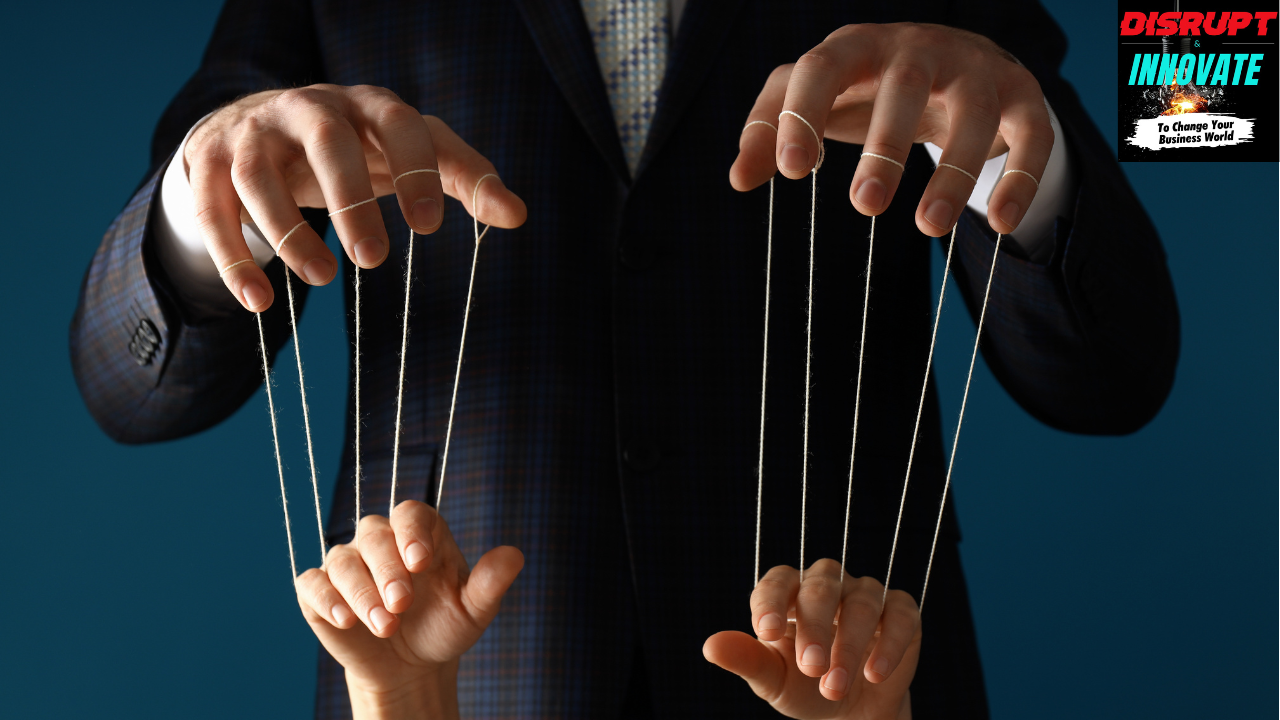
Business leaders make this mistake all the time. A leader at the top has an idea. They decide it is brilliant. They announce it. They send it down through the organization as if strategy were a delivery service and compliance were the same thing as commitment.
Then they wonder why the rollout is rocky. Why does resistance appear? Why does morale dip? Why middle management stalls. Why execution gets messy. Why the supposedly obvious path turns into organizational turbulence.
The answer is simple: people were not invited to change. They were subjected to it.
Ted’s work is so valuable because he helps leaders understand that change imposed and change co-created are not remotely the same experience.
If you invite people into the process, you get energy.
If you force people into the process, you get friction.
That is not soft thinking. That is operational reality.
Commitment to the Outcome, Not Attachment to the Path
This may be the single most useful leadership distinction Ted offered, especially for executives driving transformation:
Be committed to the outcome, but not attached to how you get there.
That is elegant. It is also very hard.
Because many leaders blur those two things. They say they want a result, but what they are actually protecting is their idea of the route. They become attached to the mechanism, the process, the architecture, the timeline, the original concept, the plan they announced publicly, the strategy they now feel personally identified with.
In other words, the ego gets welded to the method.
And once that happens, the organization’s intelligence gets shut out.
Ted helps leaders separate those two dimensions. You can absolutely point to the future state you want. You can be deeply intentional. You can say, “This is where we are headed.” But if you want the best path to emerge, you have to let the organization participate in discovering it.
That is leadership.
Not because the leader abdicates responsibility, but because the leader recognizes that the people closest to the work often hold insights the top cannot see alone.
For business executives, this is a crucial lesson. Your job is not always to have the full answer. Your job is often to hold the direction strongly enough that others can help build the route intelligently.
That shift changes everything.
What Attached Leadership Looks Like
Let’s be honest about the alternative.
The leader who is attached to the idea tends to sound like this:
- This is the plan.
- This is the right way.
- We are doing it because I said so.
- If you do not see it, you are the problem.
- We will push this through no matter what resistance appears.
Sometimes, yes, a visionary leader sees something others do not yet see. That happens. Sometimes, conviction is required before consensus exists. But in many cases, what leaders call conviction is actually rigidity. What they call decisiveness is actually over-identification. What they call strategic confidence is actually a refusal to listen.
And that can be expensive.
I have rarely seen someone successfully die on the hill of an idea nobody else supports and call it a win. More often, the organization pays the price. Trust erodes. Talent disengages. Execution slows. Customers feel the cracks. And the leader becomes increasingly isolated from reality because the only feedback left is filtered.
Ted’s coaching interrupts that pattern.
He helps leaders move from “my way or the highway” into a more powerful posture: clarity about destination, humility about design, openness to intelligence from across the system.
That is not a compromise. It is a better way to lead.
Nonlinear Transformation Requires Vulnerability
Ted describes part of his work as helping leaders catalyze nonlinear transformation. That phrase matters because the most meaningful shifts in organizations do not happen in straight lines.
They happen when someone questions an assumption everyone else has normalized.
They happen when a leader stops optimizing a broken model and imagines a better one.
They happen when a team is allowed to think beyond current constraints.
But to do that, leaders have to let go of something they often cling to: certainty.
Ted talks about helping leaders envision the future unencumbered by today’s assumptions and limitations. That sounds inspiring, but let’s call it what it is: vulnerability.
Because imagining a future bigger than your current paradigm requires admitting that your current paradigm may be too small.
That is uncomfortable.
It is easier to plan from the present forward. It feels more responsible. More rational. More defensible. But Ted pushes leaders to do something more expansive: envision from the future backward.
What could this organization become if we were not trapped by what we assume must remain true?
What could this market look like if we stopped treating current limits as permanent?
What could this team achieve if we expanded the envelope of possibility?
That is where transformation lives.
And for executives, especially those leading in mature organizations, this is an essential discipline. If you only extrapolate from the present, you rarely disrupt anything meaningful. You simply improve the existing model. Sometimes that is enough. Often, it is not.
The Neutral Facilitator Is More Powerful Than Most Leaders Realize
One of the strongest themes in Ted’s journey is the value of an objective third party.
As coaches, consultants, and facilitators, one of the most important things we bring into an organization is not just expertise. It is perspective and permission.
Inside organizations, information flow gets distorted.
People do not tell the full truth to the boss.
Bosses hear what they are prepared to hear.
Teams edit themselves for safety.
Frustrations get coded.
Insights get softened.
Fear, politics, and hierarchy slow the honest exchange of information.
Humans are funny that way.
A neutral facilitator changes that dynamic.
Ted described the value of interviewing participants individually, synthesizing what is real, and bringing themes back to leadership and the group in a way that is honest, constructive, and usable. This matters immensely. When people feel heard, they are more willing to engage. When patterns are synthesized across the system, they become harder to dismiss as isolated complaints or personality conflicts. And when a leader can see the truth of the organization more clearly, they can lead more effectively.
This is a point executives should not underestimate.
Third-party facilitation is not an indulgence. It is often the fastest way to reduce distortion in the system.
You get better data.
You get more honest input.
You get synthesis instead of noise.
You get a truer picture of culture, alignment, friction, and opportunity.
And that makes better decisions possible.
Change That Connects to Customers, Not Just Internal Ego
There is another important layer here: change must connect not only to the leadership team and the employees, but to the customer.
This is where many internal transformation efforts lose the plot. A company becomes fascinated with its own restructuring, its own systems, its own org chart, its own vision statement, its own efficiency initiative. Meanwhile, the customer is barely part of the equation.
Ted’s work, though more coaching-centered than consulting-centered, still points toward this broader truth: if organizational change does not improve how the business creates value for customers, then much of the effort risks becoming self-referential.
Executives must ask:
- Does this change improve our ability to serve?
- Does it clarify our value?
- Does it align with what customers actually need?
- Does it strengthen trust, responsiveness, relevance, or outcomes?
If not, then the change may be internally interesting but externally meaningless.
That is why the best organizational transformation is never just about internal mechanics. It connects leadership behavior, team alignment, operational clarity, and customer value into one coherent system.
The Entrepreneurial Journey: Purpose, Products, and Authentic Scale
Ted is not only a coach. He is also a business owner building a practice. And one of the most compelling parts of our conversation was how honestly he talked about the challenge of aligning authentic purpose with scalable business.
That is a tension many founders and executives know well.
How do you build something intimate and scalable?
How do you stay true to who you are without becoming so bespoke that you cannot grow?
How do you avoid chasing money so hard that you drift away from your actual mission?
Ted’s answer circles back to authenticity.
He described the journey of sometimes chasing the money, then realizing he needed to come back to himself. Back to what he actually stands for. Back to what turns him on intellectually and emotionally. Back to the kind of impact he truly wants to have.
That is not just personal reflection. It is smart business.
Because organizations, like people, have a kind of DNA. And too many lose touch with it as they grow. They start saying things they think the market wants to hear instead of clarifying what they genuinely stand for. They scale operations while diluting identity. They become more polished but less distinctive.
Ted’s journey is a useful reminder that true differentiation does not come from louder messaging. It comes from clearer alignment between purpose, product, and delivery.
The Product of the Product
One of the most insightful ideas Ted shared is the concept of “the product of the product.”
When someone buys coffee from Starbucks, they are not only buying coffee. They are buying convenience, familiarity, identity, atmosphere, belonging, a certain feeling, and a certain tribe. The product is not only the thing. It is the experience, meaning, and secondary value created by the thing.
That principle applies powerfully to leadership and organizations.
Ted is not just coaching leaders to communicate better or make better decisions. The “product of the product” is larger than that. He is trying to help create organizations where work feels more human, more purposeful, more connected. Where leaders are more effective, yes, but also where people feel they belong, matter, and contribute to something meaningful.
That is a worthy ambition.
And frankly, business needs more of it.
Because many organizations still operate as if work is supposed to be endured. As if employees should simply tolerate the environment in exchange for compensation. As if belonging, trust, and impact are nice extras rather than core drivers of sustainable performance.
Ted rejects that model.
He wants work to feel more like a place where people can gather with their tribe, make an impact, and create meaningful outcomes together.
For business executives, that is not a fantasy. That is the future of organizations that want to attract, retain, and energize high-level talent.
What Business Leaders Should Take from Ted’s Journey
Ted Whetstone’s journey offers executives a powerful set of reminders.
First, leadership is not about forcing change. It is about inviting people into transformation.
Second, clarity of destination matters far more than rigidity of method. Be committed to the outcome. Stay flexible about the path.
Third, if you want real organizational intelligence, you have to make it safe for truth to surface. Neutral facilitators help that happen.
Fourth, transformation begins when leaders loosen their grip on current assumptions and become willing to imagine from the future backward.
And fifth, the real value of leadership is never only the visible outcome. It is the “product of the product”: the culture created, the trust built, the people developed, the belonging fostered, and the impact multiplied.
That is what makes Ted’s work so relevant now.
In a world full of leaders announcing change, Ted helps leaders architect it.
In a business culture still over-reliant on top-down directives, he helps unlock bottom-up intelligence.
In organizations full of smart humans who often do not feel heard, he helps create the conditions for better truth and better decisions.
And in an era where companies are desperate for growth, resilience, and innovation, he offers something more foundational:
a way of leading that is bolder because it is more human.
Listen to the full episode on C-Suite Radio: Disrupt & Innovate | C-Suite Network
Watch the episode: DI 162 The Human Element in Leadership
Check our website: LcubedConsulting.com
This article was drafted with the assistance of an AI writing assistant (Abacus.AI’s ChatLLM Teams) and edited by Lisa L. Levy for accuracy, tone, and final content.