Every meaningful conversation about business eventually arrives at the same truth:
Organizations don’t grow—people do.
Yet for all the talk about culture, engagement, and leadership development, many companies still treat human capital investment as an expense rather than a growth strategy. We scrutinize ROI on marketing campaigns, technology platforms, and operational efficiencies—but when it comes to developing our people, we often rely on intuition, tradition, or underfunded initiatives that barely scratch the surface.
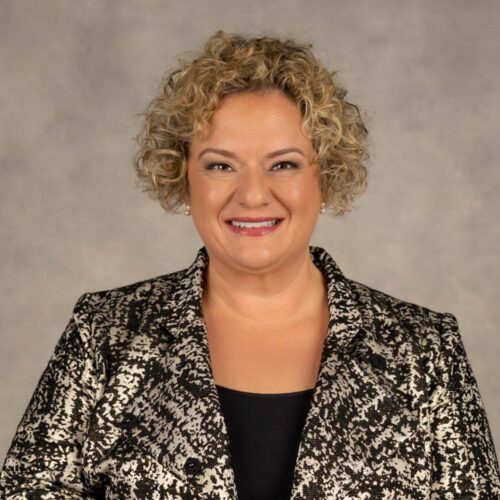
That disconnect is exactly where Francie Jain’s journey becomes so compelling.
As the founder and CEO of Terawatt, Francie Jain has built a business designed to tackle one of the most persistent—and costly—challenges facing organizations today: employee turnover driven by underinvestment in professional growth. Her work sits at the intersection of coaching, workforce development, and measurable business impact. And what makes it particularly relevant for executives is that it reframes coaching not as a luxury for the few, but as a scalable, data-backed strategy for organizational performance.
The Missing ROI Conversation in Human Capital
Francie articulated a reality many leaders feel but rarely quantify:
Almost every function inside an organization can clearly explain its return on investment—except HR.
We can predict revenue from sales initiatives.
We can model cost savings from operational improvements.
We can track conversion rates from marketing spend.
But when it comes to employee development, the conversation often sounds like this:
“It’s important.”
“It’s the right thing to do.”
“It feels valuable.”
All of which may be true, but none of which satisfy executive decision-making frameworks.
Francie’s work challenges that status quo. She points to a growing body of research demonstrating that investment in professional development directly correlates with reduced turnover, improved performance, stronger engagement, and measurable financial returns. The problem isn’t that the data doesn’t exist—it’s that most organizations haven’t been shown how to track it, interpret it, or act on it.
Terawatt was built to bridge that gap.
A Marketplace Model Designed for People, Not Just Profit
At its core, Terawatt is a B2B marketplace—often described as “Airbnb for executive coaching.” But that analogy only scratches the surface.
The platform connects three key stakeholders:
- Organizations seeking to develop and retain talent
- Employees looking for growth, clarity, and support
- Coaches who bring deep expertise but often struggle with visibility and lead generation
What makes the model distinctive is its philosophy: everyone must win.
Francie is explicit about this. Terawatt is designed so that organizations see business results, employees experience genuine development, and coaches are respected, fairly compensated, and able to focus on their craft. It’s a “rising tide lifts all boats” approach—one that reflects her belief that solving complex problems requires alignment, not exploitation.
For executives, this matters. Sustainable models are built on trust, not transactions.
The Origin Story: A Curiosity About Disappearing Careers
Like many meaningful ventures, Terawatt didn’t start with a pitch deck—it started with a question.
Francie became deeply curious about the long-term decline of manufacturing jobs in the United States. While public discourse often frames this as a recent phenomenon, her research showed that manufacturing employment actually peaked in the 1940s and has been declining for decades due to automation, offshoring, and technological advancement.
What troubled her wasn’t just the data—it was the human impact.
What happens to people when entire career paths disappear?
Who helps them adapt, reskill, and find new purpose?
Francie couldn’t find a system that addressed this challenge at scale. And that absence felt unacceptable—especially in a country built on cycles of boom, bust, and reinvention.
Layered on top of that curiosity was her own experience: she had successfully switched careers multiple times. Adaptability wasn’t theoretical for her—it was lived experience. That perspective shaped her conviction that career transitions are survivable, even empowering—if people have the right support.
From there, the idea evolved. Coaching emerged as a powerful, underutilized lever. Organizations already had budgets for learning and development, often spent on conferences or one-size-fits-all training. Meanwhile, an entire ecosystem of highly qualified coaches struggled to find consistent access to clients.
The gap was obvious. The opportunity was clear.
Why Coaching Works: A Case Study That Changes the Conversation
One of the most striking examples Francie shared comes from healthcare—a sector under immense pressure, where turnover is both costly and dangerous.
A healthcare organization in Colorado faced 24% employee turnover, well above industry averages. Located in a smaller community, they struggled to recruit and retain talent. Leadership recognized that the status quo was unsustainable.
They implemented a coaching framework centered on group coaching and psychological safety—helping employees understand their own strengths, appreciate differences in others, and collaborate more effectively.
The results were not immediate. And that’s important.
This wasn’t a quick fix or a motivational seminar. It was a long-term investment.
Over nine years, employee turnover steadily declined—from 24% to just 4%.
The financial impact?
$32 million per year in savings.
Let that sink in.
The coaching investment costs a fraction of that amount. The return wasn’t just financial—it showed up in patient safety, employee engagement, organizational reputation, and award recognition.
For executives who ask, “What’s the ROI of coaching?”—this is the answer.
Beyond Metrics: The Human Impact That Changes Everything
What I find particularly powerful about this story isn’t just the dollar figure—it’s what happens inside the organization when people feel seen, supported, and capable.
In healthcare, where lives are literally on the line, communication breakdowns can be fatal. Francie described scenarios where improved psychological safety could mean the difference between silence and speaking up, between an error unnoticed and an error prevented.
When people understand themselves—and understand how others think differently—they collaborate better. They communicate more clearly. They respect perspectives they once dismissed.
These are “soft skills” only in name. In reality, they are hard drivers of performance.
The Untapped Potential of Self-Awareness
Another moment from Francie’s journey that stood out to me involved doctors—highly trained, deeply experienced professionals—who had never taken a personal or behavioral assessment until years into their careers.
That realization was staggering.
These individuals had mastered complex science, diagnostics, and procedures—but had never been given structured insight into how they communicate, make decisions, or experience stress in relation to others.
Once exposed to these tools, the impact was immediate. Frustrations made sense. Conflicts softened. Collaboration improved.
The lesson here is simple and profound:
Technical excellence does not replace the need for human understanding.
No matter how advanced the field—medicine, engineering, finance—we are always working with people.
Leadership, Culture, and the Long Game
Cultural transformation doesn’t happen overnight. Francie’s healthcare example took nearly a decade. That’s not a weakness—that’s reality.
Sustainable change requires:
- Consistent leadership commitment
- Willingness to measure progress over time
- Patience to let new behaviors take root
But it always starts the same way: someone decides it’s time to do things differently.
And that decision is a leadership act.
The Founder’s Journey: What Got You Here Won’t Get You There
Francie was candid about the challenges of building Terawatt. One insight she shared resonates deeply with anyone who has founded or scaled a business:
What got you here is not what will get you there.
Entrepreneurship demands constant reinvention. Just when you feel competent, the next stage requires a new skill set, a new mindset, a new tolerance for discomfort.
Francie embraced that reality. She actively seeks feedback. She reads relentlessly. She puts herself in uncomfortable situations to grow.
And she does it with clarity of values.
As a founder, she has the freedom—and the responsibility—to align every decision with her long-term vision. That clarity becomes a North Star. It simplifies decision-making. It eliminates noise.
Disrupting the Status Quo—One Contract at a Time
One of the most telling examples of Francie’s leadership philosophy shows up in something most people never read: contracts.
Rather than relying on industry boilerplate designed to protect platforms at the expense of partners, Francie intentionally rewrote agreements to reflect trust and fairness.
Coaches are paid promptly.
Market rates are respected.
Exploitative service models are rejected.
This isn’t just ethics—it’s strategy.
By treating coaches as true partners, Terawatt attracts experienced professionals through word of mouth alone. Nearly 100 coaches joined organically—not because of aggressive marketing, but because the model aligned with their values.
For executives, the takeaway is clear: how you structure relationships determines the quality of your ecosystem.
Why This Matters Now
We are living through continuous disruption—technological, economic, and social. Career paths are shifting. Roles are evolving. Entire industries are being redefined.
In that environment, the organizations that will thrive are those that:
- Invest in people proactively, not reactively
- Treat development as a strategy, not a perk
- Measure human capital outcomes with the same rigor as financial ones
- Build cultures where learning and adaptability are normal
Coaching is not the only answer—but it is one of the most powerful, underutilized tools available to leaders today.
The Executive Takeaway
If you are a business leader asking how to:
- Reduce turnover
- Improve engagement
- Strengthen leadership pipelines
- Navigate constant change
- Build resilient, adaptable teams
The answer may not be another system, process, or incentive.
It may be investing—intentionally and measurably—in the growth of your people.
Because when people grow, businesses follow.
And that’s not optimism.
That’s strategy.
Listen to the full episode on C-Suite Radio: Disrupt & Innovate | C-Suite Network
Watch the episode: DI 141 Transforming Workplace Culture Through Coaching: Francie Jain on the Terawatt Revolution.
This article was drafted with the assistance of an AI writing assistant (Abacus.AI’s ChatLLM Teams) and edited by Lisa L. Levy for accuracy, tone, and final content.