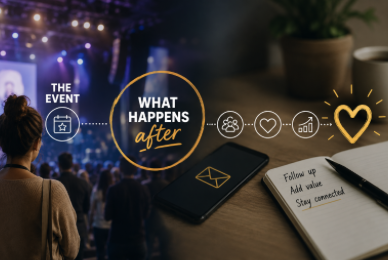
Most brands spend months planning an activation and only days following up.
The venue is booked. The experience is designed. The event team is trained. The social content is ready. Then the event ends, everyone packs up, and attention shifts to the next campaign.
That is where many brands leave the biggest opportunity on the table.
The event itself is not the finish line. It is the starting point of a much larger customer journey. The brands that generate the strongest return on investment from experiential marketing are not always the ones with the biggest activations. They are the ones that have a plan for what happens next.
The Most Overlooked Part of Experiential Marketing
Experiential marketing works because it creates memorable moments that traditional advertising cannot replicate. People may forget an ad they scrolled past, but they remember how a brand made them feel during a live experience. This emotional connection is one of the reasons experiential marketing continues to be such a powerful strategy. (MOGXP LLC)
Yet many companies focus almost entirely on attendance numbers, samples distributed, or social impressions. Those metrics matter, but they only tell part of the story.
The real value is created after the event when attendees move through the next stage of the customer journey.
Without a follow-up strategy, even the most successful activation can become a missed opportunity.
Turning Attendees Into Leads
Every event attendee represents a relationship that has already begun.
They have invested their time, interacted with your brand, and shown interest.
That makes them significantly more valuable than a cold prospect.
The key is capturing the right information and creating a clear path forward.
This could include:
- Email signups
- QR code registrations
- Product trial requests
- Contest entries
- Mobile app downloads
- Loyalty program enrollment
The goal is not simply to collect data. The goal is to create permission for an ongoing conversation.
Turning Leads Into Customers
Once the event is over, speed matters.
The longer a brand waits to reconnect, the more the experience begins to fade from memory.
A simple post-event nurture sequence can dramatically improve conversion rates:
Day 1: Thank attendees for participating and share event highlights.
Day 3-5: Deliver valuable content related to the product or service.
Week 2: Offer a special promotion, consultation, demo, or next step.
Week 3-4: Share customer success stories or case studies.
The messaging should remind attendees of the experience they had while helping them understand how your solution fits into their everyday lives.
Turning Customers Into Advocates
The highest-performing experiential campaigns create more than customers. They create advocates.
People naturally share experiences that are memorable, emotional, or unexpected. That is one of the reasons experiential marketing often generates strong word-of-mouth impact.
After the event, brands should actively encourage attendees to:
- Share photos and videos
- Leave reviews
- Post testimonials
- Join online communities
- Refer friends and colleagues
Advocates extend the life of an activation long after the physical event ends.
One event can create months of content, conversations, and brand visibility when attendees continue telling the story.
Simple Nurture Strategies That Maximize Event ROI
You do not need a complex marketing automation system to improve post-event results.
Start with these fundamentals:
Create an Event-Specific Email Sequence
Build a short series of emails that references the experience attendees just had. Personalization increases engagement and keeps the brand top of mind.
Repurpose Event Content
Photos, videos, interviews, and user-generated content can fuel social media, email campaigns, blogs, and sales materials for weeks.
Segment Your Audience
Not every attendee has the same level of interest.
Separate prospects, customers, partners, and media contacts so follow-up messages remain relevant.
Measure Long-Term Impact
Track more than attendance.
Monitor:
- Lead generation
- Conversion rates
- Customer acquisition
- Repeat purchases
- Referral activity
- Customer lifetime value
The most important metrics often appear weeks or months after the event concludes.
The Real Measure of Success
An activation is not successful because people showed up.
It is successful because people remembered it, acted on it, and continued engaging with the brand afterward.
The strongest experiential marketing programs are designed around the entire customer journey, not just the event itself. Brands that focus on pre-event planning, event execution, and post-event engagement create experiences that continue generating value long after the venue lights go out.
If your team is investing time and budget into experiential marketing, make sure the post-event strategy receives as much attention as the event itself.
Because what happens after the event often matters more than the event.