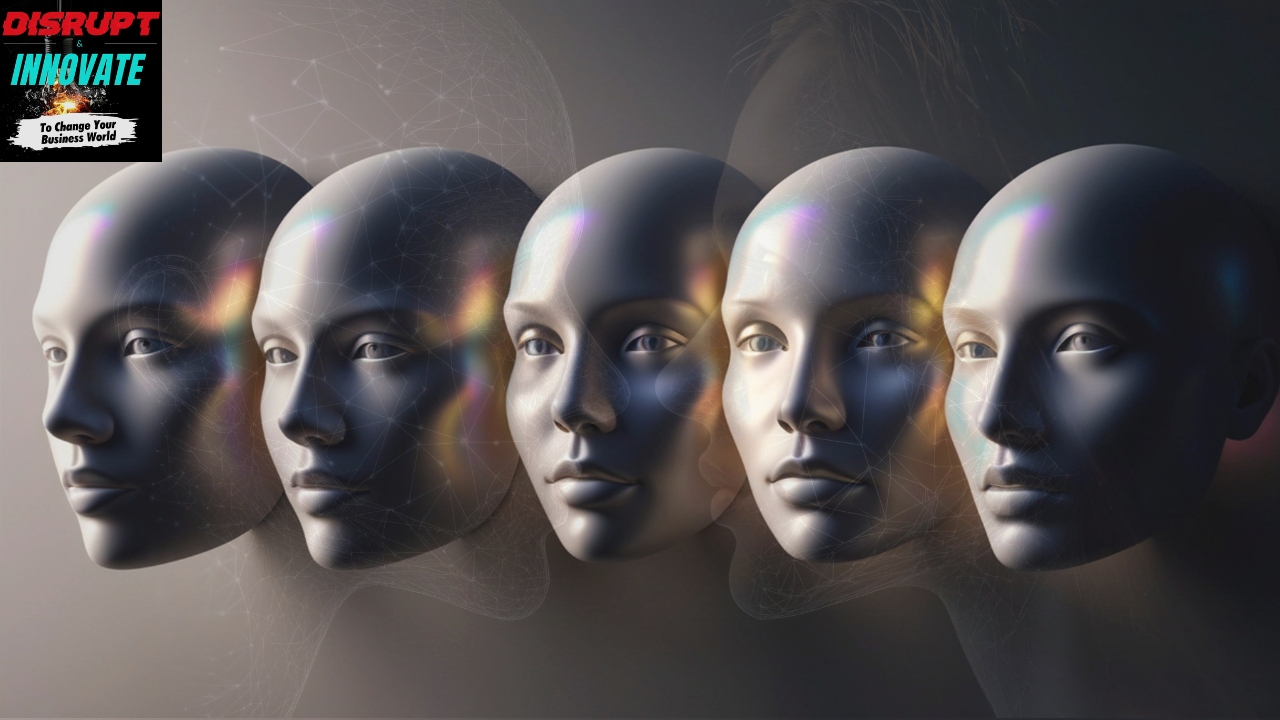
We are living through one of the most profound shifts in how businesses interact with customers.
Artificial intelligence is everywhere—embedded in our apps, our phones, our shopping carts, our entertainment. It’s optimizing logistics, personalizing recommendations, automating support, and reshaping entire industries.
And yet, something unexpected is happening.
Customers are walking away from brands that lean too hard into automation—and gravitating toward those that protect the human connection.
This is the paradox at the center of customer experience today: the more AI advances, the more human interaction matters.
And no one understands this tension—or how to navigate it—better than Chris Hood.
With over 35 years of experience spanning business development, digital strategy, and customer success at companies like Google, Fox, Disney, and Universal, Chris has spent his career at the intersection of storytelling, technology, and human behavior. Named one of the top 30 customer experience gurus in the world by Global Gurus for the second year running, his work challenges leaders to rethink what customer experience actually means in an AI-saturated world.
His message is clear:
Technology should enable connection—not replace it.
The AI Inflection Point
Let’s start with a reality check.
AI isn’t new.
Most of us have been using AI for over a decade—in Gmail, Netflix, Starbucks apps, weather forecasts, mobile assistants, and more. According to recent research Chris references, 99% of Americans have used AI in the last week—even if they didn’t realize it.
The difference now is visibility.
AI is no longer invisible infrastructure. It’s front and center—chatbots, voice assistants, automated checkouts, AI-generated content. And that visibility is forcing a reckoning.
Because while AI can optimize processes, it cannot replicate empathy, nuance, or trust.
And customers are noticing.
Two Companies, Two Strategies, Two Very Different Outcomes
Chris offers two powerful case studies that illustrate this tension perfectly.
Discover Card: Betting on Humans
Discover made a bold strategic decision: they would differentiate themselves by guaranteeing access to real human support.
Their Super Bowl ads didn’t tout features or rates—they made fun of robotic customer service. The message was simple: Call us. Talk to a real person.
The result?
A measurable increase in profitability as customers left banks that forced them through automated systems and moved to Discover, where a human connection was still valued.
Taco Bell: Betting on Automation
Taco Bell took the opposite approach.
AI voice assistants in drive-throughs.
Self-service kiosks in restaurants.
Fewer employees.
Higher menu prices.
On paper, it looked like a win: lower labor costs, higher margins.
In reality?
Customers started leaving—migrating to competitors like Chick-fil-A and In-N-Out, where human interaction remained central to the experience.
The Lesson: Choice Matters
The difference between these two examples isn’t that one used AI, and the other didn’t.
It’s the one that gave customers a choice, and the other didn’t.
Chris draws a parallel to grocery store checkouts. Some people prefer self-checkout for speed and convenience. Others want the interaction, the help, the human touch.
The brands that win are the ones that offer both—and let the customer decide.
Forcing AI on customers—especially in moments that matter—erodes trust.
Offering AI as an option that enhances the experience? That’s strategic.
Where AI Should (and Shouldn’t) Show Up
One of the most valuable frameworks Chris offers is this:
AI works best as an enabler—not a replacement.
Consider a healthcare triage scenario.
An AI agent listens to symptoms, gathers preliminary information, and curates relevant data before the patient sees a doctor. When the doctor walks in, the conversation is informed, efficient, and human.
That’s AI as an enabler.
Now contrast that with the all-too-familiar customer service nightmare:
You explain your issue to a chatbot.
It escalates you to a human agent.
The agent asks you to repeat everything.
That’s AI as a barrier.
The difference isn’t the technology—it’s the integration and handoff.
When AI and human touchpoints are seamless, the experience improves. When they’re disjointed, frustration compounds.
Why Traditional Journey Mapping Is Dead
Here’s where Chris challenges one of the most sacred practices in customer experience: the journey map.
For years, businesses have relied on linear journey maps—diagrams that plot a customer’s path from awareness to purchase to retention.
But Chris argues that this model is fundamentally broken.
Why?
Because customers don’t move linearly anymore.
The Grocery Store Thought Experiment
Imagine you’re walking through a grocery store.
You’re shopping for dinner.
You pass the bread aisle and remember you forgot to pay your Visa bill.
You pull out your phone, log into your bank, transfer money, and pay the bill.
You’re still walking—mindlessly now—thinking about whether you have enough in your account to cover groceries.
You glance at the price of bread and wonder if it’s cheaper at Walmart.
You add it to a mental list for your next trip.
This is reality.
Customers are multi-dimensional, multi-tasking, and multi-channel by nature.
They’re thinking about competitors while standing in your store.
They’re managing finances while shopping for food.
They’re planning future purchases while completing current ones.
If your journey map only accounts for what happens inside your store, you’re missing the entire picture.
The Movie Theater Example
Chris offers another brilliant scenario: the movie theater experience.
A traditional journey map might look like this:
- Customer buys tickets
- Arrives at the theater
- Visits concession stand
- Watches a movie
- Leaves
But the real journey includes:
- Planning dinner reservations
- Arranging a babysitter
- Stopping at the grocery store to buy candy
- Choosing an outfit with pockets to smuggle said candy
- Posting about the movie on social media afterward
- Inviting friends to see it again
Now imagine if theaters recognized this.
What if they partnered with local grocery stores?
What if they offered a rewards program that acknowledged customers who buy snacks elsewhere?
What if they turned the “smuggling candy” experience into a playful brand moment instead of a friction point?
The technology to do this exists.
What’s missing is the willingness to map the real journey—not the idealized one.
Before, During, and After: The Missing Pieces
One of the most critical insights Chris offers is this:
Most companies are obsessed with what happens during the transaction—and ignore what happens before and after.
But the before and after are where loyalty is built or lost.
- What influenced the decision to engage with you in the first place?
- What happens after the purchase that determines whether they come back?
- What are they thinking about while they’re with you that has nothing to do with you?
Until businesses expand their view to include these dimensions, they’ll continue to optimize for the wrong things.
Customer Experience Is Not a Project—It’s a Practice
Another powerful reframe Chris offers:
Customer experience isn’t something you build once and measure. It’s something you adapt moment by moment.
Too many organizations treat CX like a campaign.
They design an experience.
They launch it.
They measure success.
They move on.
But customer expectations shift constantly.
What worked last week may not work this week.
What delights one customer may frustrate another.
The best companies don’t chase perfection—they chase relevance in the moment.
Chris describes this as experimentation at speed:
- Try something for a day or two.
- If it works, keep going.
- If it doesn’t, kill it and move on.
No attachment. No ego. Just relentless focus on what drives results.
The Real Success Metric
Chris challenges the obsession with analytics dashboards and click-through rates.
Those metrics matter—but they’re not the point.
The real question is:
Did you increase sales? Did you build loyalty? Did you create more “smiley faces”?
If the answer is yes, move on to the next experiment.
If the answer is no, stop immediately.
Customer experience isn’t about perfection. It’s about momentum.
What Executives Must Do Now
Chris’s journey offers several critical takeaways for business leaders:
- AI is a tool, not a strategy. Use it to enable—not replace—human connection.
- Give customers a choice. Forcing automation erodes trust.
- Map the real journey. Include what happens before, during, and after your touchpoint.
- Think multi-dimensionally. Customers are juggling competitors, finances, emotions, and logistics—all at once.
- Experiment relentlessly. CX is not a project. It’s a practice.
- Measure what matters. Analytics are useful, but loyalty and revenue are the real scorecards.
Most importantly:
The brands that win in the AI era will be the ones that use technology to amplify humanity—not eliminate it.
The Bottom Line
We are not living in a world where AI replaces the human experience.
We are living in a world where AI makes the human experience more valuable than ever.
Customers will tolerate automation when it’s convenient.
They will reward humanity when it matters.
The leaders who understand this distinction—and design accordingly—will build the brands that endure.
The rest will optimize themselves into irrelevance.
Listen to the full episode on C-Suite Radio: Disrupt & Innovate | C-Suite Network
Watch the episode: DI 135 The Future of Customer Experience: Balancing AI and Human Connections.
This article was drafted with the assistance of an AI writing assistant (Abacus.AI’s ChatLLM Teams) and edited by Lisa L. Levy for accuracy, tone, and final content.