There are some industries where inefficiency is irritating.
And then there are industries where inefficiency is cruel.
Fertility care sits squarely in the second category.
When a business process breaks down in most sectors, you lose time, money, momentum, maybe a little patience. When fertility care breaks down, people lose something far more intimate. They lose confidence. They lose peace. They lose time they cannot easily get back. They lose the illusion that science and medicine will be there for them when they need it most. And sometimes, after tens of thousands of dollars and months or years of emotional upheaval, they are left with nothing to show for the journey but debt, grief, and a pile of questions nobody answered clearly enough at the start.
That is why my conversation with Mary Fusillo matters.
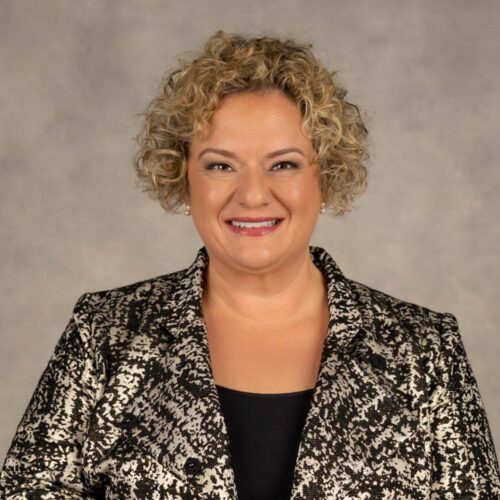
Mary is the CEO and founder of Family Solutions International. For more than 25 years, she has been at the forefront of reproductive health, launching donor egg and surrogacy programs, scaling them from a handful of donors to hundreds worldwide, and building an ecosystem for third-party reproduction that is far more human, navigable, and supportive than what many families find when they enter this system on their own.
She is also something else: a disruptor who is willing to say out loud what too many people in fertility care still dance around.
This system is not equitable.
This market is not functioning in the patient’s best interest.
And innovation has not always made access better. In some cases, it has made the business of fertility more expensive, more opaque, and more extractive.
That is not a comfortable conversation.
It is also a necessary one.
Fertility Is Not Just a Medical Journey. It Is a Leadership Failure in Healthcare Delivery.
One of the reasons business leaders should care about this topic is that fertility care is a case study in what happens when a high-emotion, high-demand market evolves without enough discipline around access, affordability, transparency, and patient-centered design.
Mary came to this work after a long career in healthcare, nursing, fertility management, and consulting. Nearly two decades ago, she started her own business for two very practical reasons. First, she was a mother of young children and wanted a way to be more present in her own life. Second, she saw a need in the market. There were already companies operating in third-party parenting, but she believed the model could be made more user-friendly, more navigable, and more supportive for the people living through it.
That instinct was correct.
Because the fertility journey is not some neat clinical transaction. It is long. It is expensive. It is emotional. It is logistically complex. And for many families, it is one of the most psychologically loaded experiences they will ever face.
People are not just making medical decisions. They are making financial, relational, ethical, and identity-level decisions while under stress.
That is exactly the kind of environment where bad systems do real damage.
The Core Problem: Fertility Care Is Not Equally Available
Mary said something in our conversation that business leaders should not ignore: there is no equity in fertility care.
If you have money, the sky is the limit.
If you have deep pockets, access expands. Options expand. Time expands. You can keep trying. You can pursue IVF, donor eggs, surrogacy, multiple cycles, second opinions, and specialist pathways. You may still endure heartbreak, but you have room to maneuver.
If you do not have that kind of money, the experience is entirely different.
A normal person with a normal job can spend $60,000, $70,000, $80,000, even $90,000 and still have no baby, no certainty, and no meaningful insurance support. The emotional burden is obvious. The financial burden is devastating.
So now imagine the layers of decision-making people are navigating:
- Do we spend the money?
- Do we borrow from our retirement?
- Do we refinance the house?
- Do we ask parents for help?
- Do we go into debt for a possibility rather than a promise?
That is not a consumer journey.
That is triage under emotional pressure.
And this is where Mary’s work becomes so important. She helps clients balance the emotional and practical reality of the process. She acts as a guide, mentor, translator, and stabilizing force in an environment where too many people are overwhelmed before they have even had a chance to understand what their choices really are.
The Cost Problem Is Not Just About Complexity. It Is About Power.
At one point in the conversation, I asked the obvious question in a different form: yes, these procedures are expensive, but are they actually that expensive?
Mary’s answer was direct: no.
That is the conversation too few people are willing to have.
The drugs have largely not changed in the way their pricing would suggest. Medications used in fertility have been around for years, yet what once cost roughly $2,500 can now cost $4,000 or $5,000. Clinics offer newer bells and whistles—time-lapse embryo imaging, additional layers of technology, upgraded monitoring tools—but the central question remains: has all of this materially improved pregnancy rates?
Not enough to justify the cost escalation.
For many patients under 33 or 34 without serious underlying complications, success rates may still hover around 70 percent. That is meaningful, but it is not certainty. Patients are still paying extraordinary sums for a process that does not come with a guaranteed outcome.
So if costs are rising while fundamentals remain relatively similar, what are we really paying for?
That is where power enters the picture.
Because when people are desperate, markets behave badly. And fertility is a hope-driven market. Hope, when unmanaged, becomes highly monetizable.
Private Equity Did Not Fix Fertility. It Financialized It.
This is where Mary got especially blunt, and I appreciated every second of it.
Over the last several years, fertility clinics have gone through the same kind of consolidation seen across other healthcare sectors. Older physician-owners were reaching retirement age. Fertility medicine in the United States is still a relatively young field, especially compared to other specialties. The first major generation of fertility doctors needed an exit. Younger physicians coming out of training often could not afford to buy into those practices at the level required.
So in came private equity.
On paper, the pitch sounded familiar:
- economies of scale
- shared vendors
- better operations
- stronger management
- cleaner growth
- lucrative exits for founders
In reality, Mary’s research and firsthand observation suggest something quite different happened. Costs did not meaningfully come down. Clinical life did not necessarily improve. In some cases, doctors began fleeing the very groups that were supposed to modernize the business.
This is not surprising.
Private equity is not inherently evil, but it is structurally oriented toward financial return. In a field like fertility—where patients are vulnerable, physician supply is constrained, and demand remains strong—that orientation can distort the purpose of care very quickly.
When capital enters a high-emotion healthcare market without sufficient guardrails, the patient often becomes the instrument of yield.
That is the harsh version. It is also often the honest one.
Artificial Scarcity Makes the Problem Worse
Mary highlighted another issue that business leaders will recognize immediately: constrained supply in the face of strong demand creates pricing power.
In fertility, that supply constraint exists not only in clinics but in training pathways.
There are only so many fellowship slots. That means only so many reproductive endocrinologists are being trained and released into the field each year. At the same time, many current practitioners are aging out and approaching retirement. So the system is tight at both ends:
- not enough new specialists entering
- experienced specialists leaving
That bottleneck keeps access limited, and prices elevated.
But here is where the conversation gets interesting. Mary pointed out that not every step in fertility treatment requires the highest-level specialist to perform every mechanical function personally. Much of the monitoring, interpretation, and process management can be handled by trained mid-level practitioners and supporting physicians, with the reproductive endocrinologist making the critical judgment calls.
That opens the door to a more distributed model.
And some innovators are doing exactly that.
Real Innovation Is Making Fertility More Available, Not Just More Expensive
Mary mentioned a model she admires that is bringing fertility treatment into smaller and mid-sized markets using a more scalable care structure. Instead of forcing every piece of the process through a narrow, expensive specialist bottleneck, these organizations are using properly trained practitioners to handle the mechanics while keeping physician oversight where it matters most.
The result?
Comparable pregnancy rates.
Lower costs.
Broader geographic reach.
More accessible care.
That is innovation worth paying attention to.
Because too often in healthcare, innovation gets mistaken for technological layering. Add another device. Add another screen. Add another billable enhancement. But true innovation is not just about adding sophistication. It is about improving access, outcomes, and usability.
If a model can bring high-quality fertility care into cities that currently lack it, while keeping results strong and costs more reasonable, that is not a minor operational adjustment. That is a market correction.
And market corrections in broken systems matter.
The Human Side of Third-Party Reproduction
Where Mary’s work becomes especially powerful is in the human architecture she has built around third-party reproduction.
Back when donor egg programs were smaller and less developed, information was limited. Over time, Mary and others in the field realized that intended parents—especially women using donor eggs—wanted more than generic profiles. They were not seeking fantasy. They were seeking resonance.
They wanted to understand who this donor was.
They wanted to see themselves in the possibilities.
They wanted context, story, features, personality, and some sense of emotional fit.
So the donor process evolved.
What started as thinner profiles has become a much richer experience, with detailed bios, photos, videos, and more nuanced options for how relationships are handled. Mary’s organization now operates with large donor pools and robust information structures that allow intended parents to sort and review donors based on multiple characteristics, then narrow their choices, ask questions, and even meet via Zoom with the donor if appropriate.
This is not technology replacing humanity.
It is technology supporting humanity.
And that distinction matters.
One of the Biggest Innovations Was Not More Data. It Was More Honesty.
Perhaps the most interesting shift Mary described is the move away from strict anonymity.
Years ago, anonymous donation was common. Today, it has faded significantly in favor of identity-release models, where a child conceived from donor eggs can reach out at age 18 if they choose. In some cases, there are even fully open arrangements where families and donors share contact information from the beginning.
At first glance, this seems like a story about transparency and openness. And it is. But what fascinated me most was Mary’s realism about how these arrangements actually play out.
She has seen thousands of cycles. She has watched families, donors, and donor-conceived children move through this process over many years. And her observation is refreshingly grounded: many of the adults involved imagine these relationships with far more intensity than the children eventually do.
A small percentage are deeply curious and invested.
Many are simply fine.
That is not dismissive. It is clarifying.
The child is not the donor. The donor contributed a critical missing piece, but the parents are still the parents. The pregnancy is still the parents’ journey. The child is still raised, loved, formed, and known within that family.
Mary’s logo is a puzzle piece for a reason. The donor is the missing piece, not the whole picture.
That is a far more useful framing than some of the borrowed emotional models that have been imposed onto this work. As Mary noted, this is not adoption. The field has at times tried to map adoption-style expectations onto donor conception, but the experiences are fundamentally different. The more honest the field becomes about that, the better it can support people without layering on unnecessary emotional scripts.
What Business Leaders Should Learn From Mary Fusillo’s Journey
Mary Fusillo’s journey is about much more than fertility. It is about what happens when a complex, emotional, high-demand industry is left to drift toward cost inflation, consolidation, and uneven access without enough courageous voices insisting on a more human path.
Business executives should take several lessons from her work.
First, innovation without accessibility is not enough. If technological progress and business growth make a service more expensive and less reachable, leaders should question whether that progress is actually serving the mission.
Second, patient experience is not a soft variable. In emotionally charged sectors, navigation, mentorship, clarity, and trust are not side benefits. They are central to whether people can make sound decisions under pressure.
Third, private equity and consolidation may solve one set of incentives while creating another. Leaders need to examine whether the business model is enhancing care or extracting value from desperation.
Fourth, scarcity is often structured, not accidental. Training bottlenecks, geographic concentration, and legacy operating models can all artificially constrain access in ways that benefit the system more than the client.
And finally, the best disruptors do not always invent a brand-new wheel. Sometimes they take an existing wheel, stop pretending it works perfectly, and rebuild it to serve people better.
That is what Mary has done.
She stepped into a system full of emotion, cost, and complexity and asked a better question: how do we make this journey more navigable, more honest, and more humane for the people living through it?
That is not just good healthcare leadership.
That is real innovation.
And in a field built on hope, that kind of innovation matters more than ever.
Listen to the full episode on C-Suite Radio: Disrupt & Innovate | C-Suite Network
Watch the episode: DI 167 The Hidden Costs of Reproductive Health
Check our website: LcubedConsulting.com
This article was drafted with the assistance of an AI writing assistant (Abacus.AI’s ChatLLM Teams) and edited by Lisa L. Levy for accuracy, tone, and final content.