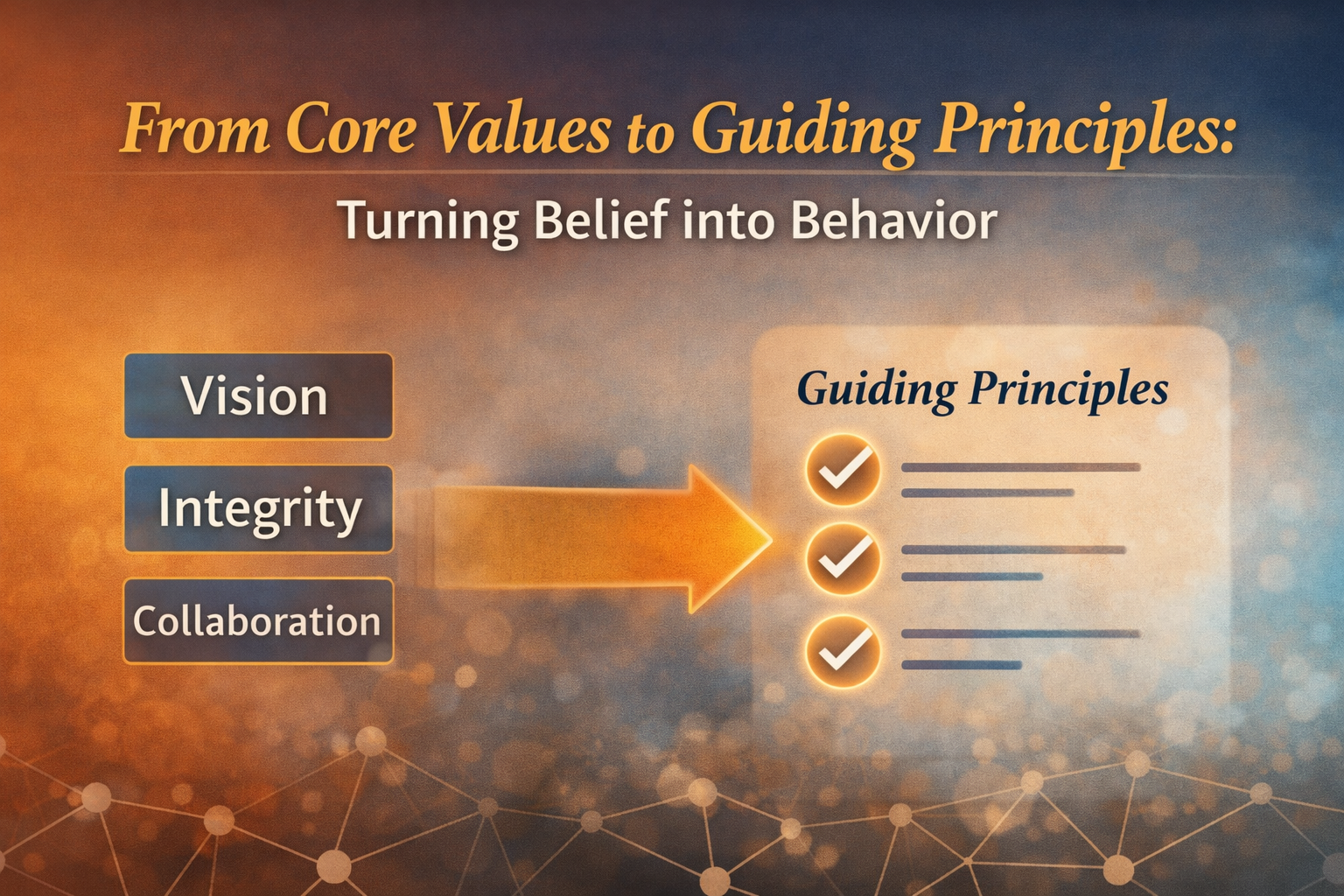
From Core Values to Guiding Principles: Turning Belief into Behavior
By Hugh Ballou
Core values are often treated as inspirational words mounted on a wall, included on a website, or printed in a handbook. They are usually well-intentioned and thoughtfully chosen. Yet in far too many organizations, they fail to shape behavior, guide decisions, or create the culture leaders say they want. The reason is simple: values without interpretation do not drive action.
I teach leaders to understand core values as fundamental, non-negotiable beliefs. They define what the organization stands for, what it will protect, and what it will not compromise. But values alone are not enough. Teams need clarity. They need help translating belief into daily behavior. This is where guiding principles become essential.
Why Values Alone Are Not Sufficient
Words like integrity, excellence, collaboration, or respect sound universally positive, but they are also dangerously vague. Ask five people on your team what integrity looks like in a difficult budget decision, a staffing conflict, or a missed deadline, and you may receive five different answers. When values are open to interpretation, alignment erodes.
In leadership, ambiguity creates friction. When expectations are unclear, people default to personal preferences, past experiences, or positional authority. Culture becomes inconsistent, and trust weakens. Leaders then find themselves correcting behavior after the fact instead of shaping it intentionally.
Guiding Principles: Values Put to Work
Guiding principles are values expressed as actionable commitments. They take an abstract belief and translate it into a clear statement that informs decisions, behaviors, and priorities. Guiding principles answer the question, “If we truly believe this value, how do we act when it matters?”
Where core values define what we believe, guiding principles define how we behave. They provide practical clarity without becoming rigid rules. They are statements for implementation, not slogans.
Examples of Values Translated into Guiding Principles
Value: Integrity
· Guiding Principle: We tell the truth early, especially when it is uncomfortable, and we take responsibility for our decisions and their outcomes.
Value: Excellence
· Guiding Principle: We prepare thoroughly, evaluate our work honestly, and continuously improve rather than settle for what is merely acceptable.
Value: Collaboration
· Guiding Principle: We seek input from those affected by decisions, listen with respect, and work toward shared solutions rather than individual wins.
Value: Stewardship
· Guiding Principle: We treat financial, human, and relational resources as entrusted assets and make decisions with long-term sustainability in mind.
Guiding Principles as Tools for Cultural Alignment
Guiding principles are powerful because they align people around shared expectations. They create a common language for decision-making and performance. When teams know not only what the organization values but how those values show up in practice, synergy becomes possible.
In a healthy, aligned culture, people do not need constant supervision. They are empowered to make decisions consistent with shared principles. This is leadership through influence rather than control. It is the difference between managing behavior and shaping culture.
How Guiding Principles Build a Synergistic Culture
First, guiding principles reduce conflict by setting expectations in advance. Many workplace conflicts are not about personalities but about unspoken assumptions. When principles are clear, teams can resolve disagreements by returning to shared commitments rather than personal opinions.
Second, guiding principles strengthen trust. People trust leaders who are consistent. When leaders use guiding principles to make decisions, especially difficult ones, teams see fairness and coherence. Trust grows when people know what to expect.
Third, guiding principles support high performance. Just as a musical ensemble relies on shared standards of preparation, listening, and timing, organizations rely on shared behavioral norms. Alignment does not limit creativity; it enables it by removing confusion.
Guiding Principles in Leadership Practice
I encourage leaders to actively use guiding principles in meetings, evaluations, planning sessions, and coaching conversations. Referencing them regularly reinforces that they are living commitments, not theoretical ideas.
When a decision is difficult, ask, “Which guiding principle applies here?” When feedback is needed, frame it through the lens of principles. When celebrating success, name the principles that were demonstrated. This repetition embeds culture.
From Words to Way of Being
Organizations do not become aligned because they have values. They become aligned because leaders translate those values into shared behavior. Guiding principles provide that bridge. They bring coherence to culture, clarity to decisions, and harmony to teams.
When leaders do this well, the organization functions like a well-conducted ensemble. Each person understands their role, listens to others, and contributes to a unified performance. That is not accidental. It is the result of intentional leadership.
Based on “Leaders Transform: Mastering the Art of Influence, Book 3: Leadership Systems: Orchestrating Success” by Hugh Ballou
Hugh Ballou is The Transformational Leadership Strategist, author, and founder of SynerVision International, Inc. and SynerVision Leadership Foundation. He empowers leaders across sectors to transform vision into high-performing results.
Article is based on my new series, “Leaders Transform: Mastering the Art of Influence” – http://LeadersTransform.info
For a list of resources go to – http://AboutHugh.com
#Leadership #HighPerformingTeams #Trust #Empowerment #Podcast #OrchestratingTeams #Teamwork #Transformation #Authenticity #Core values #Guiding principles #Organizational culture #Values-based leadership #Leadership behavior #Culture alignment #Decision-making frameworks #Transformational leadership