

Sunday, November 1, 2026
HomeCapitalMergers & AcquisitionBusiness Valuation Gap Analysis

Business Valuation Gap Analysis

Business Valuation Gap Analysis Business Valuation Gap Analysis

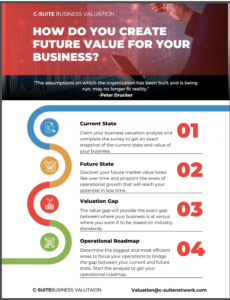
A Business Valuation Gap Analysis is a tool used to evaluate the difference between a business’s current valuation and its targeted or desired valuation. The “gap” represents the amount by which the actual value of the business falls short of or exceeds its expected value as determined by the business owner, investors, or other stakeholders.

Components of Business Valuation Gap Analysis

  1. Current Business Valuation: This is the existing value of the business, often calculated through methods such as Discounted Cash Flow (DCF), Comparable Company Analysis, or Book Value, among others.
  2. Targeted Valuation: This is the desired valuation that the company aims to achieve within a specific period, often set by the management or investors.
  3. Gap Analysis: This identifies the “gap” or difference between the current and targeted valuations. It serves as a quantitative measure of how much needs to be done to reach the target.

Purpose of Business Valuation Gap Analysis

  • Strategic Planning: It helps companies understand where they are versus where they want to be, aiding in setting realistic goals and strategies.
  • Investment Decisions: Investors can use it to evaluate whether the gap between the current and desired valuations is realistically bridgeable.
  • Operational Changes: It helps identify areas of improvement or potential risks that need to be addressed to close the valuation gap.
  • Fundraising: Demonstrating a clear path to closing the valuation gap can be a strong selling point during fundraising efforts.
  • Mergers & Acquisitions: Knowing the valuation gap can inform negotiations and deal structures.
  • Performance Metrics: It allows businesses to set benchmarks and key performance indicators (KPIs) to monitor progress toward closing the gap.

Steps in Conducting Business Valuation Gap Analysis

  1. Calculate Current Valuation: Utilize one or multiple business valuation methods to establish a baseline value.
  2. Determine Target Valuation: Set a target value based on growth prospects, market opportunities, and other strategic objectives.
  3. Identify the Gap: Subtract the current valuation from the target valuation to determine the gap.
  4. Analyze Factors: Evaluate internal and external factors contributing to the gap. These could be market conditions, operational inefficiencies, etc.
  5. Develop Strategies: Create a detailed action plan to close the valuation gap.
  6. Implement and Monitor: Execute the action plan and regularly monitor progress, making adjustments as necessary.

Understanding the valuation gap and its underlying causes is crucial for businesses that aim to increase their market value, whether for investment, M&A, or other strategic purposes. Valuation Calculator


Jeffrey Cline
Jeffrey Clinehttps://KeyWordCalls.com
“Every industry is a geek away from being Uberized.” — Jeff Cline
Jeff Cline is a technologist and builder who uses technology, predictive analytics and AI to help companies increase sales, cut costs and dominate their markets — PROFIT AT SCALE. He has founded and built dozens of companies, with multiple exits and more than 25 years in business development and scaling growth. His philosophy is simple: Data doesn't lie. Tech always works. The only question is whether it's worth doing. Jeff is the founder of 1-800-MEDIGAP, the force behind R0cketShip, and is backing the next great idea through The Big Idea — up to $444,000 in tech investment for founders ready to Uberize their industry. 📰 Read: Geek for Hire — Equity →
📈 Case study · 1-800-MEDIGAP — In one of the most competitive markets in insurance, the 1-800-MEDIGAP demand engine, built on this stack, generated 30,000+ inbound calls and $25M+ in revenue at a cost per acquisition under half the industry average (company-reported).
🧰 THE STACK — the tools Jeff uses to build, launch and scale, every one already working in market. See the full stack and what it's worth →
🚀 Fast Start by R0cketShip — Idea to MVP in market — then the levers, the KPIs and the cost per acquisition, proven before you scale. Three ways in: Fast Start (you keep 100%), Joint Venture, or OPM. Use case: a founder with a validated idea but no tech team launches a working product in months, measures real demand and CPA, and walks into the next conversation with numbers instead of a pitch.
🔥 Predictive Data — The demand engine: see who is in-market before anyone else — identity append, visitor identification and ZIP-level predictive data delivered to your CRM. Use case: an insurance agency stops buying cold lists and spends only on households already showing buying intent in its ZIP codes — so every dollar chases a likely buyer.
💲 MoneyWords.org — Keyword economics: the highest-value "money words" in your market — buyer intent, market size and B2B/B2C cross-references — mapped to your offer. Use case: a med spa discovers which treatments people actually search for with a credit card in hand, and builds its pages and ads around those words instead of guesses.
🧠 Consulting with Jeff Cline — Executive strategy straight from Jeff: technology, predictive analytics and AI to increase sales, cut costs and de-risk the business. Use case: an owner facing rising ad costs gets a plan that finds the leaks, rebuilds the funnel around data, and sets the numbers to watch every week.
✉️ vrtcls.marketing — Intent-based outbound email: pick a keyword and location, pull live buyers, send the right template — and every click makes the next send smarter. Use case: an HVAC company reaches homeowners actively searching for AC repair in its service area the week the heat hits — instead of blasting a list that went cold years ago.
⚡ Quuik · Trusted GPT — A validated, trusted answer engine on top of the network — so your business is the one cited when people ask AI what to buy and who to call. Use case: when someone asks an AI assistant for the best local provider in their category, a business with consistent, trusted information across the network is the name that comes back.
➕ contacts.plus — The smart business card that does the networking for you — a shareable page, trusted referrals with context, and a relationship CRM across a growing business network. Use case: a commercial roofer turns every handshake into a saved contact, a follow-up and a tracked referral — instead of a business card in a drawer.
📞 KeywordCalls — Pick a keyword, set your price per call, give a routing number — and get high-intent buyers calling your line, live. Pay only for the calls you get. Use case: a roofing company picks "roof replacement" in its metro and its phone rings with homeowners ready to talk — the same inbound-call engine behind the 1-800-MEDIGAP results.
💡 FeatureMe — get your name in lights — Features across top brands and publications that build authority and trust — and help answer engines like ChatGPT recommend you. Use case: a founder announcing a strategic deal publishes once and is found in the business and finance outlets investors read — see the 1-800-MEDIGAP launch.
💌 Smart Email from siimpler.com — Warm, opted-in email that nurtures, onboards and sells — delivered through the siimpler trusted network to one clean, welcome inbox. Use case: a practice with years of past clients turns that list into a steady stream of return visits with emails people actually want to open.
💡 Got the next big idea? Apply for The Big Idea → · Book a call with Jeff · jeff-cline.com
RELATED ARTICLES

Most Popular