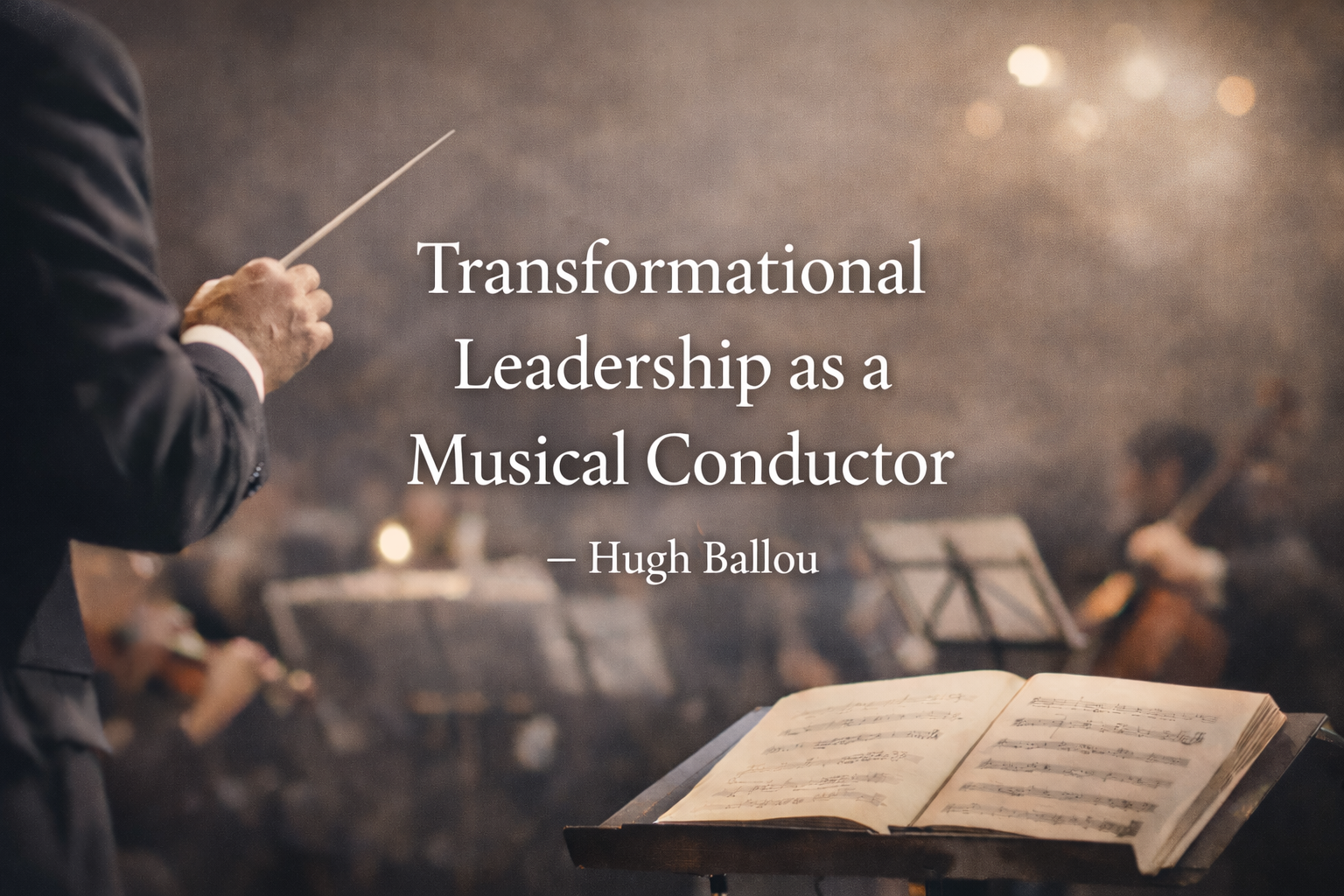
Transformational Leadership as a Musical Conductor
By Hugh Ballou
Many leaders believe strategy is something they communicate. In reality, strategy is something people experience.
Over the years, I have watched well-intentioned leaders invest enormous energy into strategic plans, vision statements, and carefully worded presentations—only to wonder why behavior never changes. The assumption is that if people understand the strategy, they will automatically align with it. That assumption is flawed.
 Be our guestYour next big opportunity could be in a room you're not in.Meet CEOs, founders and owners at a reception in your city or online. Your first event is on us.Request my guest seat →
As a musical conductor, I learned early that strategy does not live on paper. It lives in performance. No audience has ever been moved by a rehearsal plan. They are moved by what happens when musicians play together in real time. My responsibility on the podium was never to play an instrument or explain the score. My responsibility was to integrate vision, timing, and intention into a unified experience.
A conductor does not stop a concert to remind musicians of the strategy. The strategy is already embedded in the tempo, the phrasing, the dynamics, and the cues. Every gesture communicates direction. Every pause creates clarity. The musicians do not wait to be told what to do; they respond to what they see and feel.
Leadership works the same way. When leaders treat strategy as a document, teams experience confusion. When leaders embody strategy through their behavior, teams experience coherence. People follow what leaders do far more consistently than what leaders say.
This is why so many organizations struggle with execution. Leaders talk about empowerment while micromanaging decisions. They speak about trust while withholding authority. They claim to value collaboration while rewarding individual heroics. The stated strategy and the lived experience do not match and people notice.
In an orchestra, misalignment is immediately audible. If one section ignores the conductor, the music falls apart. In organizations, misalignment is less dramatic but far more costly. It shows up as disengagement, slow decision-making, and quiet resistance. The problem is rarely a lack of talent. It is a lack of integration.
Effective leadership is not about control or charisma. It is about creating the conditions where others can perform at their best. A great conductor trusts the musicians to do their work while providing clear signals about direction, timing, and expectations. That balance, clarity without control, is what allows excellence to emerge.
When leaders integrate strategy into daily behavior, something powerful happens. Meetings become more focused. Decisions align more naturally with values. Accountability increases because expectations are visible and shared. People no longer need constant reminders; they understand the rhythm of the work.
The question every leader should ask is simple: Can my team see the strategy in how I lead?
If the answer is no, the solution is not another planning session. The solution is to look in the mirror and examine how strategy shows up in conversations, priorities, delegation, and decision-making. Leadership, like music, only works when vision and performance are inseparable.
This conductor-based leadership model is explored in depth in my book *Leaders Transform: Orchestrating High-Performing Teams*, part of the Leaders Transform series. The book is designed to help leaders move beyond command-and-control thinking and learn how to integrate vision into action, consistently, visibly, and sustainably.
Based on “Leaders Transform: Mastering the Art of Influence, Book 3: Leadership Systems: Orchestrating Success” by Hugh Ballou
Hugh Ballou is The Transformational Leadership Strategist, author, and founder of SynerVision International, Inc. and SynerVision Leadership Foundation. He empowers leaders across sectors to transform vision into high-performing results.
Article is based on my new series, “Leaders Transform: Mastering the Art of Influence” – http://LeadersTransform.info
For a list of resources go to – http://AboutHugh.com
#Leadership #HighPerformingTeams #Trust #Empowerment #Podcast #OrchestratingTeams #Teamwork #Transformation #Authenticity
Opinions expressed by C-Suite Network contributors are their own.
 The Boardroom Needs the Ground: By Mark Madrid
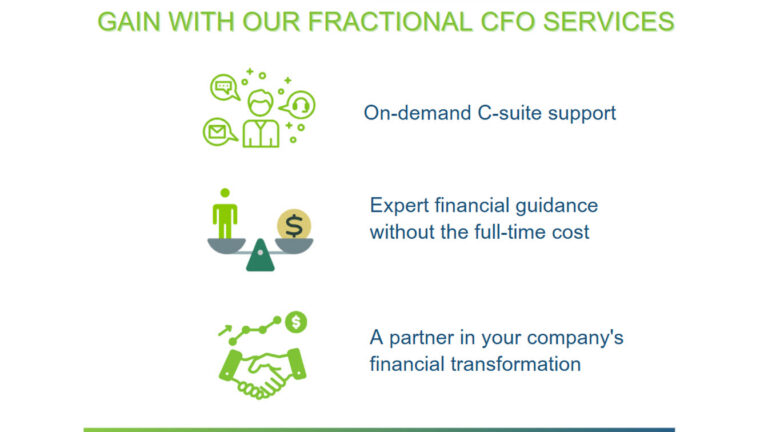 How Fractional Executives can Help Your Company Thrive: Key FactsBy Paul Whitley
 Do Not Cut 25% of Your Workforce YetBy Mahesh M. Thakur
 C-Suite TV · 22 minProject Calm: Johnny C. Taylor Jr. on Leadership, Culture, and the Future of Work
 C-Suite Radio · Manage Self, Lead Others: Emotional Intelligence and Leadership for Managers199 Look for the Second Right Answer--Nina Sunday with Dixie Carlton
 Chairman's Corner · Jeffrey HayzlettYour Best Performer Might Be Your Biggest Problem. And It’s Contagious.
Meet the founders, CEOs and operators behind stories like this one. Next reception: NYC Executive Reception, Tue, Nov 24.
Attend as a guestMembership: $100/mo →