Every once in a while, you have a conversation that makes you realize the system is not just under strain.
It is broken at the joints.
That was my conversation with Simon Holzapfel. He is the co-founder and CFO of Leaf Lab, and he is working at one of the most urgent intersections in business today: education, workforce development, and innovation. With 15 years in senior roles, he brings an unusual combination of strategic discipline, operational clarity, and a deeply human understanding of what work is supposed to do in a person’s life.
He is also funny, direct, and refreshingly unwilling to pretend that the current way we prepare young people for work is functioning well.
Because it isn’t.
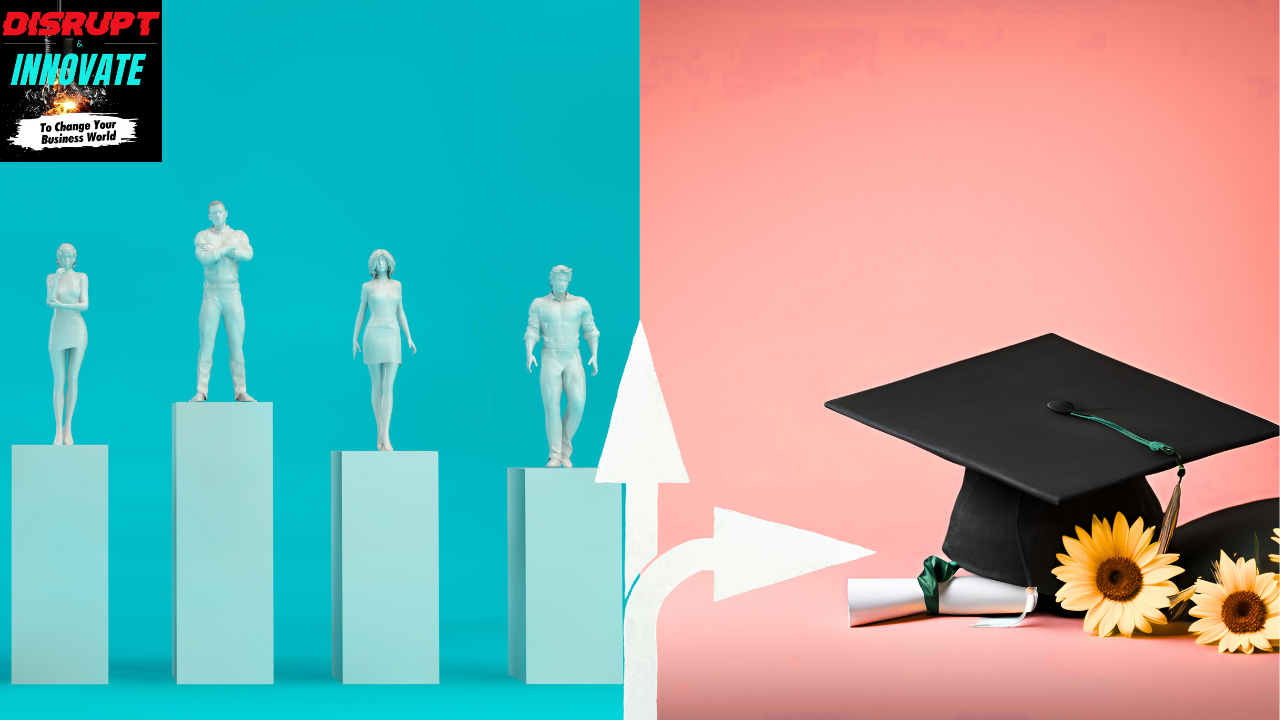
For decades, the assumption was relatively straightforward. A student goes to college, earns a degree, and moves into some version of corporate life. It was never perfect, but it was a bridge most people recognized. Today, that bridge is cracking from multiple directions at once.
The cost of education is soaring.
The nature of work is changing.
AI is transforming what skills matter.
Distributed teams are normal.
Traditional career ladders are dissolving.
And employers still complain they cannot find people who are ready to create value quickly.
Simon and his team looked at that reality and asked a deceptively simple question:
What if there were a better way to prepare people for the real future of work?
That question became Leaf Lab.
And business executives should be paying very close attention.
The Junction Box Is Broken
One of the phrases Simon used that has stayed with me is that he and his team are trying to fix a “broken junction box” in the future workforce.
That is exactly the right metaphor.
The connection point between education and employment used to be more reliable. Not ideal. Not equitable. Not universally effective. But more predictable. Today, that coupling is falling apart. Students invest staggering amounts of money and time into degrees without any real guarantee that the experience will translate into work readiness. Employers expect graduates to show up prepared, yet often fail to define what “prepared” actually means. And somewhere in the middle is a generation of young people trying to figure out how to build a life in a labor market that keeps rewriting the rules.
Simon sees this not as an abstract policy issue, but as a lived reality.
He talked about his own son, now in his third year at a $90,000-a-year institution. He was clear: his son is doing well, and the family is grateful to be able to shoulder that burden. But he also said plainly what many families are thinking: that is an enormous amount of money, and many people simply cannot do it.
That is where his business journey becomes more than professional.
It becomes personal.
And when leaders build from that place—where mission is anchored in reality rather than rhetoric—the work tends to matter more.
The Real Question: What Actually Gets a Young Person Ready for Work?
This is where Simon’s thinking gets especially valuable for business leaders.
He is not interested in vague promises about employability. He is interested in building a learning experience that actually gets a young person ready to work in the kind of environment many businesses already operate in: distributed teams, digital collaboration, fast decision cycles, and mission-driven execution.
That is a very different question from simply asking whether someone has a degree.
And frankly, it is the better question.
Because the future of work is not waiting for education systems to catch up.
AI is already here.
Remote and hybrid work are already here.
Cross-functional collaboration is already here.
Shorter decision cycles are already here.
Outcome-based performance is already here.
The businesses that will thrive are not the ones nostalgically wishing for a simpler talent pipeline. They are the ones willing to build, partner, and think differently about how capability gets formed.
Leaf Lab is an attempt to do exactly that.
What Leaf Lab Is Building
At its core, Leaf Lab is creating low-cost entry and exposure to real work from real companies.
That matters.
Too much workforce development is still built around simulation, abstraction, or delayed relevance. Students spend years learning concepts without understanding how those concepts create actual value inside organizations. Leaf Lab flips that model. It gives high school, college, and graduate students free access to a real-world lab experience where they can spend a modest amount of time each week—two to five hours—learning how work actually works.
Not hypothetically.
Not eventually.
Not after graduation.
Now.
That design choice is strategic.
The time commitment is intentionally manageable because today’s students often have multiple obligations. They are balancing classes, jobs, side hustles, family responsibilities, and financial pressure. Leaf Lab is designed to become what Simon called their “best side hustle,” not by paying them in the traditional sense, but by giving them something many formal institutions still fail to provide: meaningful practice in creating business value.
And there is another element here that executives should note.
The lab is largely led by young women, with significant participation from young men and young people of color. In other words, this is not only about workforce readiness. It is also about representation, access, and creating environments where the next generation of talent can lead, contribute, and learn in ways that traditional institutions do not always enable.
The Tom Gilb Influence: Open-Source Wisdom Meets Modern Workforce Design
Every serious innovator has influences. Simon’s includes one of the most fascinating names I have heard in a while: Tom Gilb.
Simon describes Tom as a kind of Gandalf-Dumbledore hybrid of systems thinking, value engineering, and practical innovation. He has written more than 80 books. He has worked with organizations like Intel, Boeing, and McDonnell Douglas. And importantly, much of his work is open source and grounded in real case studies rather than consultant jargon.
That matters because Simon and his team are not improvising from thin air. They are building Leaf Lab on rigorous thinking about value engineering, systems design, and how people learn to improve outcomes in real organizations.
This is where the conversation moved beyond idealism into something executives can use.
If I had to summarize one of the central competencies students learn in the lab, it would be this:
They learn how to define, map, and improve value.
That may sound simple. It is not. It is one of the most commercially important skills a person can develop.
Value Stream Mapping Is Not Just for Specialists Anymore
Simon was very specific about something that deserves more attention in business and education alike: value stream mapping.
For executives, this is familiar territory. Value stream mapping helps identify how work flows, where friction lives, where waste accumulates, and how to improve outcomes across a process. In many organizations, it is considered a specialist capability—something taught in Lean environments, operations roles, product organizations, or process-improvement contexts.
Simon’s insight is that this way of thinking should not be limited to specialists.
It should be foundational.
And he is right.
Because when young people learn how to ask:
- Where is value actually created?
- What does the customer define as valuable?
- Where is time being wasted?
- Where are handoffs breaking?
- What process changes would improve the outcome?
They are not just learning a tool. They are learning how to think.
They are learning critical thinking.
They are learning business thinking.
They are learning systems thinking.
They are learning how organizations really function.
That is powerful.
And it is especially powerful because so many of us learned it the hard way.
Many mid-career and senior leaders had tasks thrown at us with unrealistic expectations and zero real process design. We were rewarded for endurance, urgency, and appearing endlessly available. For years, we accepted that as normal. Then many of us eventually realized that exhaustion is not a business model and burnout is not proof of commitment.
The next generation is challenging that logic much earlier.
And frankly, good for them.
Teaching Students What Too Many Employers Never Taught Us
One of the most quietly radical things about Leaf Lab is that it teaches students skills that many employers still fail to teach their own teams.
That includes value engineering.
That includes product thinking.
That includes distributed collaboration.
That includes learning by iteration rather than panic.
Simon described how the lab brings in “back burner” projects from real companies so students can try, fail, refine, and try again without the crushing pressure of artificial urgency. That is smart instructional design.
How do you make someone worse? Rush them.
How do you destroy confidence in a tentative young contributor? Make everything feel high stakes before they have the tools to succeed.
Leaf Lab does the opposite.
It creates room for repetition, reflection, and better thinking.
That is not coddling. That is capacity building.
Too many businesses still confuse pressure with performance. They take inexperienced people, throw them into chaotic environments, and then act surprised when the output is inconsistent. Simon’s model is a strong reminder that if we want a future-ready workforce, we need to build people in environments where learning, contribution, and real-world application can reinforce each other.
That is not a weakness.
That is intelligent workforce design.
The Power of Digital Teams Is No Longer Debatable
There was another part of my conversation with Simon that I appreciated deeply: his unapologetic defense of digital teams.
We are still hearing, often from leaders who seem determined to prove they have not noticed the world changing around them, that digital collaboration is inherently inferior. That virtual teams are less real, less productive, less committed, and less effective.
That argument is not just tired. It is increasingly irrelevant.
Simon’s point was sharp: if you can get people to work well together in digital formats, you can create extraordinary value. The problem is not the medium. The problem is usually leadership, culture, clarity, or process.
And that is the conversation executives should be having.
Not whether distributed work is “real.”
It is.
Not whether digital collaboration “counts.”
It does.
The real question is whether organizations know how to create clear leadership, healthy team dynamics, and effective workflows inside those environments.
Leaf Lab is training people in exactly that reality.
Students are not being prepared for an outdated version of office life where attendance equals productivity. They are being prepared for the world as it is: connected, distributed, dynamic, and increasingly dependent on people being able to think, communicate, and collaborate well without physical proximity.
That is future workforce preparation.
The Toolbox Story and the Deeper Meaning of Work
One of the most memorable moments in our conversation had nothing to do with software, process maps, or educational models.
It was a wooden toolbox.
Simon shared the story of an oak toolbox that had belonged to his grandfather, a tool-and-die machinist who immigrated from Quebec to the United States. That toolbox represented skilled work, economic mobility, and dignity. It helped secure a good job. It helped build a life. It was later used by Simon’s mother as an artist. It supported the family again, in a different form. Then it was handed to Simon.
That image matters.
Because while the forms of work have changed—from metal to art to digital teams—the underlying thread has not.
Work, at its best, creates livelihood, identity, possibility, and generational impact.
That is what Simon is trying to restore for students who may not inherit a clear pathway, a family business, or a strong model of what real work can build. Through the lab experience, they begin to see that what they do today can matter far beyond this semester, this internship, or this assignment.
It can shape a future.
For executives, that is an important reminder. Workforce development is not merely a pipeline problem. It is a legacy problem. If we do not help the next generation understand how value is created, how teams function, and how purposeful work supports a meaningful life, then we are not just failing them.
We are weakening the future of business itself.
Mission-Driven Organizations Need Practical Builders
One of the reasons Simon’s journey is so compelling is that it is deeply mission-driven without becoming vague. He is not using purpose language as decoration. He is building infrastructure around a real problem.
And that is where business leaders should pay attention.
Mission-driven organizations do not succeed by passion alone. They succeed when the mission is translated into systems, experiences, tools, and practices that create measurable value. Leaf Lab does that by giving students applied exposure to value engineering, product development, agile thinking, and team-based digital work.
This is not theory for theory’s sake.
It is a practical response to a broken transition point in modern workforce development.
And it reveals something many executives need to hear:
The workforce problems we complain about are often design problems we helped create.
If graduates are not ready, what did we ask them to practice?
If entry-level talent lacks business acumen, what did we expose them to?
If younger workers reject burnout, are they wrong—or simply less willing to accept bad design as normal?
These are leadership questions, not just labor market questions.
What Business Executives Should Take from Simon’s Journey
If you are a business executive, Simon Holzapfel’s journey offers several important lessons.
First, the gap between education and employment is no longer something companies can ignore. If you want a future-ready workforce, you need to support new models that build real capability earlier.
Second, value engineering and value stream mapping are not niche skills. They are core ways of thinking that make people more effective in almost any business environment.
Third, digital teams are not a compromise. They are a legitimate, powerful operating model when leadership, culture, and process are strong.
Fourth, younger generations are not rejecting work. They are rejecting badly designed work. There is a difference.
And finally, mission matters most when it is tied to practical execution. Simon and his team are not just criticizing the old bridge between school and work. They are building a new one.
That is the kind of disruption I care about.
Not noise for the sake of noise.
Not posturing.
Not nostalgia.
Real disruption.
Real innovation.
Real positive impact.
The toolbox behind Simon may be made of wood. The work he does today may happen through screens and digital teams. But the throughline is the same: when people understand how to create value, they can build lives, organizations, and futures that endure.
And that is a journey worth paying attention to.
Listen to the full episode on C-Suite Radio: Disrupt & Innovate | C-Suite Network
Watch the episode: DI 161 Building Future-Ready Workforces
Check our website: LcubedConsulting.com
This article was drafted with the assistance of an AI writing assistant (Abacus.AI’s ChatLLM Teams) and edited by Lisa L. Levy for accuracy, tone, and final content.