There is a quiet but undeniable shift happening inside organizations.
It’s not loud.
It’s not always visible.
But it is absolutely transformational.
The old leadership model—the one built on power, performance, and pressure—is breaking.
And not gradually.
Decisively.
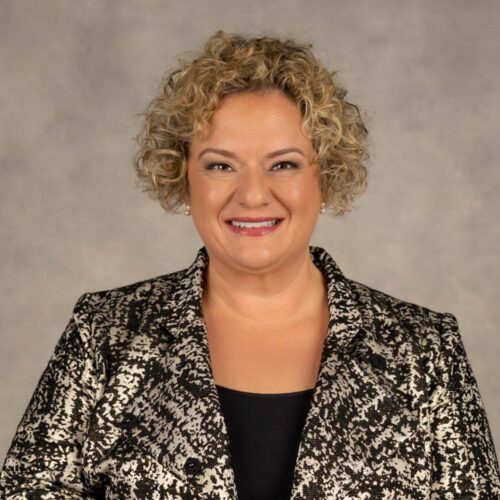
When I sat down with Katja Kempe—founder and CEO of a human capital technology platform designed to scale coaching, training, and reskilling—I was struck not just by the innovation she has built, but by the clarity of the problem she is solving.
Because of all the investment organizations make in people, most are still operating with a fundamentally flawed system.
And it’s costing them more than they realize.
The Broken System No One Wants to Admit
Let’s start with a truth that many executives feel—but few articulate clearly:
People development, as it exists today, is fragmented, inconsistent, and largely unmeasured.
Millions of dollars are spent annually on:
- Leadership training
- Executive coaching
- Learning and development programs
And yet, when asked a simple question—“What is the return on that investment?”—most organizations struggle to answer.
Katja saw this firsthand.
Raised in an entrepreneurial family, educated across cultures, and having held global leadership roles, she experienced both sides of the equation:
The ambition to develop people.
And the chaos of trying to do it effectively.
Disconnected vendors.
Inconsistent quality.
No unified measurement.
It wasn’t just inefficient.
It was ineffective.
The New Workforce Is Not Playing by Old Rules
For decades, organizations relied on a predictable leadership model:
Top-down authority.
Performance-driven incentives.
Pressure as a motivator.
It worked—until it didn’t.
Today, we are operating in a fundamentally different environment:
- Three generations in the workforce
- Distributed and hybrid work models
- Accelerated technological disruption
- Persistent global uncertainty
And perhaps most importantly:
A workforce that is no longer willing to tolerate outdated leadership styles.
This is often framed as a “Gen Z problem.”
It’s not.
It’s a human problem.
As Katja pointed out, people across all generations are questioning the status quo:
- Why am I doing this work?
- Does this align with my purpose?
- Am I being developed—or just utilized?
These are not soft questions.
They are strategic ones.
From Control to Conscious Leadership
The shift we are experiencing is not incremental.
It is paradigmatic.
We are moving from:
- Control → Empowerment
- Hierarchy → Distributed leadership
- Pressure → Purpose
And this is where many organizations are struggling.
Because while the intention to evolve exists, the infrastructure to support that evolution does not.
That is the gap Katja set out to close.
Building a Platform for Human Potential
At its core, Katja’s platform integrates three historically separate domains:
- Coaching
- Mentoring
- Training
But the real innovation is not the combination.
It is the scalability and measurability of those elements.
For the first time, organizations can:
- Access a broad network of vetted experts
- Deliver development programs at scale
- Measure outcomes against business KPIs
This is a fundamental shift.
Because what was once intangible is now operational.
The End of “One-Size-Fits-All” Development
One of the most common challenges organizations face is over-reliance on a limited set of voices.
A trusted coach.
A known consultant.
An internal expert.
While valuable, this creates a bottleneck.
It limits perspective.
It restricts specialization.
It reduces impact.
Katja’s model expands that ecosystem.
It introduces:
- Subject matter expertise across functions
- Diverse perspectives
- Flexible delivery models
And perhaps most importantly:
Choice.
Because development is not one-dimensional.
And neither are people.
Psychological Safety: The Hidden Multiplier
There is another critical element that often goes unaddressed in traditional development models:
Trust.
When coaching is internal, employees may hesitate.
- Will this be shared?
- Will this impact my career?
- Can I be fully honest?
External coaching—when done well—creates psychological safety.
It allows individuals to:
- Explore challenges openly
- Address limiting beliefs
- Develop authentically
This is where transformation happens.
Not in the training room.
But in the moments of honest reflection.
The M&A Pressure Cooker
If you want to see leadership challenges magnified, look at mergers and acquisitions.
Two organizations.
Two cultures.
Two leadership teams.
One future.
On paper, it’s strategic alignment.
In reality, it’s often:
- Uncertainty
- Anxiety
- Competing agendas
Katja highlighted this as one of the most critical use cases for her platform.
Because without intentional intervention:
- Leaders become reactive
- Decision-making fragments
- Top talent disengages
And when top talent leaves, the cost is not just financial.
The Cost of Losing What You Can’t Measure
We often talk about the cost of attrition in terms of replacement.
Time to hire.
Cost to onboard.
Lost productivity.
But that’s only part of the equation.
As I shared in our conversation:
Only about 20% of organizational knowledge is documented.
The remaining 80% lives in people.
Their relationships.
Their intuition.
Their experience.
When they leave, that knowledge leaves with them.
And it is nearly impossible to fully recover.
Turning Development into a Strategic Asset
This is where measurement becomes critical.
Katja’s platform doesn’t just deliver development.
It connects it to business outcomes.
Through integration with organizational KPIs, leaders can:
- Track progress
- Identify trends
- Optimize investment
This transforms development from a cost center into a strategic lever.
And in today’s environment, that distinction matters.
The Leadership Shift in Action
Let’s bring this to life.
In one example, a large consulting organization used the platform to:
- Automate coaching delivery
- Standardize reporting
- Improve visibility into outcomes
In another, organizations navigating mergers used it to:
- Align leadership teams
- Reduce uncertainty
- Retain key talent
Different contexts.
Same principle:
Intentional, measurable development drives better outcomes.
The Talent Crisis 3.0
We are entering what Katja calls Talent Crisis 3.0.
And it is driven by three forces:
- Increased expectations from employees
- Decreased tolerance for poor leadership
- Accelerated pace of change
Organizations that fail to adapt will face:
- Higher attrition
- Lower engagement
- Reduced competitiveness
Those that succeed will do so by:
- Investing in people strategically
- Building adaptable leadership models
- Creating environments where individuals can thrive
The Executive Mandate
If you are leading an organization today, the questions are no longer optional:
- How are you developing your people?
- Can you measure the impact?
- Are your leadership models aligned with the future—or anchored in the past?
Because the cost of inaction is not static.
It compounds.
The Future of Leadership
Katja’s journey—from global leadership roles to building a scalable platform for human development—is a reflection of a broader truth:
Leadership is no longer about control. It is about cultivation.
Cultivating:
- Talent
- Culture
- Capability
And doing so in a way that is:
- Scalable
- Measurable
- Human-centered
The Final Thought
The organizations that will thrive in the next decade are not the ones with the most resources.
They are the ones with the most aligned, empowered, and developed people.
Because strategy can be copied.
Technology can be replicated.
But culture—and the way you develop it—cannot.
And that is where the real competitive advantage lies.
Listen to the full episode on C-Suite Radio: Disrupt & Innovate | C-Suite Network
Watch the episode: DI 154 The Future of Work: Coaching and Culture
Check our website: LcubedConsulting.com
This article was drafted with the assistance of an AI writing assistant (Abacus.AI’s ChatLLM Teams) and edited by Lisa L. Levy for accuracy, tone, and final content.