Employers may not be able to control every healthcare increase—but they can choose a better, more affordable way for employees and their families to access care.
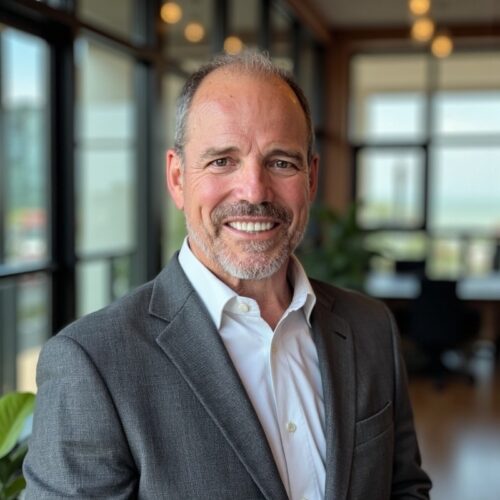
By David Huerta, CEO & Co-Founder, Whole Person Virtual Care
Over the past several months, I’ve spent a lot of time talking with business owners about healthcare. I keep hearing the same frustration: costs continue to rise, employees are paying more, and employers feel like they have fewer good options.
At a recent conference in Nashville, one business owner told me he simply couldn’t afford to provide traditional medical coverage to his employees.
After learning about Whole Person Virtual Care, he said:
| “I may not be able to afford to give my employees medical coverage, but I sure can afford to give them Whole Person.” |
Another owner was facing a significant medical renewal increase. Higher premiums meant higher payroll deductions and potentially higher deductibles for his employees. His response wasn’t to pretend those increases weren’t happening. He wanted something positive he could give his people in return.
That is the change in thinking we need.
Get Off the Sidelines
The healthcare status quo has conditioned employers to believe there isn’t much they can do.
Wait for the renewal. Accept the increase. Change the plan design. Increase the deductible. Shift more cost to employees. Repeat next year.
But this is your company. These are your employees.
You don’t have to sit on the sidelines.
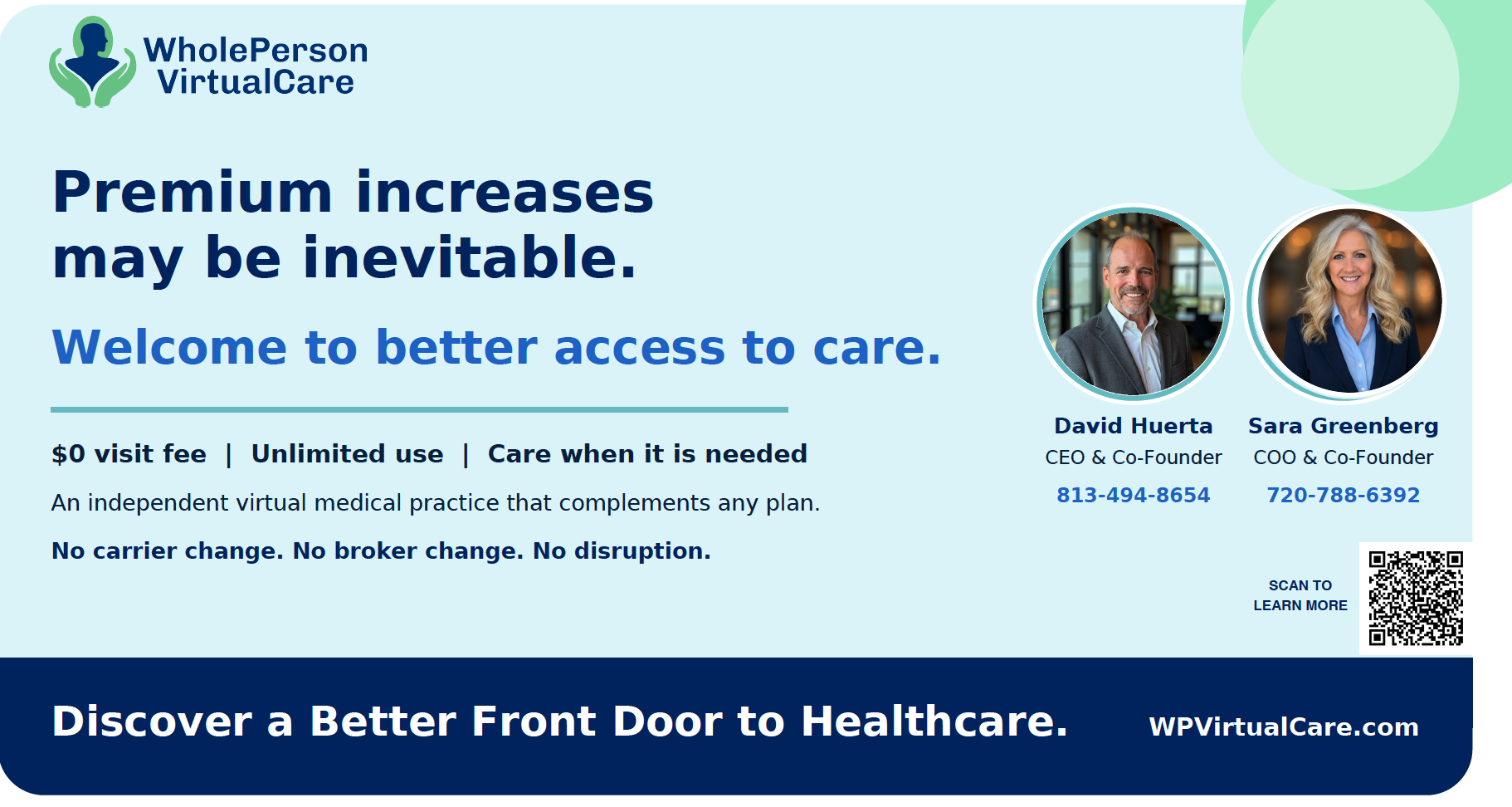
| Premium increases may be inevitable. Poor access to affordable care is not. |
Whole Person gives employers an opportunity to get back in the game and make healthcare better for their people without changing their insurance carrier or agent.
Whole Person supplements whatever medical plan you already have. And if you don’t offer medical insurance at all, it should absolutely be on your radar.
A Different Front Door to Healthcare
Whole Person isn’t traditional carrier telemedicine. Members receive access to an independent virtual medical practice established in 2013 that has handled more than 6 million patient encounters and achieved an NPS of 76.
For employers, the model is remarkably simple.
At $15 per employee per month, one membership covers the employee, spouse and qualified dependents through age 26. There is a $0 visit fee, no limit on utilization and no claims charged back to the employer.
That’s $180 per employee annually for a family to have access to care when they need it.
And employees actually use it.
In a recent study of more than 5,000 covered employees across companies of different sizes, utilization averaged 71%. More than 48% of encounters occurred after 5 p.m., before 8 a.m. or on weekends—exactly when accessing traditional care can become difficult.
The service is used across generations, and 96% of encounters are diagnosed and treated on the first reach-out.
Then It Happened to Me
You never know when you—or someone in your family—will need care.
While attending a conference in Nashville recently, I caught whatever illness was making its way around.
Instead of searching for an urgent care, figuring out transportation, sitting in a waiting room and wondering what the visit would cost, I opened my patient portal and submitted my symptoms.
Within 30 minutes, a Physician Assistant contacted me.
Four prescriptions were sent to a local pharmacy.
I picked them up and started treating the problem immediately.
Instead of trying to barrel through several days of meetings while getting progressively worse, I was addressing the problem right away.
That’s when the value of access becomes very real.
Virtual Care Is Here to Stay
Some employers remain hesitant about virtual care. I understand that.
But virtual care itself isn’t the question anymore. The question is what kind of virtual care you’re providing.
Is it easy to access? Do employees trust it? Does it actually resolve their problem? Can they use it whenever they need it? Are there additional fees every time they seek care?
Or is it simply another underutilized feature buried inside an insurance plan?
For appropriate non-emergency conditions, virtual care can eliminate the drive, the waiting room, exposure to other illnesses and uncertainty about what the visit will cost.
That isn’t just convenient.
It’s a better way to access care.
And better access can mean employees address health issues sooner, miss less work and spend less time navigating a complicated healthcare system.
Leadership Means Choosing Better
We aren’t going to solve every problem in American healthcare overnight.
But employers don’t have to wait for the entire system to change before doing something better for their people.
You have a choice.
You can stay on the sidelines and continue accepting the status quo.
Or you can get in the game.
| Premium increases may be inevitable. Better access to care is available today. |
Be the leader your employees already believe you are.
Give them something better.
WHOLE PERSON VIRTUAL CARE
Better Access to Care. Better for Your People. Better for Your Business.