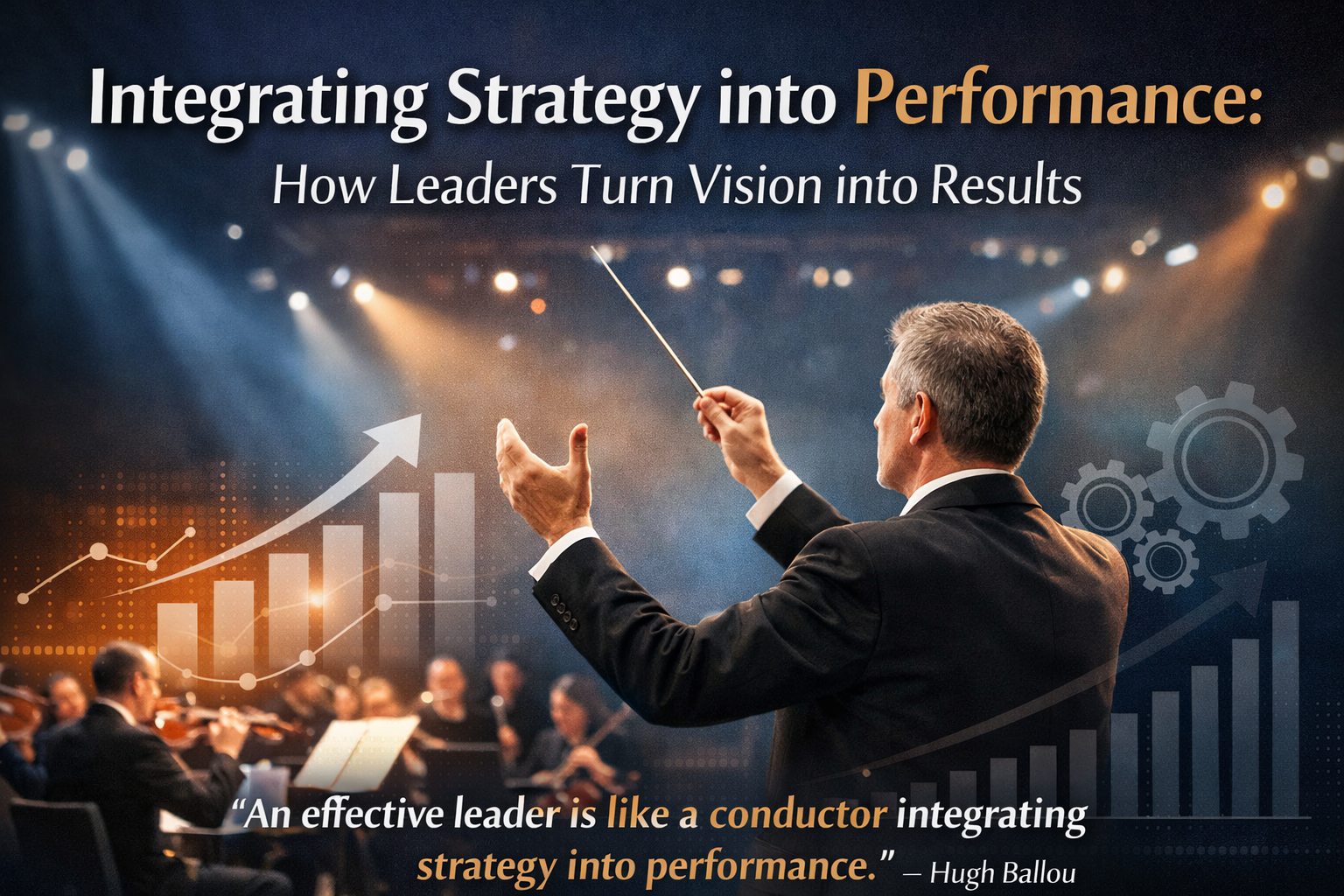
Integrating Strategy into Performance: How Leaders Turn Vision into Results
“An effective leader is like a conductor integrating strategy into performance.”
By Hugh Ballou
Most leaders don’t fail because they lack vision. They fail because the vision never makes it into the daily rhythm of the organization. Strategy lives in one place, execution in another, and systems, if they exist at all, rarely bridge the gap. The result is predictable: stalled initiatives, inconsistent performance, and teams that feel busy but not productive.
This framework offers a practical path for leaders and entrepreneurs who want to move from good intentions to measurable outcomes.
Why Strategy Fails: The Integration Problem
Many leaders can articulate a compelling vision, but few have the systems to translate that vision into consistent performance. As the teaching guide notes, “Leaders often have vision but lack execution systems.”
The challenge isn’t intelligence or passion—it’s integration. Strategy without execution has no impact. Execution without structure creates chaos. The real work of leadership is weaving these elements together, so the organization moves with clarity and momentum.
The Integration Principle
“Strategy without execution has no impact. Execution without structure creates chaos.”
This principle sits at the heart of effective leadership. Ideas alone don’t produce results. Activity alone doesn’t produce outcomes. Leaders must intentionally connect the two through disciplined systems.
Key questions leaders should ask:
- Where do ideas break down
- Where does execution drift
- What systems are missing or inconsistent
Naming the gap is the first step toward closing it.
The Three-Part Model: Strategy → Systems → Performance
1. Strategy — The Score
Strategy defines the direction. Vision, mission, and goals must be clearly defined and visible. A score tells musicians what to play; strategy tells teams what matters.
2. Systems — The Rehearsal
Systems create alignment and consistency. Weekly planning, workflows, and metrics ensure the team is prepared to perform.
3. Performance — The Stage
Execution happens through structured meetings and deliverables. This is where stakeholders experience the results of the work.
A crucial shift in this model: replace agendas with deliverables. Agendas list topics. Deliverables produce outcomes.
From Agenda Items to Deliverables
One of the most transformative practices in the framework is rewriting agenda items into deliverables. Instead of discussing “Marketing Update,” leaders define:
- A decision to be made
- An owner responsible
- A deadline for completion
This shift forces clarity, accountability, and momentum.
Building an Execution Rhythm
High-performing organizations operate on predictable rhythms. The guide outlines a simple cadence:
Weekly Rhythm
- Identify 3–5 deliverables
- Assign clear ownership
- Track progress
Monthly Rhythm
- Review metrics
- Adjust strategy based on data
Quarterly Rhythm
- Reset direction
- Recalibrate priorities
This rhythm keeps teams aligned without overwhelming them.
Leadership Shift: From Compliance to Commitment
“Consensus builds ownership. Covenants build culture.”
Leaders often default to telling people what to do. But sustainable performance comes from shared ownership, not compliance. When teams participate in shaping deliverables, systems, and expectations, they commit at a deeper level.
This shift transforms culture from passive to proactive.
Identifying Common Breakdowns
Most performance issues fall into predictable categories:
- No clear deliverables
- Ineffective meetings
- Lack of metrics
- No accountability
Leaders should identify their top breakdown so they can address it directly rather than treating symptoms.
Action Planning: Turning Insight into Movement
The framework concludes with a simple but powerful action plan:
- One deliverable to move forward
- One system improvement to strengthen execution
- One leadership shift to model integration
Small, consistent steps compound into organizational transformation.
Closing Insight
“Strategy is not what you write. Strategy is what your team delivers.”
Leadership is not about crafting elegant plans—it’s about creating the conditions where those plans become reality.
____________________________________________________________________________________________________________________
Hugh Ballou is The Transformational Leadership Strategist, author, and founder of SynerVision International, Inc. and SynerVision Leadership Foundation. He empowers leaders across sectors to transform vision into high-performing results.
The article is based on “The Transformational Leadership Accelerator: The Fast Track to Leadership Excellence” a personal study course for leaders in all segments and in all levels of personal development. For more information about my courses, go to https://synervisionleadership.org/self-study-courses/
For a list of resources go to – http://AboutHugh.com
#Facilitation #Leadership #Development #ConsensusBuilding #Collaboration #TeamLeadership