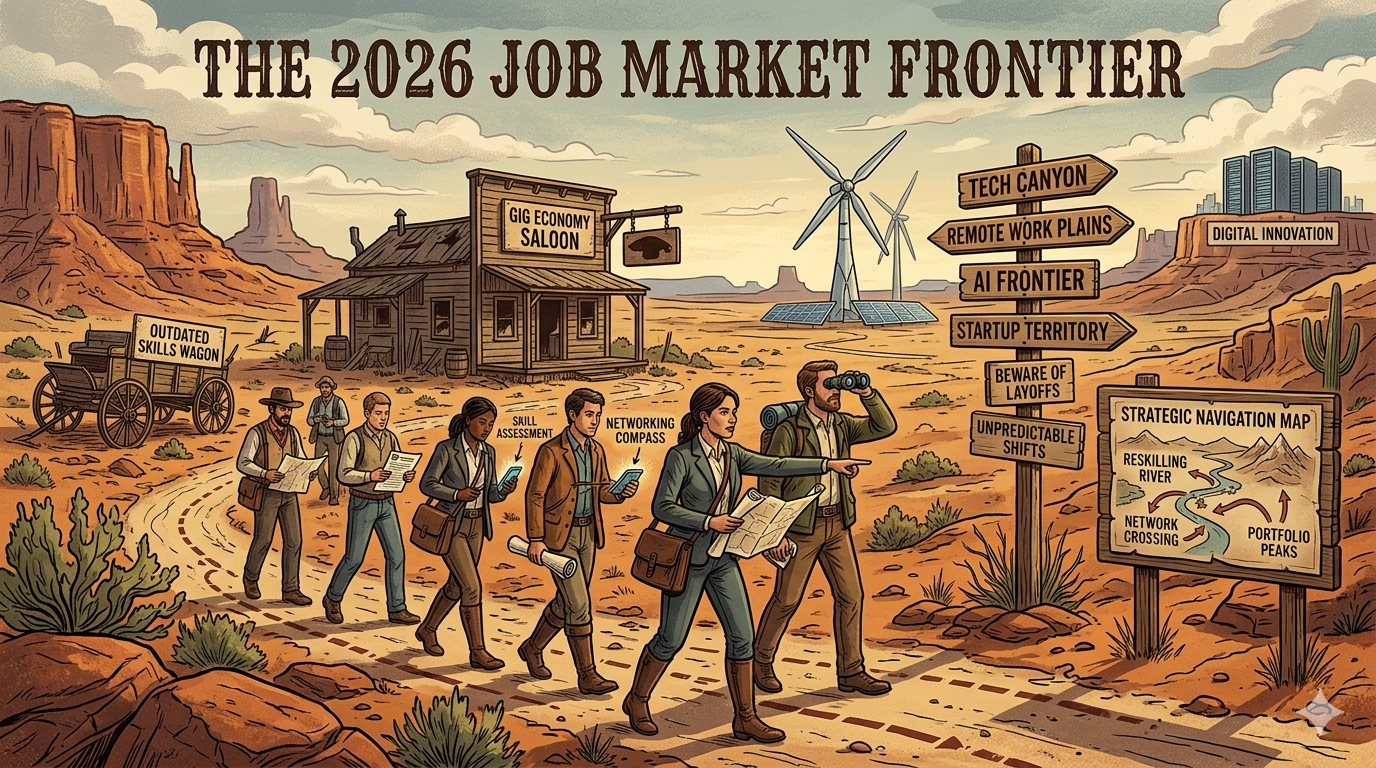
This job market is the Wild West. I’m not being dramatic. I’m being data-driven.
The BLS February jobs report shows non-farm payroll employment was down by 92,000 in February, and the unemployment rate sits at 4.4% with 7.6 million people unemployed. Job openings have decreased to 6.5 million (the lowest since September 2020), and the job openings rate has dropped to 3.9%, the lowest it’s been since 2017 outside the pandemic.
And the competition is fierce. Employers are receiving an average of 250 applications per job posting, with entry-level roles seeing 400 or more. Only 0.1%-2% of online applications result in a job offer. If you live in the Washington D.C. area or were part of the federal workforce, it’s even worse. The federal workforce has shrunk by 242,000 people (over 10%) since January 2025, flooding the market with highly qualified professionals all searching for jobs at the same time.
This isn’t the job market your parents navigated. It’s not even the job market from three years ago. And if you’re running your job search like it’s 2019, you’re going to be searching for a very long time.
The Old Playbook Is Broken
Here’s what isn’t working anymore: applying to 50 jobs on LinkedIn, crossing your fingers, and waiting for the phone to ring. The latest data shows that you need roughly 42 applications to land just one interview, with only 2.4% of candidates reaching the interview stage. Job seekers now need anywhere from 100 to 200+ applications to secure just one offer.
The math is brutal. And it gets worse when you factor in “ghost jobs.” An estimated 18-22% of postings may have no real hiring intent and applicant tracking systems reject over 80% of resumes before they ever reach human eyes.
Here are three things that actually work in 2026: authentic application materials, strategic networking, and targeted applications. Let me break each one down.
Your Application Materials Need Personality
Everyone’s resume sounds exactly the same right now. Many people are using AI to write their resumes for them. And hiring managers can smell a ChatGPT-generated resume from a mile away. When every applicant’s materials use the same buzzwords, the same generic accomplishment statements, and the same lifeless tone, nobody stands out.
Your resume, LinkedIn profile, cover letter, and portfolio need to showcase your authentic personal brand, not a sanitized, AI-polished version of a generic professional. The women I work with who land roles fastest are the ones whose materials sound distinctly like them.
This means:
- Specificity over generalities. “Led cross-functional initiatives that drove results” doesn’t tell me much. “Built a 12-person product team from scratch that launched three new revenue streams generating $4.2M in the first year” tells me specifically what you’re capable of.
- Your voice, not corporate speak. Your materials should sound like the way you’d explain your work to a smart friend over coffee- professional but human. If your resume reads like a press release, it’ll get skipped.
- Authentic differentiation. What’s your angle? Your philosophy? The thing that makes you different? If you can’t articulate it, neither can a hiring manager who’s reviewing 250 applications.
In a sea of AI-generated slop, being authentically YOU is your competitive advantage.
Networking Is Everything
We all know that most jobs are landed through networking. That’s always been true. But in this market, it’s even more critical. 54% of workers report landing a job through a personal or professional connection. Over 70% of participants in a LinkedIn survey were hired by a company where they had a connection. Referrals make up just 2% of applications, but lead to 11% of total hires, which is about 10x higher conversion than other application methods.
When each job posting attracts 250 applications, you need a way to bypass the job boards and get directly to the people inside the room. A referral gets your resume seen and championed.
Data shows that referrals are seven times more likely to be hired than job board applicants and the hiring process via referrals takes only 29 days- compared to 55 days for job board applicants. Here’s the disconnect: 21% of workers have never asked anyone for a referral, and nearly 60% reach out to only a few close contacts or no one at all when job searching.
The magic of networking is always in the follow-up. It’s not about collecting as many business cards as possible or sending a ton of cold LinkedIn message and hoping for the best. It’s about building genuine relationships over time and being willing to actually ask for help when you need it.
Start with people you already know- your close circle. Then expand to second and third-degree connections. Have real conversations and offer value before you ask for a favor. And when there’s an opening that fits, don’t be shy about asking for an introduction.
Targeted Applications Beat Spray-and-Pray
When you’re anxious about your job search and short on time, it’s tempting to click “Easy Apply” 50 times to get as many applications submitted as possible. Don’t do it.
Fewer applications with high customization are more effective than 100+ generic applications. Quality beats quantity every time. Only 30% of applicants receive an offer after submitting 21-80 applications, compared to 20% of those who send over 81. It’s clear that quality matters more than volume.
Here’s what a targeted approach actually looks like:
- Research before you apply. Is this company actually hiring, or is this a ghost job that’s been posted for six months? Do you know anyone who works there? Have you looked up the hiring manager on LinkedIn?
- Customize every application. Not copy-paste-with-a-few-tweaks. Actually customize it. Reference specific things about the company, the role, the team. Show you’ve done your homework.
- Apply to roles you’re 90% qualified for. Five years ago, you could get away with only having 50% of the qualifications. But unless you have a strong internal referral, you need to meet 90% of the qualifications outlined in the the job description or you’ll go straight into the “rejection” pile.
- Apply through the company website, rather than the job boards. Go straight to the source!
- Follow up strategically. Don’t just submit and pray. Find a connection, send a note to the hiring manager, and do something to move your application from the pile to a person’s attention.
Ten thoughtful, researched, customized applications will outperform 100 spray-and-pray submissions every single time.
This Job Market Is Hard, Not Impossible
There’s no sugarcoating how tough the 2026 job market is. You need to be smarter, more strategic, and more intentional than you’ve ever been before. Your materials need to actually sound like you, not like everyone else using the same AI prompts. Networking has to become a non-negotiable part of your strategy. Every application counts.
The professionals who are landing roles right now aren’t the ones applying to the most jobs. They’re the ones who understand that in the Wild West, you can’t just follow the herd. You have to chart your own path.