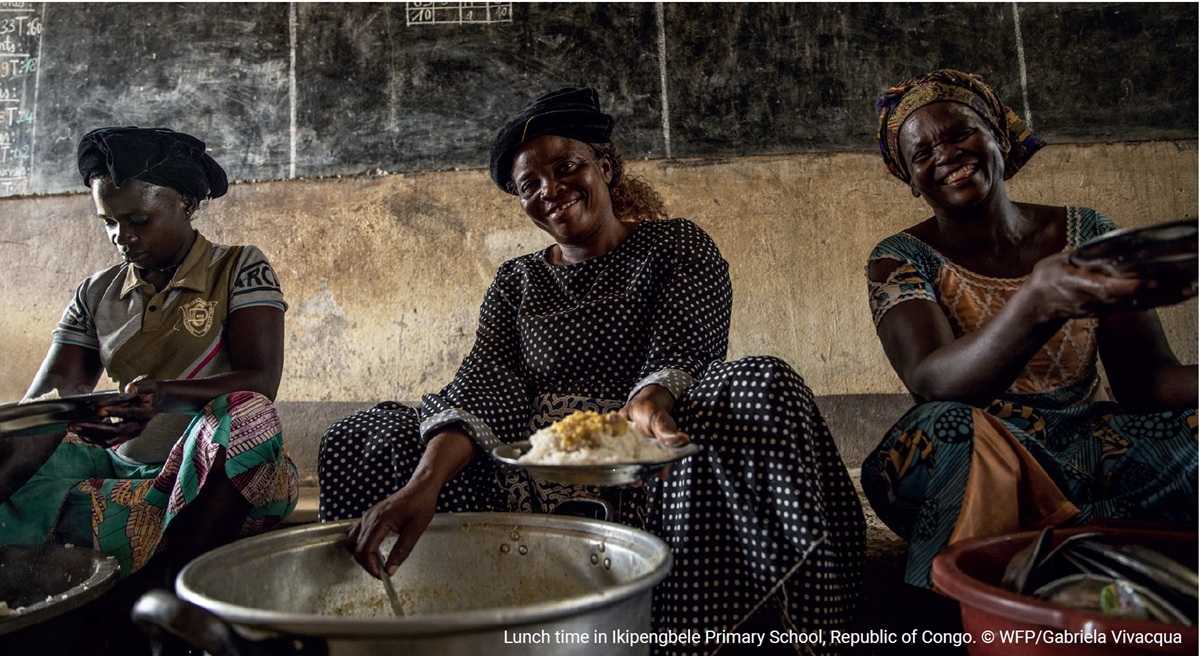
Let’s talk about cooking—something most of us do every day without much thought. But for millions of families across rural and displaced communities in Africa, cooking isn’t just a routine. It’s a daily gamble with health, time, and even safety.
The fuel you cook with can change everything
Give a household safe, clean, affordable energy to cook with, and you’ll see a chain reaction: health improves, women gain back hours of their day, forests start to regenerate, children make it back to school, and families get a real shot at economic stability. That’s not an exaggeration—it’s a ripple effect that starts in the kitchen.
Right now, most families in these communities still rely on firewood and charcoal. That means thick smoke, chronic illness, endless hours spent gathering fuel (mostly by women and girls), deforestation, and a cycle of poverty that just keeps tightening.
But solar e-cooking is changing the story
These systems use solar electricity—either standalone or part of a microgrid—to power clean, efficient electric cookers. No firewood. No charcoal. No smoke. And once you’ve paid off the system, there are no ongoing fuel costs. Just sunshine.
Today, the technology is finally catching up to the need. Solar panel prices are falling. Devices are internet-connected, trackable, and repairable. Digital payment platforms let families pay in small, manageable amounts. It’s becoming more affordable, more accessible, and more realistic for the people who need it most.
And here’s the big win: these cookers don’t just reduce expenses—they give back something far more precious. Time. Dignity. Possibility
https://www.tiktok.com/@african.nyako/video/7470516333931662622
Women don’t have to spend half the day gathering wood. Girls get to stay in school. Families breathe easier—literally. Forests around communities start to come back. And money that would’ve gone to fuel stays in the household.
What does that look like in real life?
In Nakivale Refugee Settlement in Uganda, families started using solar e-cookers through a cooperative pilot. Before that, women spent up to four hours every single day collecting wood. After adopting the cookers, cooking time dropped dramatically. Girls who used to miss school could finally attend consistently. Health clinic visits went down as smoke exposure declined. And here’s the kicker—members of the co-op got technical training, creating local jobs. Some families even turned the cookers into income-generating tools.
In Kakuma Camp, Kenya, households received solar cooking kits with mobile payment plans. The systems tracked usage and enabled real-time service adjustments. One year later, repayment rates were higher than expected. Community leaders created a maintenance team, and before long, local vendors started stocking spare parts. More people wanted in. Success bred momentum.
What about the cost?
This part surprises most people. A typical household spends around $180–$240 a year on charcoal. A solar e-cooker system costs about $400. That means a break-even point in under two and a half years—and over a five-year span, families save between $500 and $800. That’s not even counting the health benefits, time saved, or school days regained.
Still skeptical? Let’s address some common concerns.
- “But solar cookers can’t make traditional meals.”
Actually, they can. These devices handle simmering, steaming, boiling—you name it. They’re tested locally, and updates are based on community feedback. - “People won’t change how they cook.”
They will—when it saves them hours every day. Early adopters become community influencers. Training sessions help build confidence. Culturally respectful design earns trust. - “These things break too easily.”
Not anymore. Modern systems are modular, meaning individual parts can be repaired or replaced locally. Technicians are trained within the communities, spare parts are stocked, and downtime is minimal.
And here’s where it gets exciting.
We’re not just solving household problems. We’re growing local economies. Repair technicians, spare part vendors, trainers, even entrepreneurs—solar e-cooking unlocks business opportunities. Microgrids and solar power become the foundation for bigger energy access strategies.
We’re also learning in real time. Because the devices are connected, usage data tells us what’s working and where support is needed. That means smarter programs, better decisions, and greater accountability.
The financing puzzle is solving itself.
Prices have dropped, but better yet—payment models are catching up with reality. Lease-to-own setups, rotating community funds, and cooperative models are removing the affordability barrier. Ownership becomes possible. And more importantly, it becomes a source of pride.
Refugee camps are responding. Rural communities are following. Ministries are taking notice. Private investment is starting to flow. And where adoption starts, innovation follows.
What we’re seeing isn’t charity—it’s smart investment.
Every solar cooker installed eliminates toxic emissions, prevents deforestation, and protects women and girls from the dangers of fuel collection. Every dollar spent delivers measurable health outcomes, time savings, and economic gains. This isn’t about dependency. It’s about agency.
Everyone benefits. Families. Communities. Ecosystems. Economies.
Solar e-cooking preserves cultural cooking traditions while updating the method. It doesn’t replace identity—it strengthens it through innovation.
So, what do we do with all this momentum?
We keep going
Governments must back pilots.
Funders must step up.
Manufacturers must scale production.
Designers must prioritize user needs, not just market trends.
The opportunity is right here, right now. The tech is ready. The demand is clear. The partnerships are forming.
The only thing that delays progress is hesitation. But for those who act, the transformation is real and lasting.
Solar e-cooking isn’t a trend. It’s a turning point.
So, what’s next?
We keep pushing forward.
It’s time for governments to get behind more pilot programs—not just talk, but real support on the ground.
Funders? We need you to stop waiting for perfect and start fueling what’s already working.
Manufacturers—this is your moment to ramp up and meet the demand that’s knocking.
And for the designers out there: don’t build for the market—build for the people who are actually going to use these cookers. That’s where real change happens.