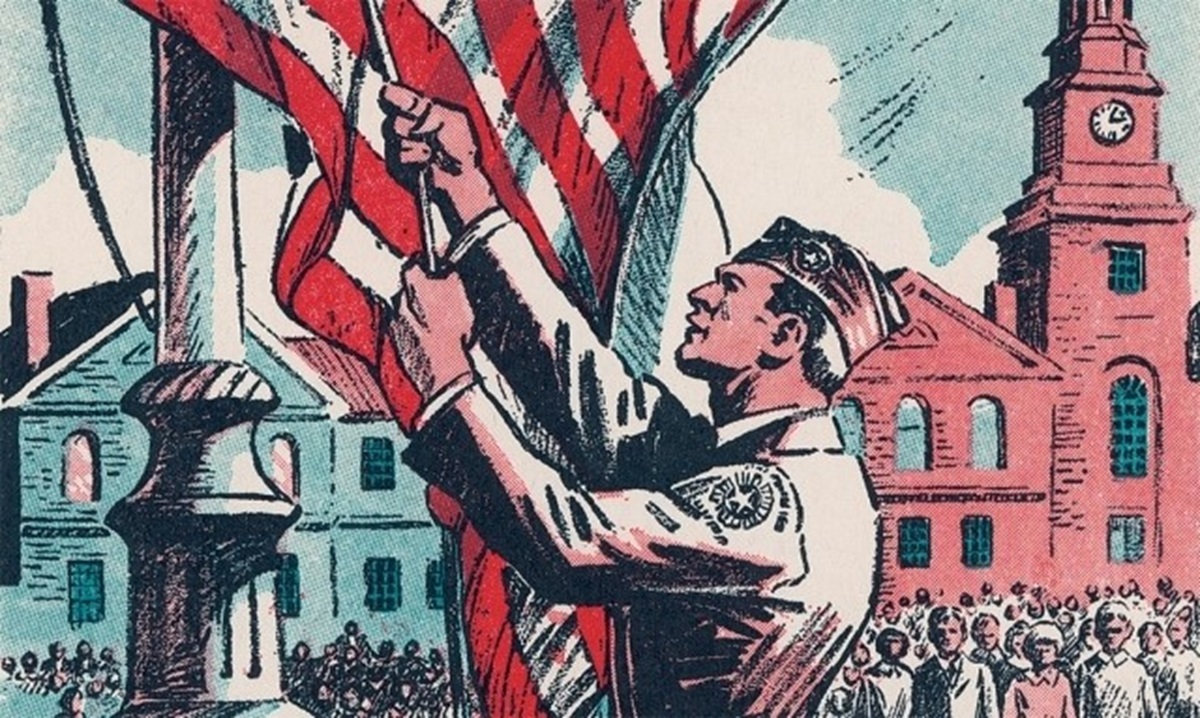
A Nation Divided National Conservatism vs Freedom Conservatism
The American political landscape is marked by a profound and growing schism, one that delves deep into the heart of conservative ideology. This divide, encapsulated in the clash between National Conservatism and Freedom Conservatism, reflects a broader struggle over the future direction of the United States and the essence of Americanism. This dichotomy is more pronounced as we edge closer to the 2024 national elections just a few months away.
Political historians on both sides of this debate explore the origins, principles, and implications of these competing visions to understand the nature of this division and its potential impact on the nation. As Victor Davis Hanson has put it, we are in an “existential war for the soul of America.”
Freedom Conservatism is rooted in the libertarian and classical liberal traditions that prioritize individual liberty, free markets, and limited government. This faction champions economic freedom and personal autonomy, advocating for policies that reduce government intervention in both the marketplace and private lives. Freedom conservatives argue that true Americanism lies in maximizing individual choice and minimizing the role of the state, believing that the principles of liberty and free enterprise are the essence of the American spirit.
Around 2010, the notion of a “Woke” perspective (slang term of African American Vernacular English) entered mainstream American politics. Although not a new term, its origins date back to around 1930-Stay Woke. Adopted by modern-day Democrat ideology, Woke–Ism is a liberal FreCon objective to address the broader spectrum of racial injustice, LBGTQ+ rights, and other identity political aspirations.
Principles and Philosophies
National Conservatism is characterized by its commitment to preserving the cultural and moral foundations of American society. National conservatives argue that a strong, cohesive nation requires a shared cultural heritage and moral framework.
They emphasize the importance of the family unit, religious traditions, and patriotic values, believing that these elements are essential for maintaining social order and national unity. For them, Americanism is about preserving the nation’s cultural identity and moral integrity.
In contrast, Freedom Conservatism is driven by a belief in the primacy of individual rights and the power of free markets to drive prosperity and innovation. Freedom conservatives advocate for deregulation, tax cuts, and policies that promote entrepreneurship and economic growth. They contend that personal freedom and economic opportunity are the cornerstones of a thriving society and that the government should play a minimal role in regulating individual behavior or economic activity. Their vision of Americanism celebrates the entrepreneurial spirit, individual initiative, and the pursuit of personal liberty.
The Nature of the Conflict
The conflict between National Conservatism and Freedom Conservatism is not merely a theoretical debate; it has practical implications for policy and governance. National conservatives often support measures that protect American industries from foreign competition, restrict immigration to
preserve cultural integrity, and promote traditional values through public policy. They argue that such measures are necessary to safeguard the nation’s identity and stability in an increasingly globalized world.
Freedom conservatives, however, view many of these measures as antithetical to the principles of liberty and free enterprise. They advocate for open markets, limited immigration restrictions, and a government that refrains from imposing moral or cultural standards. Freedom conservatives believe that individual freedom and economic dynamism are the best means to ensure national prosperity and social progress.
Implications for American Politics
The divide between National Conservatism and Freedom Conservatism has profound implications for American politics. It influences the priorities and platforms of political candidates, shapes the policy debates within conservative circles, and affects the broader national discourse. This schism also complicates efforts to present a unified conservative front, as disagreements over fundamental principles can lead to internal strife and fragmentation.
Moreover, this ideological rift reflects broader societal tensions in America. Debates over national identity, cultural values, and the role of government are not confined to conservative circles; they resonate across the political spectrum. As such, the struggle between National Conservatism and Freedom Conservatism is part of a larger conversation about the future of the United States and its place in the world.
Similarities:
- Commitment to Conservatism: Both National Conservatism (NatCon) and Freedom Conservatism (FreCon) are rooted in a commitment to conservative principles. They share a common foundation in valuing tradition, upholding the rule of law, and seeking to maintain a stable and prosperous society
- Emphasis on Limited Government: Despite their differences, both NatCon and FreCon emphasize the importance of limiting government intervention. They agree that an overreaching government can infringe on personal freedoms and stifle economic growth
- Patriotism: Both factions are deeply patriotic, believing in the importance of American exceptionalism and the unique role of the United States on the global stage. They are committed to preserving and promoting the nation’s strengths and values
- Economic Prosperity: Both NatCon and FreCon aim to foster economic prosperity, although their methods may differ. They agree that a strong economy is vital for the nation’s well-being and that economic policies should encourage growth and opportunity
Differences:
- Cultural Preservation vs. Individual Liberty: NatCon emphasizes the preservation of cultural and religious traditions, advocating for policies that protect and promote these values. FreCon, on the other hand, prioritizes individual liberty and personal autonomy, arguing that the state should not impose cultural or moral standards on individuals
- National Sovereignty vs. Global Markets: NatCon places a strong emphasis on national sovereignty and is often skeptical of globalization, advocating for policies that protect American industries and jobs. FreCon, in contrast, champions free trade and open markets, believing that global economic integration is beneficial for growth and innovation
- Immigration Policies: NatCon typically supports more restrictive immigration policies to preserve cultural integrity and national security. FreCon generally advocates for more open immigration policies, arguing that immigration is a source of economic dynamism and cultural enrichment
NOTE: These are additional Differences from the previous list
- Role of Government in Moral Issues: NatCon supports a more active role for government in promoting and enforcing traditional moral values. FreCon, however, believes that the government should refrain from legislating morality and that individuals should be free to make their own choices in matters of personal and moral significance
- Economic Approach: While both value economic prosperity, NatCon may support protectionist measures and government intervention to safeguard national interests, whereas FreCon advocates for minimal government interference in the economy, believing that free markets should operate with minimal regulation.
Understanding these similarities and differences is crucial for grasping the ongoing debate within American conservatism. Both NatCon and FreCon offer distinct visions for the future of the United States, each rooted in a shared commitment to preserving and enhancing the nation’s core values and principles.
The clash between National Conservatism and Freedom Conservatism represents a pivotal moment in the history of American conservatism. It is a battle over the core principles that should guide the nation, and it highlights the complex and often contentious nature of political ideology. As America navigates this divide, the outcome will have lasting implications for the nation’s identity, governance, and place in the global order. Understanding this conflict is essential for grasping the current state of American politics and the challenges that lie ahead in reconciling these divergent visions of Americanism.