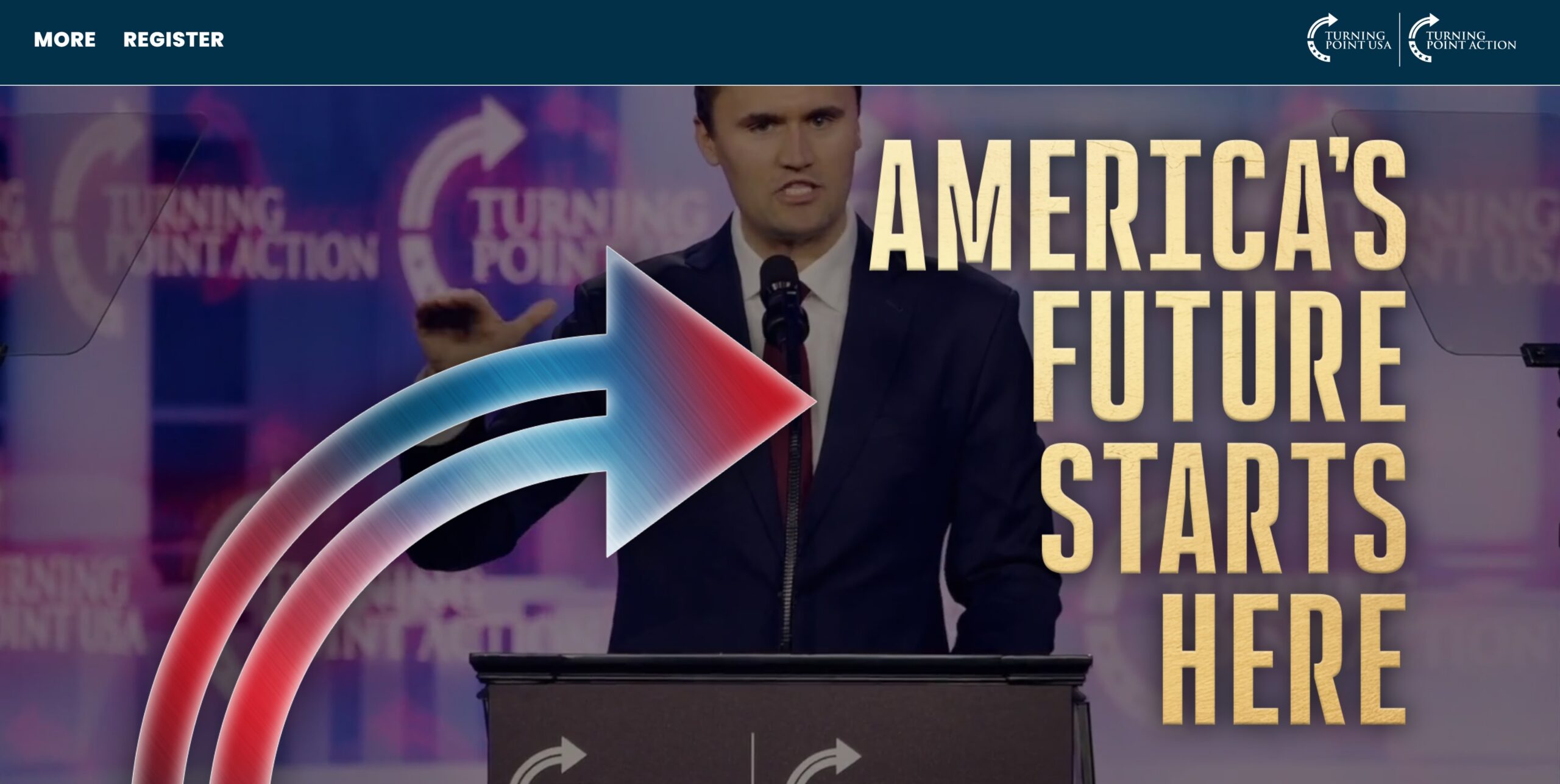
Before the Shot Was Fired:
The Rise, Mission, and Final Days of Charlie Kirk
Charlie Kirk was born Charles James Kirk on October 14, 1993, in the northwest suburbs of Chicago, Illinois. He grew up in Arlington Heights and Prospect Heights and attended Wheeling High School, where he first leaned into politics, volunteering for a Republican Senate campaign and getting his first taste of media attention after writing about what he called liberal bias in school textbooks.
Unlike most figures who rise to national prominence, Kirk never followed the usual academic path. After high school, he briefly enrolled at Harper College, a community college in Illinois, but left after one semester. He has said that college wasn’t where the work really was. Instead, he believed the real battleground was cultural — especially on campuses.
The turning point was 2012. At 18, Kirk spoke at a “Youth Government Day” event at Benedictine University. In the audience was Bill Montgomery, a 72-year-old conservative activist with Tea Party roots. Montgomery noticed that students, who had been mostly checked out while older speakers lectured, snapped to attention when Kirk talked.
Montgomery urged him not to “wait his turn,” not to disappear into a lecture hall, but to build an organization immediately. Within weeks, the two of them launched Turning Point USA. Kirk and Montgomery incorporated Turning Point USA (TPUSA) the day after Kirk graduated high school, with a stated mission “to identify, educate, train, and organize students to promote the principles of fiscal responsibility, free markets, and limited government.”
The timing matters. Most political nonprofits are the product of veteran strategists who recruit student volunteers. TPUSA inverted that formula: a teenager recruited the adults. That inversion became Kirk’s signature style — a message that young conservatives didn’t have to wait until they were older to shape the national story.
Kirk proved just as comfortable in donor suites as on campus greens. At the 2012 Republican National Convention, he persuaded prominent GOP donor Foster Friess to invest in the fledgling group. That early backing helped TPUSA move from an idea in a garage to a national youth operation in a matter of months.
From the start, Kirk framed his work not only as political but also as spiritual. In later years, he would align himself with explicitly Christian nationalist messaging, arguing that American identity was inseparable from a biblically rooted social order, and he launched religiously targeted efforts like Turning Point Faith to embed his message in churches.
Building a youth movement
Over the next decade, Kirk became more than the head of a nonprofit. He became a brand. TPUSA expanded from a shoestring startup to what major outlets have called one of the most powerful conservative youth organizations in the United States, with chapters on hundreds of campuses and a field strategy built around relentless in-person contact. TPUSA has described its model as registering voters, training activists, and flooding campuses with a pro-free-market, anti–big government message.
By 2023, TPUSA and its network of affiliates — Turning Point USA, Turning Point Action, and Turning Point Faith — had become a multimillion-dollar ecosystem employing hundreds of staff, claiming a footprint on thousands of high school and college campuses in all 50 states, and positioning itself as the pipeline for “next generation conservative leaders.”
Kirk’s own platform rose in tandem. He hosted “The Charlie Kirk Show,” appeared regularly on Fox and other right-leaning outlets, and served as an outspoken ally of Donald Trump. He pushed hard on themes that energized his base — opposition to abortion, skepticism or rejection of mainstream narratives on climate change and COVID-19, fierce criticism of diversity, equity, and inclusion programs, and repeated claims of election fraud in the 2020 election.
His approach was combative by design. TPUSA didn’t just hand out pocket Constitutions in quiet corners of campus. It staged confrontation. One of Kirk’s trademarks was the “Prove Me Wrong” setup: a table, a banner, and an open microphone. Students were invited — even dared — to argue with him in real time on-camera. Those moments became viral clips, and those clips became recruiting tools.
That same style scaled internationally. Kirk helped seed Turning Point UK in late 2018 and early 2019 alongside Candace Owens, exporting the template of youth-led, nationalist-populist messaging to Britain. The launch drew instant backlash from Labour MPs and mockery online. Still, it also drew vocal approval from prominent Conservative figures who saw in TPUSA a model for energizing a younger base around immigration restriction, national identity, and opposition to what they called “left-wing capture” of education.
By 2025, Kirk was no longer just a domestic campus activist. He was traveling, debating, and networking across borders. Reports indicate that he spoke at Oxford, sparring with students on masculinity and national identity, and that he built relationships with nationalist and right-wing groups in South Korea and Japan.
Those contacts treated him as an envoy of a distinctly American style of populism — media-savvy, faith-infused, anti-immigration, openly confrontational. To supporters, this was proof that Kirk had become something rare: a 31-year-old activist who could walk onto a campus in Tennessee or a stage in Seoul and deliver essentially the same message — that Western civilization was under siege and that young conservatives were called to defend it.
The final four months and assassination
The last phase of Kirk’s life was built around a project branded “The American Comeback Tour,” a rolling campus roadshow in 2025 designed to generate exactly the kind of unscripted encounters he’d made famous. Promotional materials advertised stops at universities across the country, often in ideologically mixed or liberal-leaning environments. The promise was simple: show up, sit down across from Charlie, and tell him he’s wrong.