One of the quiet leadership skills we don’t talk about enough is this:
the ability to interpret what’s happening accurately while it’s still unfolding.
Not after the story is all tidied up.
Not once the results are obvious.
But in the messy middle, when effort is high, outcomes are still forming, and the temptation to draw conclusions arrives early.
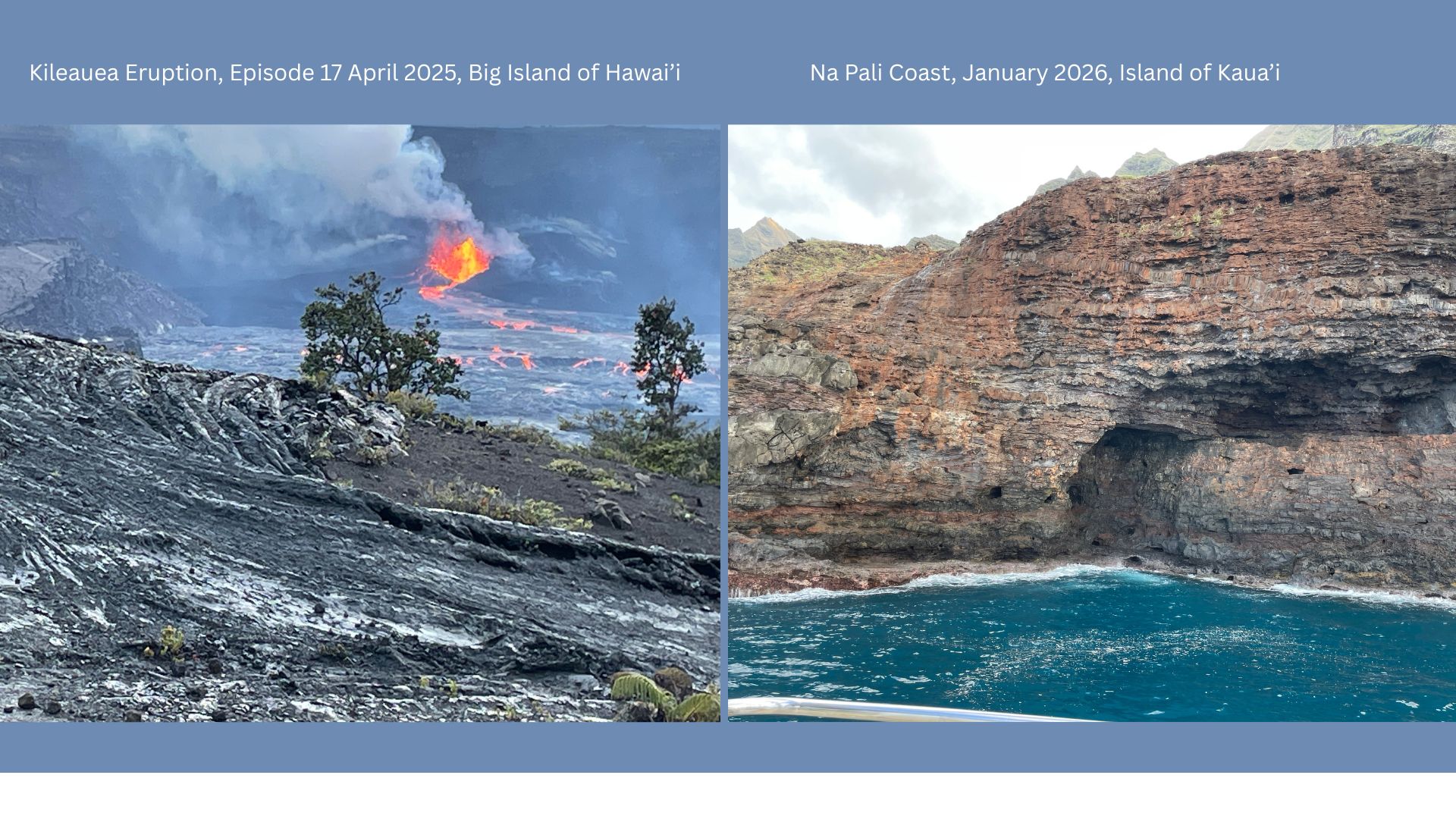
I’m spending time on the Big Island of Hawaii, the youngest island in the Hawaiian chain, and it’s a powerful reminder of how much perspective shapes interpretation.
The island exists because of the work of five volcanoes over centuries. One of them, Kilauea, happens to be the most active today, but it is part of a much larger system still doing its work. Much of the landscape is defined by vast lava fields, dark, jagged, and largely unsoftened by time. Even the sand tells the story. It’s so coarse in places that it can be uncomfortable underfoot, a tactile reminder that formation is still underway.
To many mainland eyes, the Big Island can look stark or inhospitable. Through that lens, it’s easy to see only what hasn’t arrived yet.
But that interpretation reflects the observer more than the land.
Here, lava is not destruction. It is creation in progress. New land is still being born. Possibility is still taking shape.
By contrast, we recently visited Kauai, the oldest of the major islands. Time has done what time does best. Wind, water, and vegetation have softened the terrain. The beaches feel luxurious. Along the Na Pali Coast, the cliffs reveal visible striations, each marking an earlier lava flow, now transformed into something breathtaking.
Same origin story.
Different stage of development.
So what does a Hawaiian island look and feel like?
It depends entirely on the lens you bring.
This distinction matters far beyond geography. It shows up constantly in leadership, career progression, and how we assess our own momentum.
High-performing leaders are particularly susceptible to a results-only lens. We evaluate too quickly. We mistake “not finished” for “not working.” We interpret pauses, pivots, or partial traction as indicators of failure rather than formation.
But mastery rarely announces itself early.
It reveals itself over time.
When leaders misread the stage they’re in, the cost isn’t just discouragement. It’s distorted decision-making. Premature course corrections. And a tightening of energy that limits what could otherwise develop.
A more effective lens doesn’t lower standards.
It widens the frame.
Here are five ways leaders can deliberately shift perspective and self-talk when progress feels uneven.
Five Ways to Change the Lens When Results Are Still Forming
- Separate the Moment from the Meaning — A single outcome is information, not a verdict. Strong leaders resist assigning permanent meaning to temporary data.
- Ask: “Would I Say This to a Colleague I Respect?” — If the answer is no, recalibrate. Leadership self-talk should meet the same standard as leadership communication.
- Name the Stage You’re In — Early. Experimental. Formative. Integrative. Most frustration comes from mislabeling the phase, not mismanaging the work.
- Look for Evidence of Formation, Not Finish — Engagement, learning, traction, and feedback are signals of progress, even when the final shape isn’t visible yet.
- Shift from Forcing to Inviting — Forcing narrows the frame. Inviting widens it. One compresses possibility; the other allows momentum to build.
When we change the lens, effort becomes evidence rather than indictment. Practice becomes progress. And unfinished terrain becomes proof that something meaningful is still being built.
Leadership requires the discipline to stand inside uncertainty without rushing to judgment, especially self-judgment.
The work is forming either way.
The real question is this:
Are you viewing the moment through a lens of immediacy, or through a lens of formation?
Because what you see determines how you lead forward.
Afterword
Leadership doesn’t falter because capable people stop trying.
It falters when perspective narrows and leaders misread the moment they’re in.
I work with senior executives who are navigating growth, transition, or inflection points, often before there’s external pressure to act. Together, we clarify their leadership narrative, strengthen their visibility, and ensure their digital presence reflects not just where they’ve been, but where they’re headed.
If you’re sensing that your professional story, particularly on LinkedIn, may no longer reflect the leader you are becoming, I invite you to schedule a complimentary Executive Discovery Call with me.
It’s a focused conversation to assess what lens your visibility is currently projecting, and whether it aligns with your next chapter.
👉 https://go.oncehub.com/carolkaemmerer
Let’s make your brilliance impossible to ignore.™