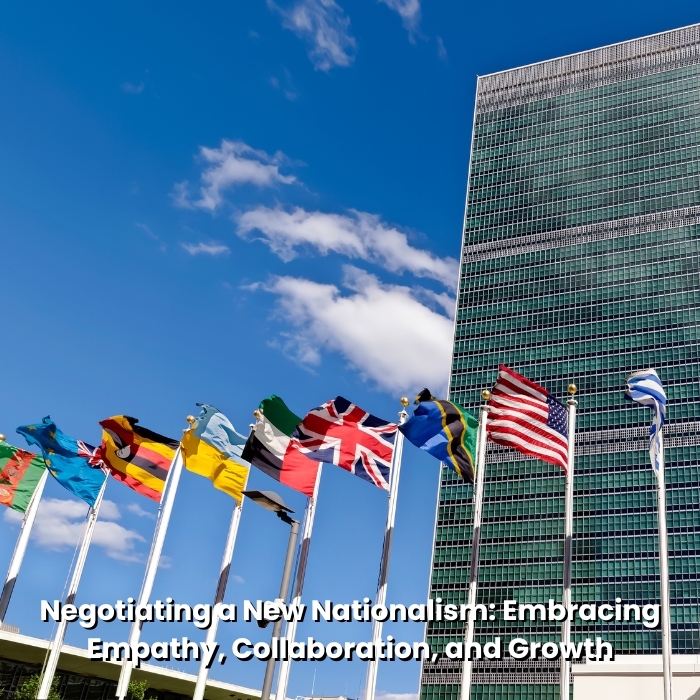
With both Independence Day and Canada Day in our rear view mirrors this week, it got me thinking about nationalism and national pride. In particular, I was contemplating how the principles of the Art of Feminine Negotiation™ could be invoked to create a new kind of nationalism – one that embraces empathy, collaboration and growth over old competitive models that don’t serve us.
In our increasingly interconnected world, the traditional approach to nationalism—rooted in the competitive mindset of “We’re the best”—can lead to unnecessary conflict and division. As individuals, we have the power to redefine what nationalism means, shifting our focus from competition to empathy, collaboration, and continuous improvement. By asking, “How can we be better?” we can contribute to a more harmonious and inclusive society.
Understanding Traditional Nationalism
Traditional nationalism, with its fervent flag-waving and face-painting, often emphasizes superiority and competition, leading to a sense of division and exclusivity. This approach can foster xenophobia, inhibit cultural exchange, and create tensions both within and between nations. To build a more inclusive and peaceful world, I invite you to reimagine your personal approach to nationalism.
The Need for a Personal Shift
In a globalized society, clinging to outdated notions of competitive nationalism is counterproductive. Instead, what if we embraced a more empathetic and collaborative form of nationalism to help us connect with others, understand diverse perspectives, and work together to solve common challenges?
Principles for a New Personal Nationalism
In considering this issue, it struck me that the principles needed to embrace a new kind of nationalism are those I’ve been advocating from the Art of Feminine Negotiation. Here’s a few practical principles you can apply to kickstart your new brand of personal nationalism.
Empathy and Emotional Intelligence
- Practicing Empathy: Take the time to understand and appreciate the experiences and perspectives of people from different cultures and backgrounds.
- Emotional Intelligence: Use emotional intelligence to navigate conversations about national identity, fostering understanding and reducing conflict.
Active Listening and Communication
- Active Listening: Engage in active listening during discussions about national and cultural issues, ensuring that everyone feels heard and respected.
- Effective Communication: Communicate openly and respectfully about national pride, focusing on commonalities rather than differences.
Flexibility and Adaptability
- Being Open to Change: Be open to new ideas and perspectives and be willing to adapt your views on nationalism as you learn and grow.
- Embracing Cultural Exchange: Embrace opportunities for cultural exchange, learning from the experiences and traditions of others.
Patience and Persistence
- Long-term Commitment: Commit to the long-term process of fostering a more inclusive and empathetic form of nationalism.
- Persistence in Dialogue: Stay engaged in conversations about national identity, even when they are challenging, to promote understanding and unity.
Collaboration and Teamwork
- Collaborative Efforts: Participate in community initiatives that promote cultural diversity and international cooperation.
- Building Relationships: Build relationships with people from different cultural backgrounds, strengthening social cohesion.
Balance and Fairness
- Fairness in Perspective: Strive for fairness in your views and discussions about national identity, acknowledging both strengths and areas for improvement.
- Balanced Approach: Maintain a balanced approach to nationalism, celebrating your country’s achievements while recognizing its challenges and areas for growth.
Practical Steps for Individuals
Education: Educate yourself about global issues and the histories and cultures of other nations. This can broaden your perspective and foster a more inclusive sense of nationalism.
Community Involvement: Get involved in community projects that promote cultural diversity and understanding. Volunteering with organizations that support immigrants and refugees is a great way to start.
Mindful Media Consumption: Be mindful of the media you consume. Seek out sources that provide balanced and nuanced views of different countries and cultures and be wary of content that promotes divisiveness.
Travel and Cultural Exchange: Travel, if possible, to experience other cultures firsthand. Engage in cultural exchange programs and events to learn and share with people from different backgrounds.
Positive National Conversations: Encourage positive conversations about national identity in your social circles. Focus on how your country can grow and improve rather than just highlighting its superiority.
Personal Reflection and Engagement
Reflecting on our personal views of nationalism and considering how we can contribute to a more positive and collaborative national identity is crucial. Here are some questions to consider:
- How do I currently view my national identity, and how might this perspective impact others?
- What steps can I take to promote a more inclusive and empathetic form of nationalism in my daily life?
- How can I encourage my friends and family to adopt a similar approach?
Moving Forward
This new approach requires a surrendering of ego. Contrary to our conditioned perspectives that this would constitute weakness, a new imagined nationalism would recognize these skills as strengths.
By adopting the principles of empathy, collaboration, and continuous improvement, we can redefine nationalism on a personal level. This shift allows us to connect more deeply with others, celebrate our shared humanity, and work together towards a better future. As individuals, we have the power to influence and inspire those around us, contributing to a more peaceful and inclusive world.
Let’s embrace this new form of nationalism and strive to be better, not just the best.