Why Clear Outcomes Are the First Act of Transformational Leadership
By Hugh Ballou
“If you said, ‘I want these specific deliverables over this specific time period,’ and then that person tells you how they’re going to do it, now you’ve got accountability.” – Hugh Ballou
Nonprofit leaders are often rich in vision and purpose yet frustrated by stalled execution. The missing link is rarely commitment or passion. It is clarity. Too many strategic plans are beautifully written, prayerfully discerned, and warmly affirmed…and then quietly shelved. The issue is not that people do not care. The issue is that the work was never translated into clear, shared agreements and actions.
Strategy is not implemented through inspiration alone. Inspiration sparks movement, but agreements sustain it. When a leader defines specific outcomes and timeframes, and then invites the team to define how those outcomes will be achieved, something essential happens. Ownership emerges. Accountability becomes mutual rather than imposed. People move from being supporters of the vision to stewards of the work.
In my work with nonprofit boards and executive teams, I see a consistent and costly assumption: leaders believe alignment exists because people nod in meetings. Nodding is not commitment. It is often politeness. Commitment shows up as clearly defined deliverables, explicit ownership, and visible follow-through. Anything less leaves too much room for confusion, disappointment, and unintended conflict.
This is not micromanagement. It is stewardship. Stewardship honors the mission by making expectations visible. It honors people by removing ambiguity. It honors time and resources by reducing rework and frustration. When leaders fail to define outcomes, they unintentionally place the burden of interpretation on staff and volunteers. That burden erodes confidence and trust.
Clear deliverables change the nature of leadership conversations. Instead of vague updates and emotional reactions, leaders and teams engage in constructive dialogue. What moved forward? What stalled? What support is needed? These questions shift the culture from blame to learning. Leaders can coach rather than correct. Boards can govern rather than rescue. The organization gains momentum without sacrificing relationships.
Measurement begins here and not with dashboards or spreadsheets, but with clarity of outcomes. When outcomes are clear, measurement becomes simple and humane. Progress is visible. Gaps are discussable. Adjustments feel responsible rather than reactive. Without clear outcomes, measurement feels punitive and arbitrary. With clear outcomes, measurement becomes a shared tool for success.
This clarity is especially critical in nonprofits, where relationships matter deeply and people often bring their whole selves to the work. Ambiguity damages relationships. When expectations are unclear, feedback feels personal. When deliverables are explicit, feedback feels supportive. Clarity protects trust.
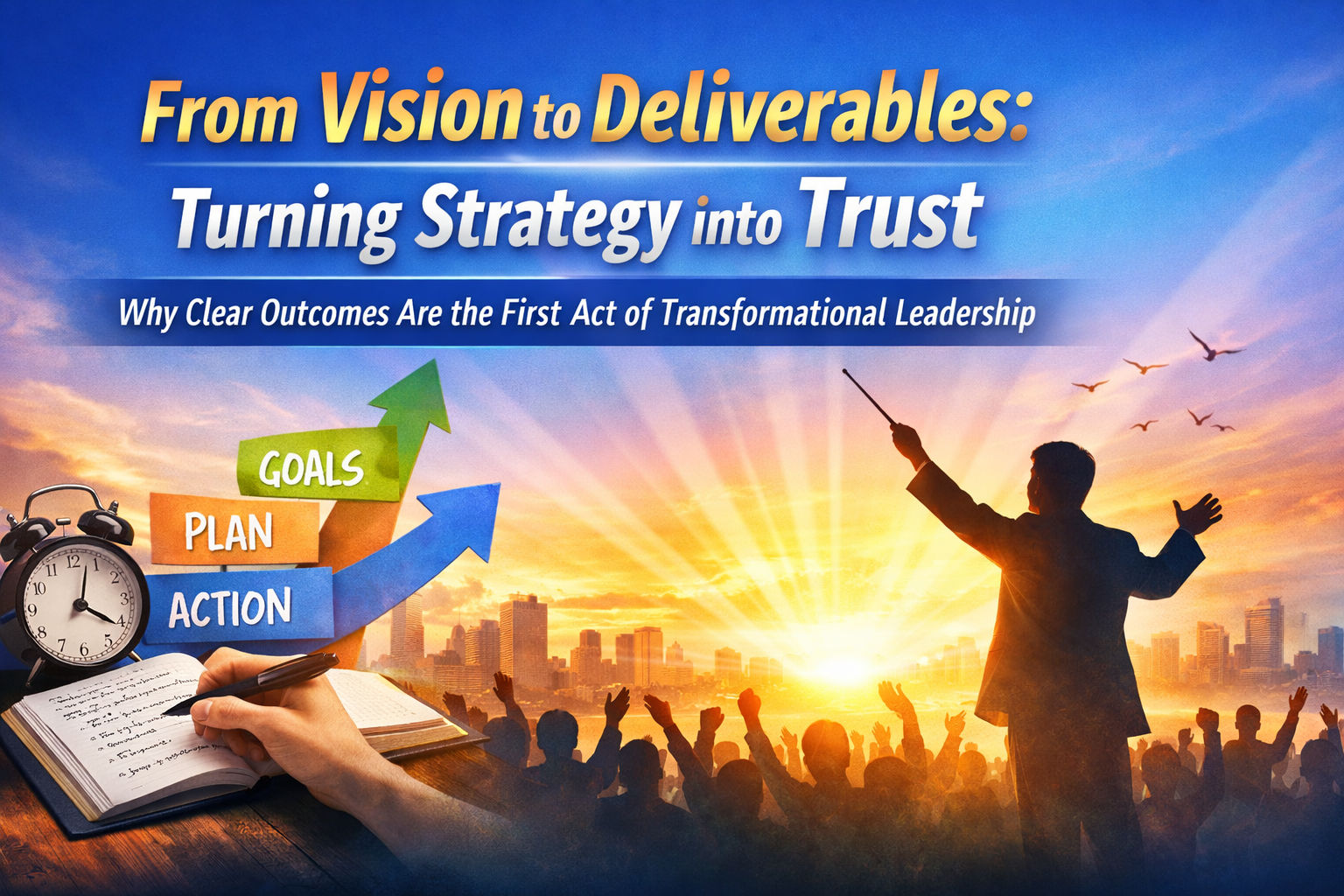
I often describe transformational leadership using the metaphor of a conductor and an orchestra. The conductor does not play every instrument, nor do they dictate every note beyond the score. Their responsibility is to ensure clarity. The score is known. The tempo or pace of the work is agreed upon. The entrances are clear. Within that structure, musicians bring their skill, expression, and creativity. The same results happen in non-musical settings. The result is coherence, not chaos.
Nonprofit leaders must learn to conduct in the same way. Vision provides the desired outcomes, but deliverables provide the results. Real music happens if the ensemble is not just “playing the notes.” Without a score, even the most talented musicians will drift. With a clear score, excellence becomes possible and sustainable.
Accountability, in this context, is not about enforcement. It is about integrity. Did we do what we said we would do? If not, what did we learn? This question builds synergy rather than fear. Over time, organizations that operate this way develop confidence in their ability to execute. Strategy becomes a living system rather than a static document.
The discipline of defining deliverables is the first act of transformational leadership because it converts intention into results and along with that builds trust. People trust leaders who are clear. They trust systems that are fair. They trust processes that are consistent. When leaders make outcomes explicit and invite collaboration on execution, they model respect and shared responsibility. Accountability shifts from the task of the leader to peer-to-peer team energy when teams realize that independence and interdependence work together.
This is also where weekly or monthly review rhythms, systems, and progress become powerful. When deliverables are clear, review is simple. Did we complete the action we committed to? If yes, what worked? If no, what got in the way? These conversations build capacity over time. Teams learn how to plan realistically, communicate honestly, and adjust wisely.
Transformational leadership is not about charisma. It is about clarity, consistency, and care. Clear deliverables are not a technical tool; they are a relational one. They reduce anxiety, strengthen trust, and allow people to bring their best work to the mission they love.
Key Next Steps:
· Define three to five priority deliverables for the next 90 days.
· Ensure each deliverable has one clear owner.
· Ask each owner to define how they will achieve the outcome.
· Establish a simple review rhythm focused on learning if the pace is too fast or not.
· Model clarity and consistency in every leadership conversation.
Based on “Leaders Transform: Mastering the Art of Influence, Book 3: Leadership Systems: Orchestrating Success” by Hugh Ballou
Hugh Ballou is The Transformational Leadership Strategist, author, and founder of SynerVision International, Inc. and SynerVision Leadership Foundation. He empowers leaders across sectors to transform vision into high-performing results.
Article is based on my new series, “Leaders Transform: Mastering the Art of Influence” – http://LeadersTransform.info
For a list of resources go to – http://AboutHugh.com
#Leadership #HighPerformingTeams #Trust #Empowerment #Podcast #OrchestratingTeams #Teamwork #Transformation #Authenticity